

Bobsleigh, bicycles, wheelchairs and feet: Lecco’s HexaLab is the world’s most advanced multi-sport simulator


In the laboratories of the Lecco Campus of Politecnico di Milano there is a piece of equipment unlike any other. There is certainly no other like it in Italy. Marco Tarabini, Vice Rector for the Lecco Campus and director of the Human Performance Lab, goes so far as to say that there are no others like it in the world: «certainly not with these levels of complexity» he says.
It is HexaLab, a multi-sport simulation platform that makes it possible to recreate extremely realistic race conditions for various disciplines, including bobsleigh, skeleton, but also Downhill and cycling. It was conceived as a sports simulator, but it also has other functions: «we use it to test the road-holding and comfort of wheelchairs for people with disabilities, for example», Tarabini explains.
Human at the centre
The practice on which the HexaLab is based is that of Human in the loop, whereby the human being can control the simulator and physically interact with the apparatus and the “simulated” world around them.
“Let us take the example of bobsleigh: normally the athlete interacts with the instrument through controls,” says Tarabini. “Based on the movements and actions they perform, information is provided to the virtual environment, which contains a physical model.” It is therefore not simply a matter of videos being projected onto the simulator screen, but of perceiving the way in which the bobsleigh interacts with the ice through the stiffness of its springs; we can model the athlete’s mass and the dynamic characteristics of the apparatus. Within certain limits, the temperature and humidity values of the environment can also be controlled in order to induce realistic physiological loads.
On the HexaLab it is possible to simulate bobsleigh, but by mounting a treadmill on the platform the same can be done for running or cross-country skiing. The treadmill too is state of the art: it is designed to keep the athlete constantly at the centre of the simulation environment and reaches speeds that are unthinkable for commercial devices.
The environment around the simulator makes it possible to assess the athlete’s response to external stimuli, which may be visual, auditory, or small reactivity games carried out within the virtual environment. In this way, the classic simulator makes it possible to create exercises to train attention or reactivity. “We interact with coaches and technical trainers to understand how these exercises can be refined: a much more complex instrument than a headset that is worn and projects an image,” adds Tarabini. “We can work both on the athlete and on the apparatus, generating combinations that are unthinkable with any commercial simulation instrument.”

One platform for 100 applications
The platform that is the “heart” of HexaLab always remains the same, regardless of what is to be simulated. It is a hexapod with an interface adaptable to the object mounted on top: bicycles, bobsleighs, treadmills, wheelchairs. It can also be left empty to expose standing people to oscillations in order to induce motion sickness.
HexaLab was used in research carried out in collaboration with the University of Exeter to evaluate the effect of some bicycle components on the comfort perceived by the cyclist. HexaLab is fundamental for recreating an environment in which tests are repeatable and at the same time extremely realistic.
HexaLab is also used for purposes other than sports simulation: in the past it was used to assess people’s cognitive response while standing or walking in conditions of unstable support; the research, funded by INAIL, led to a greater understanding of what happens to people who work for long periods on ships, trains, aircraft. «Our tests showed that in the presence of a certain type of oscillation, the person tends to walk with a wider base of support», Tarabini explains. «Adopting awkward postures over the long term leads to disabling back pain; we are collaborating on the drafting of a new ISO standard precisely on this topic, thanks to the studies carried out on HexaLab».
Creating the environments is also challenging: the information needed to generate the settings and the physical model comes from actual surveys of tracks and courses, or from measurements taken during sporting practice and reproduced in the laboratory.
A thoroughly Lecco story
HexaLab’s home is the Lecco Campus: the platform was conceived and built for the Human Performance Lab almost two years ago now. It was built by Rebel Dynamics, a company from Cesana Brianza, thanks to co-funding from Regione Lombardia. HexaLab shares the same mechanical base as DRISMI, the driving simulator at the Bovisa Campus of Politecnico di Milano, a base developed thanks to the research of Professor Hermes Giberti, former faculty member of the Department of Mechanical Engineering.
Today it is used both for research projects and for testing activities with companies, although its potential has yet to be fully explored.
Related stories
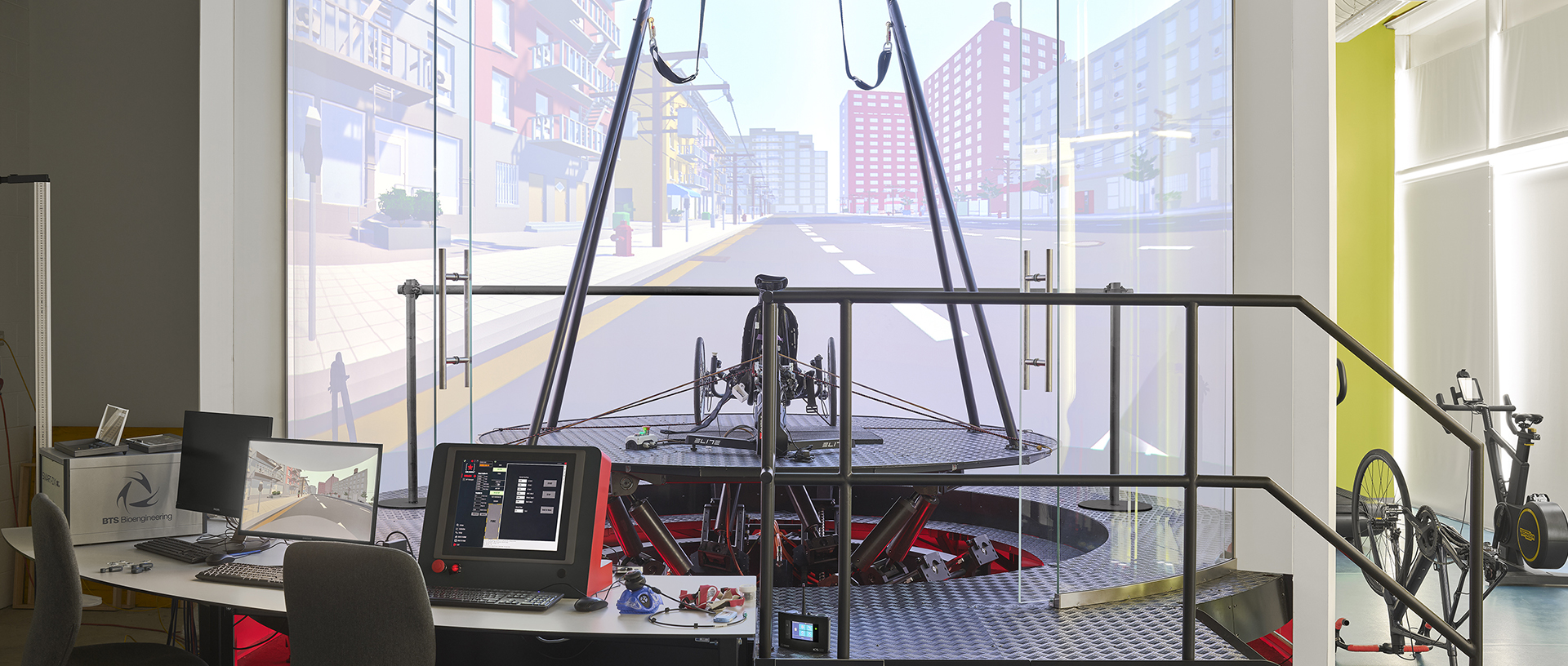
Bobsleigh, bicycles, wheelchairs and feet: Lecco’s HexaLab is the world’s most advanced multi-sport simulator
The HexaLab at the Lecco Campus is based on the “human-in-the-loop” approach, whereby a human operator can control the simulator and physically interact with the equipment and the “simulated” environment around them
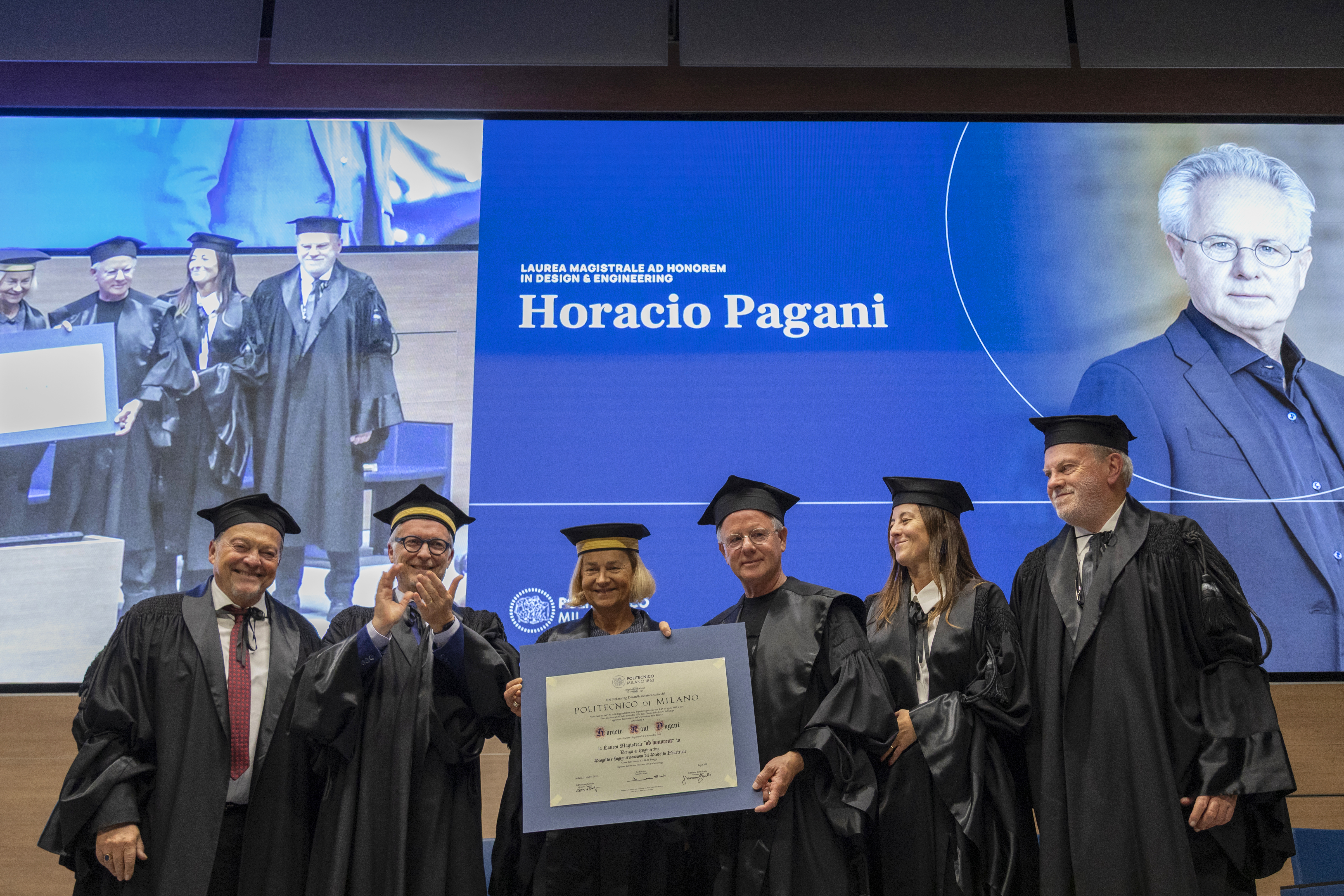
Art, science and technology in the unique design of Horacio Pagani’s hypercars
A close-up with the Italian-Argentinian entrepreneur, founder of Pagani Automobili, who revolutionised the automotive sector with his talent

The History of the Gliding Centre: How Aeronautics Conquered the Politecnico di Milano
From a wood and canvas workshop, a school will be born that will mark the Italian aeronautics

The importance of being “good ancestors”: face-to-face with Cristina Bombassei
The first woman to receive an honorary degree in Engineering from Politecnico di Milano

Touring Italy’s UNESCO sites by bike: the “E-scapes” Observatory’s mapping
Allowing different speeds to coexist, in order to promote a slow tourism in “middle areas” – with Andrea Rolando
You might also like
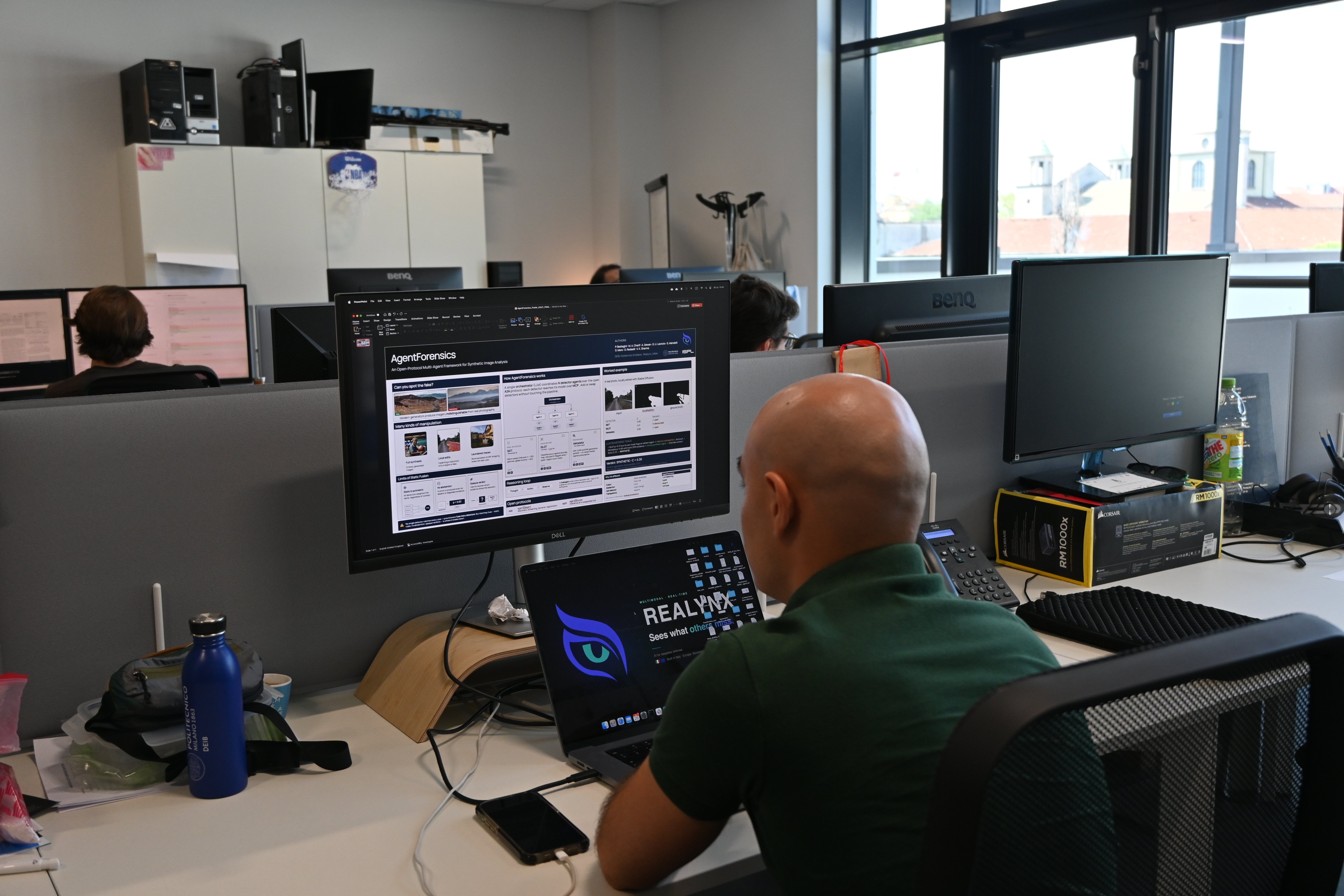
Beyond true and false: recognising synthetic content in the age of AI
From cloned voices to deepfakes, the challenge is no longer just to distinguish what is true from what is false, but to understand how content has been produced, transformed and used.
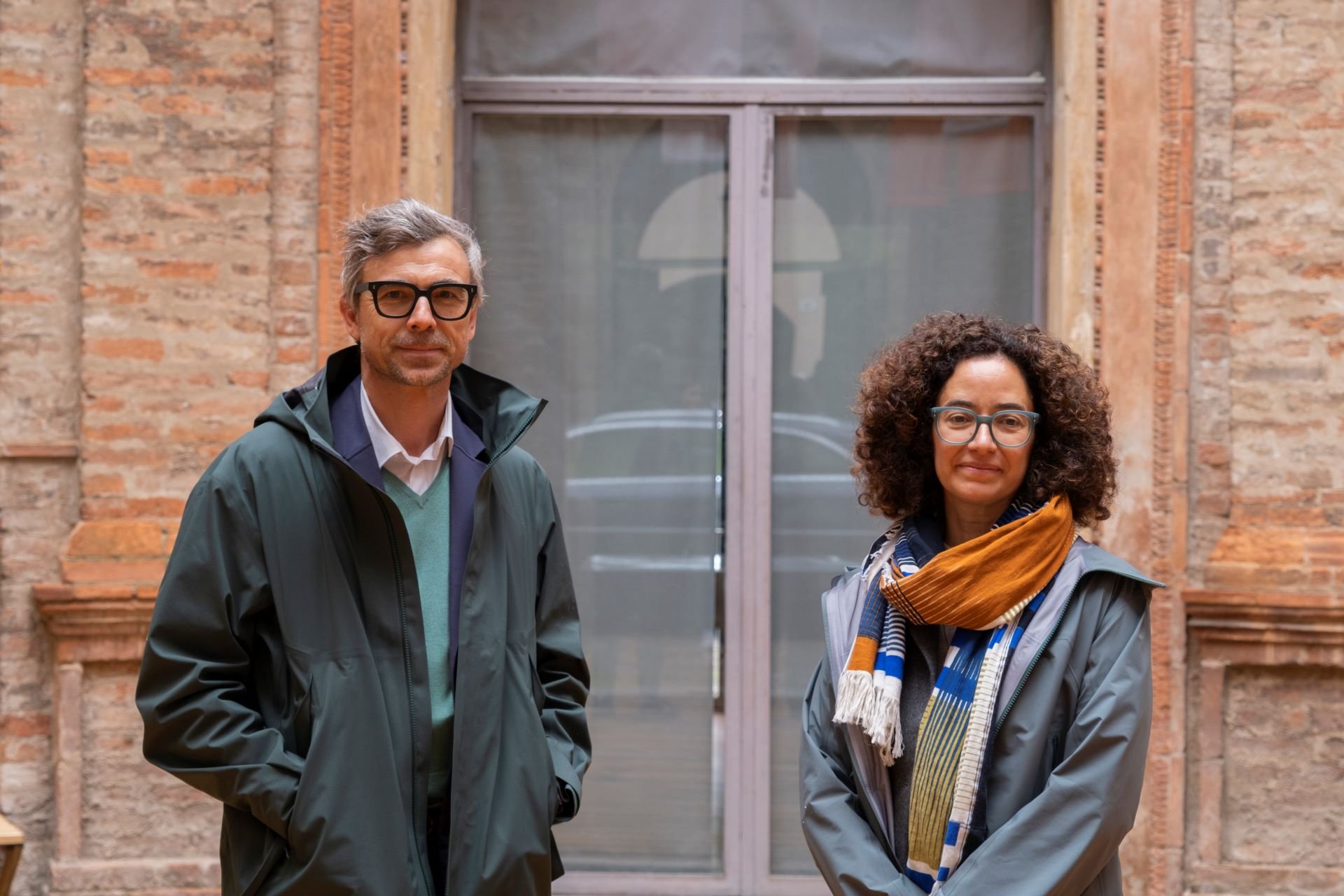
Building in Balance
Matteo Scagnol and Sandy Attia of MoDus Architects discuss an architecture shaped by the tension between landscape and infrastructure, rules and freedom, materials and climate change.

Who owns Milan? Map reveals forces reshaping the city
The financialization of the real estate market and its effects on urban development dynamics

Technology in the desert: how to map in 3D Egyptian and Roman excavations using photogrammetry
An interview with Alessandro Mandelli, a veteran for Politecnico di Milano's excavations in Egypt

Reading Maps: The Taste of Discovery
Jessica Gritti discusses the research on the Maps section of the Civica Raccolta delle Stampe “Achille Bertarelli”: from cataloguing and new international connections to the value of collaboration between universities and cultural institutions.