

Building the future, layer by layer


For centuries, humanity has created shapes and objects by subtraction: faced with a block of stone, the sculptor removes the superfluous material until the figure “emerges” from the block and takes shape. It is no coincidence that Michelangelo spoke of the “art of taking away” in reference to the artist’s gesture that frees the work of art from the raw material in which it is imprisoned.
Technology has overturned the logic of traditional production, introducing methods of creation that, instead of removing material, proceed by adding material. This is what additive manufacturing does, the manufacturing process also known as 3D printing: starting from a digital model, it builds objects by adding material layer by layer. 3D printing opens up new possibilities where traditional manufacturing methods use procedures that are difficult or costly, thus increasing the number of its applications.
But additive manufacturing technologies still need to fully mature in order to be adopted on a large scale and to move completely beyond the world of prototypes. Bianca Maria Colosimo, Professor of Additive Manufacturing and Quality Data Analysis at the Department of Mechanical Engineering of Politecnico di Milano, works on addressing these technological challenges by making machines smarter and therefore more efficient. We spoke with her about the most promising applications and the research she carries out between the Politecnico laboratory and the Massachusetts Institute of Technology (MIT), with which she has collaborated for years. We also discovered one aspect of additive manufacturing, bioprinting, which applies 3D printer technology to biological material, thus opening the way to frontier research that brings together manufacturing and life sciences.
How did you become a researcher?
Thank you for the question. It is always very nice to devote some time to looking back, trying to “connect the dots,” because it is easier to see the connections.
I am certainly a “daughter” of the Politecnico: it is here that I graduated, it is here that I did my PhD and developed my academic path. But I am a daughter who loves to travel, to look at her own family from afar and every now and then bring back new “friends.”
Looking at my path, I also see three elements that have always accompanied me: “illuminations,” intuitions that are also somewhat instinctive and that guided my interests and led me to choose the road to take even when facing some important crossroads. The “falling in love” that generally follows the intuitions: passions for a new topic or a new field to explore, infatuations... fortunately long-lasting ones—otherwise it would have been a disaster (laughs). And then, fundamentally, the choice of the right travelling companions: collaborations and working relationships with people from whom I learned a great deal.
The first illumination in my path at the Politecnico perhaps came when I was a student. The professor of Automated Production Systems took us to visit an industry trade fair, and there I saw for the first time a fully automated and robotized manufacturing system for aerospace components. I decided to write my thesis on this topic and, while writing the thesis, I discovered that I really like doing research: it translates into freedom and enthusiasm: finding oneself in front of problems that currently have no solution, or exploring dimensions that are not yet clear and with respect to which—with great humility—one has to try to shed some light, is something beautiful. So I decided not to respond to the many interview requests that consulting firms, at that time, addressed to newly graduated engineers, with very attractive financial offers as well. And, despite the grumbling of my mother and father, who already had one daughter “sacrificed” on the altar of research and the uncertain, poorly paid path of a PhD in gene therapy, I too decided to pursue a PhD. And it is here that I discover data science thanks to industrial statistics: the second protagonist that, together with manufacturing, would then always accompany my research path. My PhD thesis is on Bayesian statistics applied to quality in production: observed data, together with prior knowledge of the manufacturing process, can be a very powerful way to improve product quality.
After my PhD, I felt I needed to deepen my knowledge of industrial statistics and decided to spend my first period abroad, at Pennsylvania State University (Penn State), a university that at the time ranked fourth in U.S. industrial engineering rankings, under the guidance of one of the foremost experts in industrial statistics for quality problems, Enrique del Castillo. Since then, Enrique has become a long-term travelling companion and a friend of the Politecnico: he has often come here, also for long periods. Together we developed solutions that use Bayesian statistics tools for quality control and improvement, with the goal of avoiding scrap, rework, and waste of material. We also wrote a book together on the subject.
Once back in Milan, I began my career first as a researcher, then as an associate professor and finally as a full professor. And during those years, I realized that data were becoming more and more pervasive, massive, and highly complex. I told myself that we could no longer wait to intervene on the product once it came out of the machine: it was too late. We need to anticipate, predict degradation conditions and defects thanks to the analysis of all process data: signals, images, and videos. An incredibly powerful set of information that must be analyzed using machine learning tools. We were a little on the threshold of what would later be called Industry 4.0.
Meanwhile, my path in the United States continued in parallel: I was appointed Editor in Chief of the Journal of Quality Technology of the American Society for Quality, a journal that at the time was a point of reference for those working on industrial statistics for quality problems. And I am very happy to have been the first non-American editor (and the second woman...). Since then, the network of contacts among researchers working on data analysis for industrial problems in the United States and Europe has grown and become more solid. A few years ago, I was extremely proud to receive the George Box Medal, an award that bears the name of someone who for me is a myth—George Box—one of the “giants” who laid the foundations of all the statistical tools we know for statistical process control and continuous quality improvement.
Then, more than ten years ago, came a new illumination and a new love: 3D printing processes, which were initially developed for the rapid fabrication of prototypes, became true manufacturing processes for finished (and complex) products. And in the Department of Mechanical Engineering, together with some colleagues and the Head of the Department at the time, Ferruccio Resta, we decided to invest in a new laboratory, the AddMe Lab, which focuses on additive technologies for metal and ceramic materials. Since then, the laboratory has continued to grow, equipping itself with all the most promising technologies for 3D printing and becoming increasingly sensorized and intelligent. I believe that at the moment it is one of the landmark laboratories on the international scene. In the last year alone, thanks to a careful use of PNRR resources through the MICS – Made in Italy Circolare e Sostenibile project, we brought to Polimi and to Mechanical Engineering the first and only installation in Italy of a fully sensorized 3D printing system capable of depositing and melting with a laser beam up to three different materials in the same layer. A new generation of products that do not require welding and that can improve performance is ready to be produced (if we solve all the open challenges that, as always, new processes bring with them).
And it is with 3D printing that, more than ten years ago, the collaboration with MIT began, thanks to the Rocca project that supports Polimi-MIT collaborations and to John Hart, an expert in additive manufacturing and now Head of the Department of Mechanical Engineering at MIT.
In this field, what does your research group work on?
My research group develops new solutions to make additive manufacturing increasingly autonomous. To use a medical metaphor, we equip machines with sensors and intelligence to know the state of health of the process: when the process is unwell, we try to heal it in real time. We have just finalized the development of an innovative system—ScanIT—that, while depositing powder, scans the last printed layer: a sort of photocopier mounted inside a 3D printer. And we develop new Artificial Intelligence (AI, or IA in Italian) solutions for the data that are collected and analyzed in real time.
At the moment we are developing “green AI” solutions (AI that does not consume too much energy during computation) to bring the intelligent printer into space (with the European and Italian space agencies), we are developing new solutions to “transfer knowledge” between laboratories and machines (collaborating on this topic with MIT), and we are trying to use “synthetic” data and images (with generative AI) to reduce the time and cost required to train neural networks to recognize and classify defects (collaborating on this topic with the Georgia Institute of Technology - Georgia Tech).
What are the advantages of additive manufacturing?
This technology is used because it makes it possible to exploit design freedom, in order to manufacture high-performance products. For example, products that become very lightweight: and lightness is an essential feature for space and aeronautical applications and, more generally, for all sustainable mobility. Greater speed or lower fuel consumption can be achieved, and therefore the impact on the planet is reduced. Additive manufacturing also enables the customization of products at limited cost (a very useful function in the dental or biomedical field, for prostheses) and makes it possible to significantly reduce the number of components, with an impact on their lifespan (which increases) and also on supply chains. By reducing the number of suppliers, one becomes more resilient and the time and costs to bring a new product to market are reduced.
It also enables a democratization and a delocalization of manufacturing: at least in principle, I can produce where it is needed and when it is needed. This is a completely new paradigm for manufacturing. Unfortunately, the costs of additive manufacturing are still high, so it remains a technology for high value-added products (aerospace, biomedical, oil and gas, now also energy and nuclear), but I am certain that there is still much to do to reduce costs and discover new opportunities and new markets. Above all thanks to research and development activities that must then pass quickly from our laboratories into companies.
People often talk about additive manufacturing applied to research in the space field. What is the link between these two areas?
Lightness, reduction in the number of components, and the possibility of processing innovative materials to obtain new products with high thermomechanical performance are essential elements for systems and components in the space sector. Reducing the mass of payloads and launchers is fundamental to reducing mission costs, especially after the arrival of U.S. private manufacturers, who have completely changed the scenario in recent years. Additive manufacturing also makes it possible to produce or repair components in situ that may be too large or too heavy to be transported by launchers. We have just completed a project with the European Space Agency and an Italian manufacturer of large-scale 3D printers to create an intelligent and autonomous 3D printer to repair or produce products in LEO (Low Earth Orbit).
And then there is the topic of lunar bases. Right after Artemis II, the spotlight turned back on the moon. And in our laboratories we have long been studying the printability of “moon dust”, by printing lunar regolith simulants. We have just developed a new system to deposit very irregular powder, such as regolith, also mixed with metallic powder, with the idea of also recycling the scrap that we will bring to the moon. Together with the European Space Agency, we are also developing new strategies for printing “reduced” regolith, namely the powder generated downstream of the oxygen extraction treatment from the regolith, which can serve other purposes.
And all the AI solutions we are studying to make these printing systems autonomous must consume little energy, both in computation and in data acquisition, because in space resources are extremely limited.
What I like most about research for space is that the challenges we tackle are then useful for Earth. Being able to print recycled powders, develop intelligent but not energy-intensive AI solutions, repair products with autonomous machines—these are all solutions that care about sustainability and the protection of the planet we live on.
Is there a project in which this link between research for space and sustainability on our planet is particularly evident?
In the PNRR MICS (Made in Italy Circolare e Sostenibile) project, led by Politecnico di Milano, we created a flagship project called “the factory in space” to explore all the dimensions of a completely circular and sustainable factory, which minimizes the waste of resources in order to design and produce products. And in that context, 3D printing plays an essential role as an enabling technology. In that project we developed new intelligent, multi-material, low-energy-consumption printer solutions for recycled powders.
Let us now turn to bioprinting. Could you tell us how the move to 3D printing of biological material came about?
Here too it all started with a somewhat accidental illumination. Within the POLIMI 2040 group, now more than seven years ago, we began to reason about 3D bioprinting together with Davide Moscatelli, Professor in the Department of Chemistry, Materials and Chemical Engineering “Giulio Natta,” who develops functionalized and biocompatible polymeric materials to deliver drugs to the areas to be treated. By combining his expertise in the synthesis of bioinks and my experience with intelligent printers, we began to carry out the first experiments by investing in a first very simple extrusion bioprinter, which uses a kind of syringe to deposit a bioink, within which the cells needed to create biological tissues are embedded. From there came the first collaborations with Humanitas, a Cariplo project, and then a European project with the Fraunhofer network.
Then, also in this case, the long collaboration with MIT played an important role. Two years ago, John Hart, with whom I have collaborated for many years, became Head of the Department of Mechanical Engineering and proposed that I go there in 2025 to teach the Additive Manufacturing course that he himself had always taught before becoming Head. I had already taken part as a speaker in many editions of the short postgraduate courses that John organizes annually at MIT. And during those six months at MIT, I came into contact with Ritu Raman, a young associate professor who uses 3D bioprinting to reproduce muscle tissues for soft robotics applications: small biorobots that function as actuators but using actual biological tissues.
What differentiates bioprinting from more traditional 3D printing?
Both create products with complex geometry by adding material layer by layer. Bioprinting, however, has some peculiarities. First of all, the scale of the process: considering that cells are only a few tens of micrometres in size, the constructs we need to print must have comparable dimensions. To give an idea, a hair has a diameter of about 80 micrometres.
Second, the process uses bioinks that contain a high amount of water, and are therefore difficult to print. Third, the process must not damage the cells during printing, so the operating conditions must be controlled carefully.
In this field, what do you work on in particular?
In this case too, we develop intelligent and autonomous bioprinting solutions, but by tackling several additional elements of complexity: bioinks are often transparent (and therefore cameras struggle to see the geometry of the deposited layer), it is necessary also to control the arrangement of the cells in the bioink (and perhaps also their state of health) and—as I was saying earlier—the dimensions are very challenging. We have, however, developed and proposed many promising innovative solutions: we are using temperature to reconstruct the geometry of the construct just deposited (thanks to the fact that it has a different temperature from that of the previous layer), and we have inserted fluorescence microscopes into the printers in order to see the cells, which are made fluorescent thanks to nanoparticles.
Together with Ritu Raman and her team, during my period as a visiting professor at MIT, with a PhD student from my group funded by the Rocca project, we extended our in situ recognition and classification solutions for printed geometries to a very challenging process: embedded bioprinting. We were able to develop real-time image segmentation solutions during printing, when the bioink with the cells is deposited inside another gel that supports it and allows great freedom of trajectory without the construct collapsing under the effect of gravity. Our solution was mentioned on MIT News and from there we are now starting with adaptive printing solutions, that is, solutions capable of changing parameters in order to autonomously find the optimal parameter set.
Is it possible to produce actual tissues with this method?
It is still an open challenge because biological tissues are also vascularized in order to bring nutrients to the cells, keep them alive, and eliminate waste and toxic products. Vascularization, that is, the creation of internal channels within the construct, including very small ones, is an open challenge for 3D bioprinting. Another challenging aspect is the ability to bioprint multicellular constructs, in which different cells are positioned in different areas of the construct, in order to reproduce biological tissues.
It is no surprise that at the moment we are only able to print very simple biological tissues such as cartilage and skin: the only case of a bioprinted construct transplanted into a patient, to my knowledge, is that of a U.S. patient who received a bioprinted ear transplant.
Are there other promising applications of bioprinting?
Among the concrete applications, there is great interest in “Organ-on-a-chip”: solutions in which biological tissues are positioned and perfused, that is, nourished, inside small platforms that monitor them in order to study the progression of diseases or develop new drugs.
The use of this technology would allow—among other things—the reduction of drug testing on animals. Many colleagues at the Politecnico study and develop innovative solutions in this field, and 3D bioprinting can support these research activities.
Is there discussion of using bioprinting in space?
I had the good fortune to be part of a working group on bioprinting for space applications at the European Space Agency and had the opportunity to see very interesting research activities: the use of plasma extracted from astronauts’ blood as a bioink for cells; the bioprinting of plant cells; the use of microalgae that produce oxygen through photosynthesis to support cellular vitality during long space missions. Also in my field, the intelligence of space bioprinters must be “extreme,” in order to allow the bioprinter to self-adapt to conditions not found on Earth, such as microgravity or reduced gravity. On Earth gravity dominates: cells suspended in the bioink tend to settle at the bottom and printed structures collapse under their own weight (which is why rigid scaffolds or support materials are often needed). In microgravity or reduced gravity, gravity becomes negligible or is greatly reduced, and surface tension—which on Earth is a “minor” force masked by weight—becomes the dominant force governing fluid behaviour. This means that drops of bioink tend to form almost perfect spheres (minimum surface area), cells remain distributed more homogeneously, and soft and complex structures can maintain their shape without supports. In this change of scenario, intelligent bioprinters must therefore learn while printing under conditions never observed before. Bringing this technology into space is a challenge that carries with it many dimensions to explore, on which research still has a great deal to say.
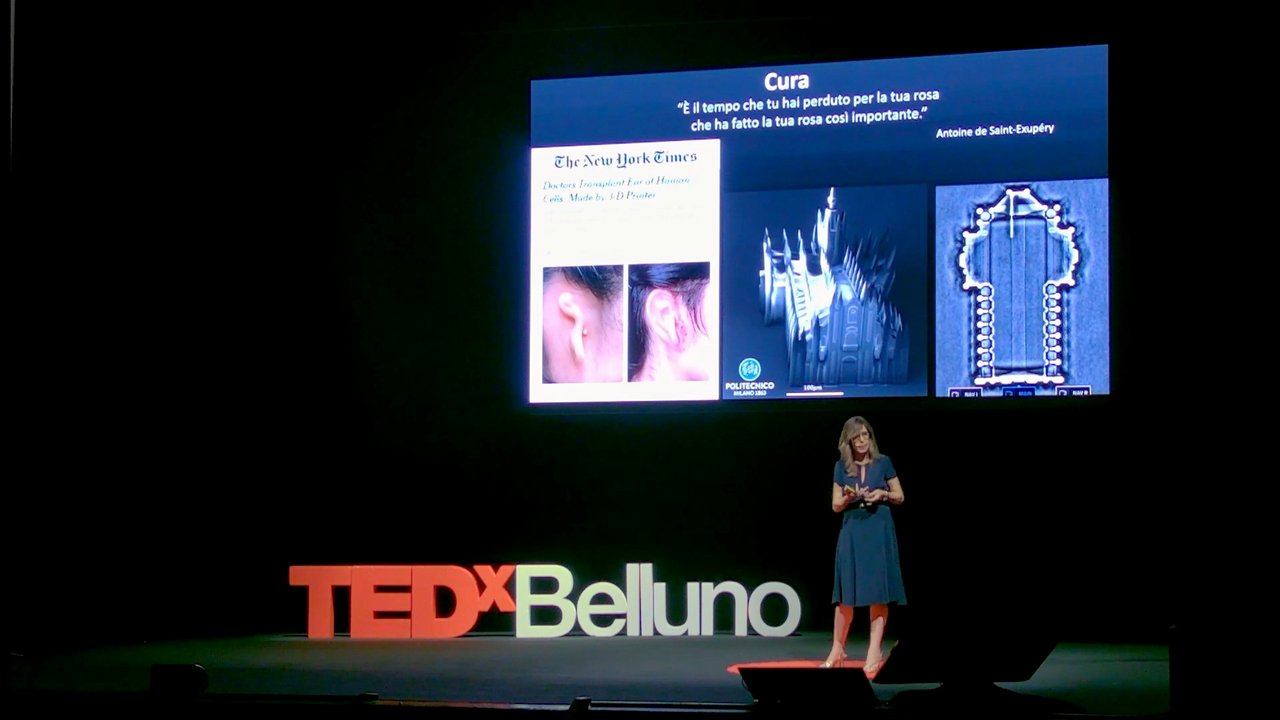
In your academic career you have had the opportunity to gain extensive international experience, especially in the United States. What differences have you found compared with the Italian scenario?
Between 2024 and 2025 I had the good fortune to teach on three different continents: in China (briefly), then in the United States, at MIT, and finally back in Italy, at the Politecnico. And I saw three worlds side by side. In China, in Xi’an, I taught for only one week at the XJTU-POLIMI Joint School, the school created through the collaboration between Politecnico di Milano and Xi’an Jiaotong University (XJTU). In that district, the industrial ecosystem is moving at an impressive speed in 3D printing. Xi’an hosts Bright Laser Technologies (BLT), one of the companies currently producing the largest metal additive systems in the world, with a facility where 1000 metal printers operate at the same time.
At MIT I certainly observed tremendous drive and a wonderful energy directed towards research and innovation. When I asked the young women and men in the classroom why they were taking an Additive Manufacturing course, almost all of them answered that their main objective was to found a start-up. And that answer prompted me to change, while the course was underway, the teaching project I had in mind: alongside the lectures, I included the simulation of an entrepreneurial project, complete with a final pitch to convince the other students - potential investors - to finance their business proposal.
Back in Italy, I asked the same question to the students at the Politecnico who were taking my Additive Manufacturing course: 160 young women and men from different degree programmes (mechanical engineering, management engineering, design, and automation), and only one of them had in mind the idea of a start-up on additive technologies. I must also say that then, during the course, if properly stimulated, the students responded positively to prompts on the still open questions of research and innovation. There is certainly an issue of mindset, habit, risk aversion, reference context, but I also believe that we as lecturers have a responsibility to find ways to bring the complexity of the real world into the classroom, trying to stimulate creativity, imagination, and inventiveness.
Also among my colleagues in Boston, the thing that struck me most was the vibrant and positive energy one breathes while crossing MIT’s “Infinite Corridor.” Despite the confusion created by Trump’s inauguration and his policies to reduce research funding, I always perceived great liveliness and a strong desire for the future in all the strategic discussions of the department boards in which I took part. The desire for the future, trust in the paths of knowledge, and a certain optimistic attitude are, I believe, dimensions that we must cultivate and nurture here in Italy as well, with students, in our laboratories, and in our conversations among colleagues.
Are there other projects in the pipeline with MIT on bioprinting?
Yes, there are currently a couple of active projects.
The first project involves combining the new MagMix (Magnetic Mixer) system, developed at MIT to mix cells homogeneously in the bioink, with our in situ fluorescence system, which analyses the position of the cells during printing. If MagMix works poorly, our in situ system can report it and the mixer can modify the parameters to improve the mixing.
The second project concerns new solutions for federated learning and knowledge transfer between intelligent bioprinters: two sensorized bioprinters, one at the Politecnico and one at MIT, exchange information (but not data) in order to learn more quickly how to bioprint new materials or new geometries without making mistakes. On this project we applied together to a Google call: one of the few calls to which one can apply jointly from Europe and the United States. The competition will be extremely high, but as always writing projects is a very powerful way to devote time to reflecting on new research topics.
I believe that this idea of federation and knowledge transfer among research laboratories, overcoming borders between countries and continents, is the best response to this historical moment, in which even places of knowledge are feeling the effects of political tensions.
What is the experience as a researcher and lecturer that has given you the greatest satisfaction?
A funny anecdote from my experience as a lecturer at MIT comes to mind. Finding myself at one of the most prestigious universities in the world, I designed the first test with enormous performance anxiety, convinced that it would certainly be too easy for them. And the result was... that the test was obviously impossible. I rescaled the grades, because I realized that with that test I was not assessing them, but was only trying to manage my own anxiety. After this less-than-brilliant debut, I asked them to carry out two projects that were, however, greatly appreciated. In the first, I asked them to challenge chatbots (ChatGPT, Claude, etc.) with questions on additive manufacturing to understand to what extent these tools can give wrong or confused answers. The second project was instead the pitch to convince their classmates to fund their own imaginary start-up proposal. And the greatest satisfaction, although I am a little embarrassed to say it, is that the final teaching evaluation received the highest possible score.
As a researcher, I was very favourably struck by the general atmosphere with which I was received. It is certainly an institution where one can breathe a strong sense of pride and belonging, but whose distinctive feature is the valorization of diversity when it is accompanied by commitment, seriousness, and passion as identity-defining elements.
And once again I appreciated the value of mobility experiences: learning new styles of reflection, critically rethinking established habits, looking to the future with different eyes and new travelling companions. An experience that has a profound impact on lecturers, PhD students, and students, and with respect to which, even trying hard, I cannot find any flaws.

What research fields would you like to explore further in the future?
A topic that currently fascinates me greatly concerns the increasingly interesting convergence between artificial intelligences, natural intelligences, and the physical world. Physical AI is a powerful term that synthesizes the possibility of having physical systems, robots, or machines endowed in some way with “cognition,” that is, with the ability to process the observed signals and data in order to develop a new level of autonomy.
More generally, I think this is a historic moment for reflecting on reconciliation among forms of knowledge. On the one hand, natural language helps us to program and, more generally, is becoming a powerful element in STEM; on the other, generative AI is becoming a topic of interest also for the humanities. I recently reread an old text by Charles Snow, *The Two Cultures*, which is still very relevant. In that text, Snow reflects on the pointless tendency to define boundaries and establish rankings between humanistic, scientific, and technological culture. I believe this is a very favourable historical moment to “lay down arms,” and rethink new reconciliations and new harmonies capable of embracing the intimately multidimensional nature of knowledge and the profoundly dynamic dimension of the processes through which we learn, do research, and innovate.
Related stories
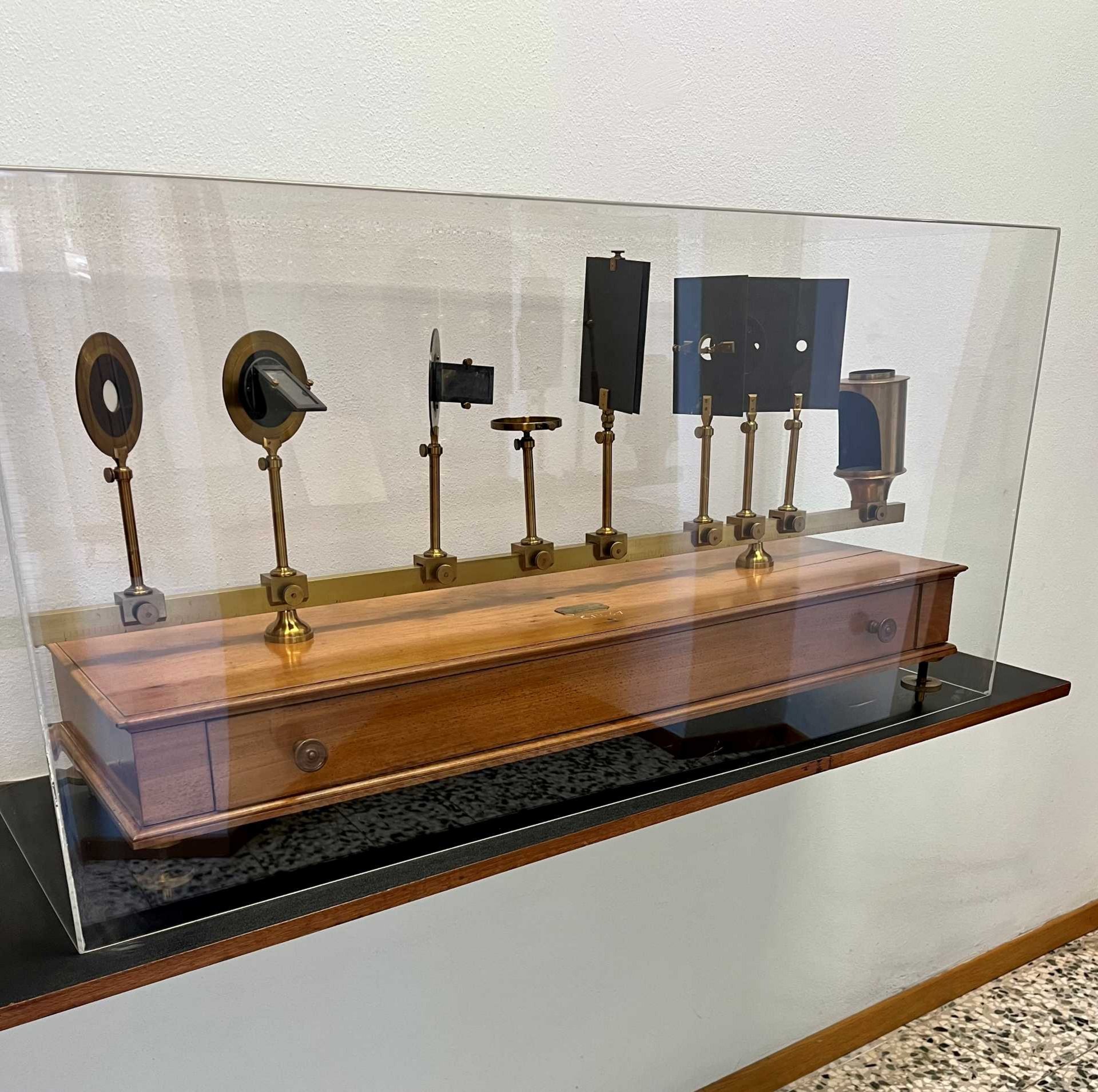
In the laser museum where physics tells its story
Period instruments and pioneering prototypes trace a century of research, all the way to ultrafast lasers and attosecond science.

Limitless energy for coin-sized sensors prototyped by MetaVEH project
Devices that sense vibrations in a bridge and transmit the data to monitor its structural stability.

The laboratory where fabrics become building materials
At the Textiles Hub, experimentation, design and technology rethink the way we build

From the reactor to the future: we shall tell you about CESNEF
Safety, knowledge and innovation. This is how the Enrico Fermi Study Centre has transformed nuclear research at the Politecnico di Milano into a permanent laboratory of ideas and skills

From micro to macro: the laboratory studying surfaces immersed in the future
Discovering SoLINano Σigma, that combines physics, chemistry, engineering and architecture
You might also like
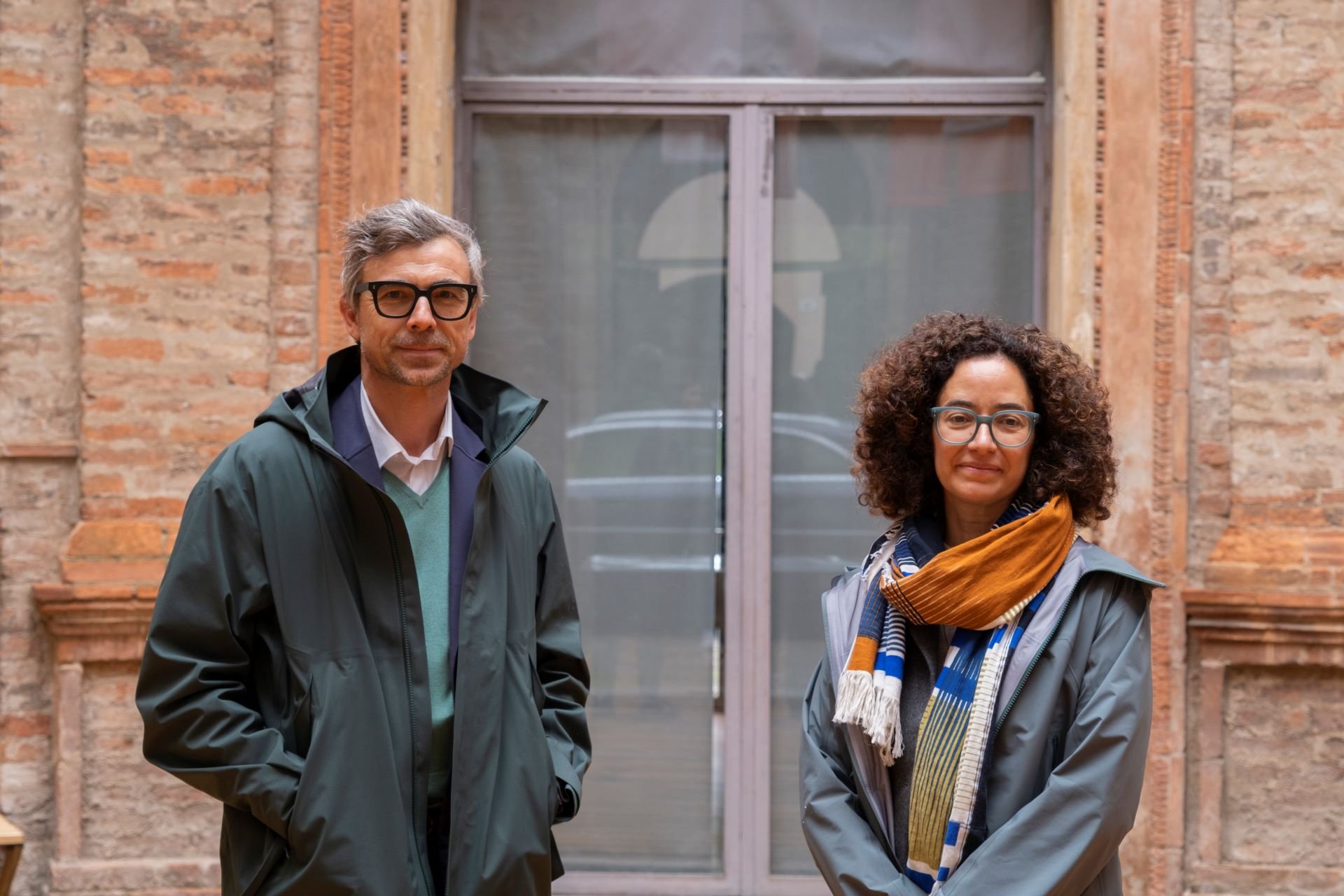
Building in Balance
Matteo Scagnol and Sandy Attia of MoDus Architects discuss an architecture shaped by the tension between landscape and infrastructure, rules and freedom, materials and climate change.

From circuit to laboratory
The collaboration with the Politecnico as seen by Autodromo Nazionale Monza

Research Takes to the Track at Monza
The agreement between Politecnico di Milano and the Monza National Circuit creates an open-air laboratory for safety, sustainability, materials, mobility and major events.

Digital sovereignty: why regulating AI is not enough
Interview with Roberto Baldoni, Senior Advisor for Technology and Cybersecurity Policy to the Ambassador of Italy to the United States
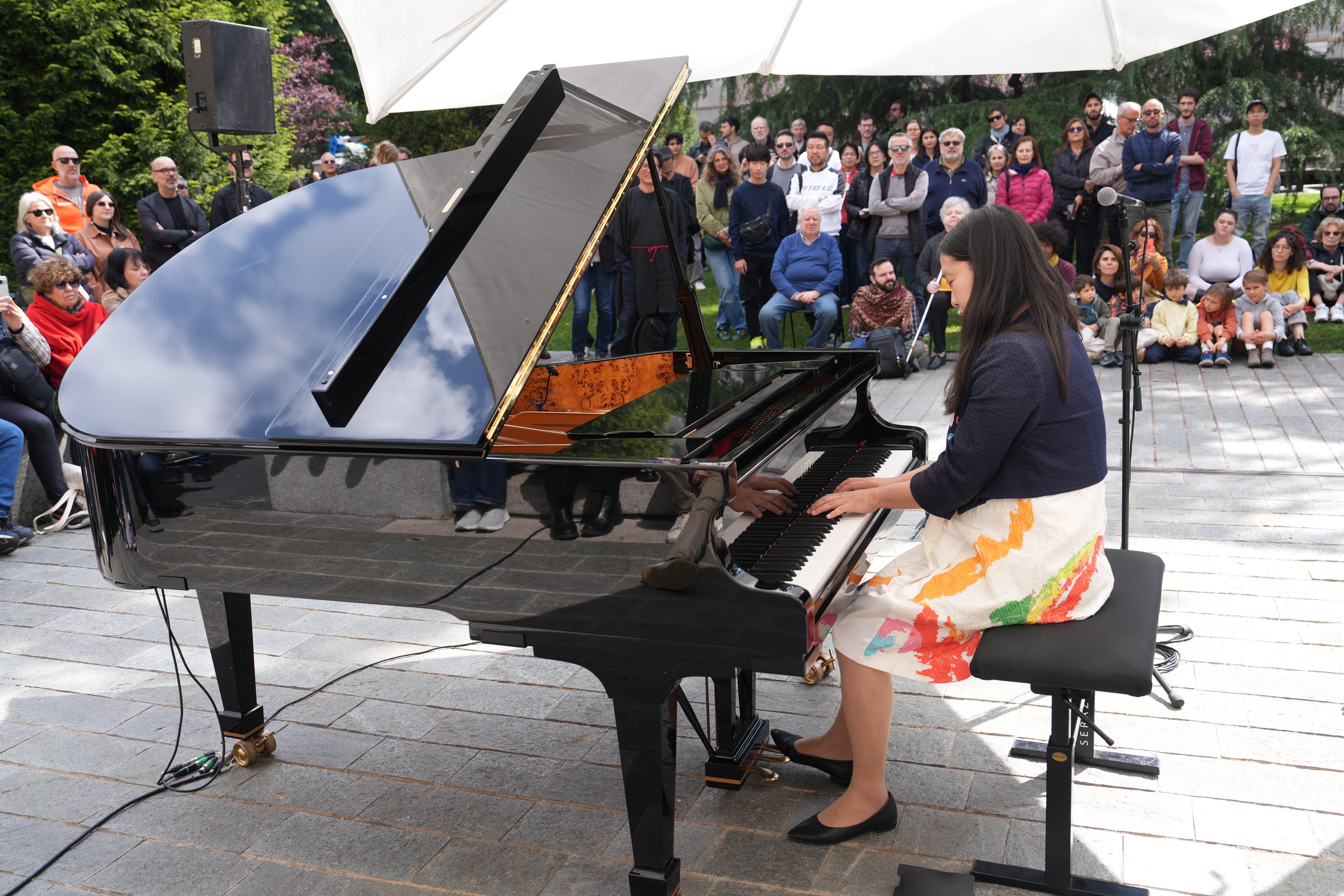
The creative force of mathematics, in the words of Sachiko Nakajima
The scientist and pianist is a tireless promoter of topics such as STEM, diversity and inclusion. In this interview she told us about her artistic world and her vision of mathematics.