

Who do we imagine when we think of scientists?


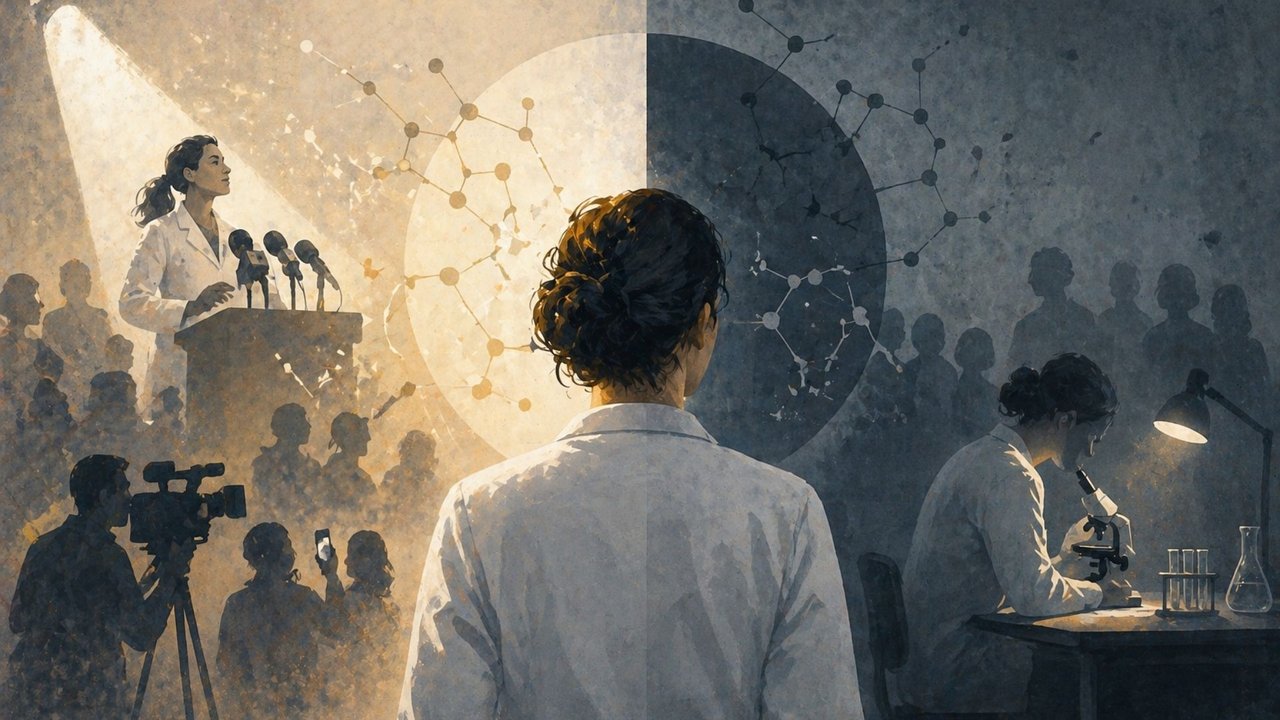
When we ask people to imagine “a scientist”, many still picture a precise figure: a man, often in a white coat, associated with the laboratory, genius and the hard sciences. It is a familiar image, almost automatic, but anything but neutral. Because stereotypes do not only shape the way we talk about science: they also shape the prestige we attribute to those who practice it, the credibility we grant to scientific voices, and the space we recognise for women in the places of knowledge.
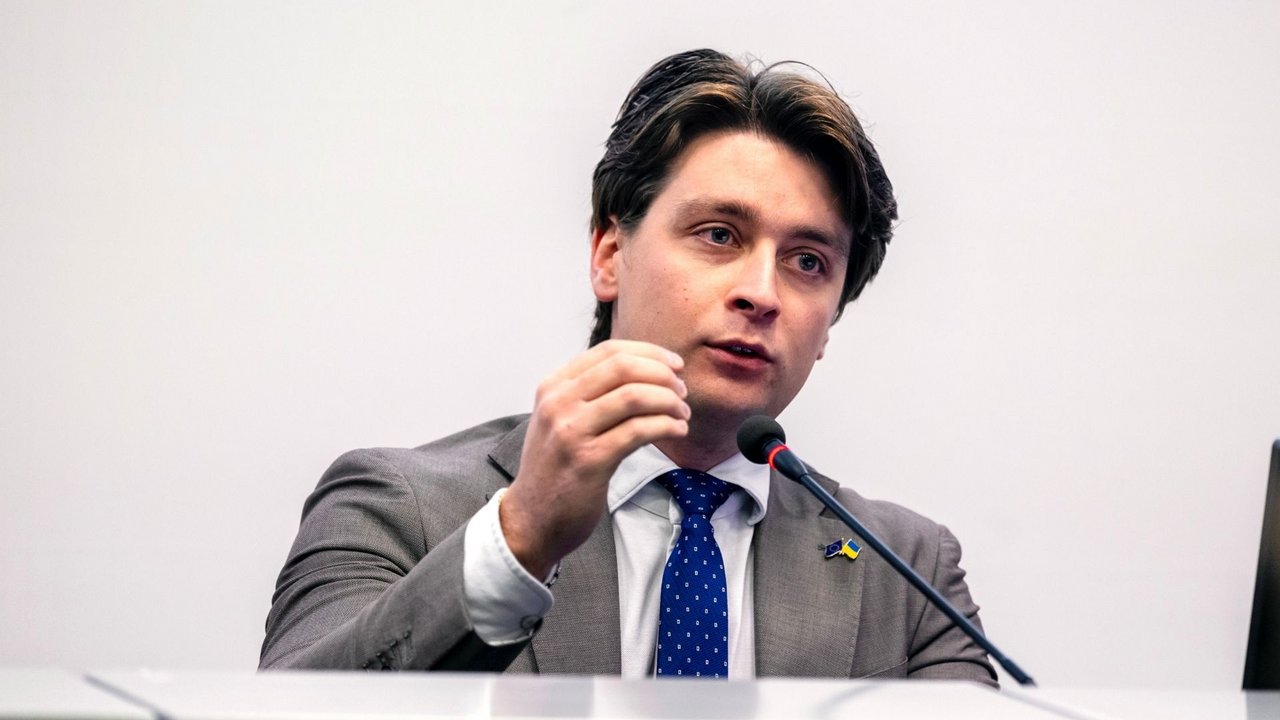
This is what Omar Mazzucchelli, a researcher at the Politecnico di Milano, works on. In his studies he first analysed how the scientist stereotype formed and became consolidated, then how this imagery translates into differences in social status between male and female scientists. What emerges is a picture that speaks of gender but also, at a deeper level, of the relationship between science and society, of authority, public trust and the cultural models that continue to guide our gaze.
What was the initial question that led you to work on this topic?
During my PhD, with Cristina Rossi-Lamastra, we began studying the relationship between society and science, in particular the way stereotypes, especially gender stereotypes, influence the public perception of male and female scientists. From there, a two-step path emerged: first a literature review, then an experimental approach. The idea was not to stop at correlations, but to understand whether gender, as a social fact, produces a causal effect on how people who do research are perceived.
In your work you show that the image of the scientist remains strongly marked by gender stereotypes. Why do we still find it so difficult to imagine science outside a male model?
Because, from what we have observed, gender continues to occupy a central position in the social representation of the scientist.
In our scoping review, we analysed studies published in journals in Scimago's first quartile from 1957 to 2024, and asked ourselves which traits were more stable and which were more peripheral in the collective imagination.
The result is that the hard core of the stereotype changes very little: the scientist continues to be imagined as a man, as a genius and as someone who works mainly in the physical and natural sciences. This is the core of the image that endures. Peripheral characteristics may change over time, but the underlying structure remains surprisingly stable.
What does it mean, in concrete terms, to talk about the social status of male and female scientists?
In our work, social status is the recognition that society attributes to a group. It is not only an individual perception: it is a social fact, constructed collectively. We measured it along three dimensions: prestige, economic success and social impact. In other words, we wanted to understand not only how a scientist is imagined, but also how much value, authority and legitimacy are attributed to them.
And what emerges when you move from stereotype to concrete recognition?
In the second study, we worked with a sample of 773 participants in Italy. Each was presented with a description of a fictitious group of male or female scientists, in different research areas, and then we measured the status attributed to those figures using validated psychometric tools.
What emerges is very clear: women scientists are attributed lower levels of status than male scientists. The interesting point is that this depends not only on the gender of the figure observed, but also on the context in which the judgement takes shape.
How much does context matter?
It matters a great deal. When we cross-tabulated the gender of the figure presented with the gender of the participants and their area of residence, we observed that women in Northern Italy tend to attribute higher levels of status to women scientists than women in Southern Italy do. This is consistent with the fact that in the North there are, on average, higher levels of gender equality and more consolidated policies on these issues.
But this result also warns us against a risk: complacency. If the gap appears less visible, one may be tempted to think that the problem has been solved. In reality, this is not the case. Just look at academic careers: at PhD level the gap narrows considerably, but as one moves up towards top positions, the presence of women still declines markedly.
So the stereotype does not remain confined to the imagination: does it also affect the real lives of those who do research?
Yes, and this is where the stereotype becomes structure. A social perception does not automatically translate, overnight, into salaries or careers, but it shapes the context in which those careers develop.
The literature shows us, for example, that women tend to be less present in the relationship between universities and industry, and that within universities they are often assigned more administrative, organisational or support tasks for students. These are important activities, but they carry less weight in the evaluation of a scientific career than research output.
In addition, stereotypes also affect expectations, for example in salary negotiation. This is why it is difficult to find a linear and immediate relationship between perception and material outcomes, but it is clear that the systemic effect exists.
Does the so-called leaky pipeline also come into this?
Very much so. The leaky pipeline is precisely the process through which, over time, female talent is lost along educational and professional pathways.
Girls are exposed very early to stereotypes that associate boys with action and science, and girls with care, beauty and perfectionism. These messages are internalized and become part of identity. For this reason, as they grow up, many girls end up not perceiving certain fields as possible spaces for themselves. It is a gradual process, drop by drop, that causes talent to be lost well before university. In the physical and engineering sectors, this is very clear. School textbooks and visual imagery also matter: the scientist is still often represented as a man in a lab coat, almost a variant of Einstein, wise, elderly and inevitably male.
What do these studies tell us, more generally, about the relationship between science and society?
They tell us that scientific authority is not recognised in a vacuum. Gender stereotypes erode the perceived authority of women scientists, but the discussion also broadens to trust in science as an institution.
The literature on trust shows us that providing correct information is not enough for people to trust a scientific fact. What we call motivated reasoning often comes into play: people start from an already formed idea of the world and then select the information that confirms it. It happens with vaccines, it happens with climate change. If someone perceives scientists as part of an elite or even a conspiracy, information alone is not enough.
There is also the issue of the underrepresentation of women in some scientific studies, such as clinical trials: when a group feels poorly represented in the production of knowledge, the relationship of trust can also weaken.
You are also working on this in a new direction, linked to the relationship between sexism and trust in science. What are you observing?
We are studying, with my colleague Mariana Kitsa, who hosted me as a visiting professor at Lviv Polytechnic National University (Ukraine), a frontier that I find very interesting: the link between sexist attitudes and distrust in science. In the data we are analysing across seven countries, it emerges that people who believe more strongly in rigid gender roles, especially to the disadvantage of women, also tend to trust science in general less.
Our hypothesis is that, in recent years, science has been perceived not only as an epistemic authority, but as a normative actor that implicitly suggests how people should think and behave. To the extent that it is associated with broader agendas of social change, such as the promotion of gender equality, science can be perceived as a challenge to existing hierarchies and privileges. Our preliminary data tell us that people motivated to defend the status quo, who therefore consider gender inequalities to be fair and justifiable, would tend to respond defensively to the normative dimension of science, which would translate into lower levels of trust. It is research still in progress, but it opens up a very important front.
Is there a gap between a public discourse that today describes itself as more inclusive and deep stereotypes that continue to operate beneath the surface?
Yes, and we must start from a fact of reality: we are all sons and daughters of a patriarchal culture. This does not mean diminishing the value of care work, but recognising that historically women have been assigned a narrower space for choice. Today, gender equality is often recognised in words as a desirable objective, but the actions needed to achieve it are not always implemented. Also because those who enjoy a privilege tend to give it up with difficulty.
Then there is system justification theory: even those who suffer inequalities can end up legitimizing them, to reduce social anxiety and continue believing in a just world. This is also why the gap between public discourse and deep structures remains so tenacious.
What, then, should change to truly dismantle these mechanisms?
There is no single solution.
Mainstream policies are needed, from quotas to training in workplaces, but above all a very strong educational investment is needed, from primary school to university. Gender equality must be presented as something desirable and central, not as an accessory issue. We need to work on textbooks, cultural models and everyday practices.
The Politecnico di Milano, for example, has made important progress in recent years, including through initiatives aimed at girls in STEM pathways. But much work still needs to be done, especially at the ages when stereotypes become embedded.
How much does the way we communicate science matter in this?
It matters a great deal. There is an issue that in social psychology is called lack of fit: women scientists are perceived as counter-stereotypical, as figures who do not correspond to the expected image. This can also be seen in studies in which children are asked to draw a scientist: for decades they almost always drew a man, even when the question was formulated in English and without gender markers.
The risk, in communication, is to celebrate women scientists as exceptions. It is right to highlight their excellence, but if we tell their stories only as extraordinary cases, we risk reinforcing the idea that they do not represent normality. This is why role models are important: having women scientists talk about research, making them visible in the places where knowledge is produced, showing that competence has no gender. The fact that the Politecnico has a female Rector also has very strong symbolic value.

If you had to point to one misconception to dismantle immediately on the topic of gender and science, which would you choose?
The one that continues to represent women as support figures for a male dominus. We often see it in films and, more generally, in the media: even when a woman scientist appears, she is often portrayed as an assistant, a helper, a lateral presence.
In this sense, a film like Don’t Look Up is interesting, because it clearly shows the relationship between science, society and politics, but at the same time risks reproducing precisely this pattern. On the one hand, the film reminds us of the importance of making scientifically informed political decisions, and underlines the risk we run as humanity when these decisions are not made because they are unpopular. On the other, however, it proposes a traditional hierarchical configuration again: the male scientist, played by Leonardo DiCaprio, takes on the role of dominus and main authoritative voice, while the woman scientist, played by Jennifer Lawrence, although she emerges as the most competent character throughout the entire narrative, is relegated to a subordinate, assisting position. This representation reflects and, at the same time, reinforces patterns of status and gender that are also central to understanding how science is perceived in the public space.
If media representation were more equitable, the collective imagination could also change more quickly.
What do you hope these studies will produce, inside and outside academia?
The hope is that they will produce useful knowledge, not only among scholars but also among decision-makers. We try to carry out dissemination at scientific conferences, but also to bring these results into contexts of public outreach and discussion with policymakers. This has already happened in public initiatives dedicated to the issues of gender-based violence and inequalities.
Of course, political decision-making does not happen simply by reading a paper, because many other processes intervene. But these studies can contribute to creating awareness, influencing technical systems and making more visible a phenomenon that too often remains implicit. The first step, after all, is to ensure that everyone knows that this problem exists and produces real effects.
Is there a book you would recommend to those who want to approach these topics?
A useful reference is the essay Framed by Gender, written by Cecilia Ridgeway in 2011. It is not a book specifically about male and female scientists, but it shows very well how social facts are framed through gender. It is an accessible text, written with great clarity, and still today remains a good entry point for understanding why gender dynamics are so important for reading society.
The point, then, is not only to correct an unfair representation. It is to understand that scientific authority does not arise only in the laboratory: it is also constructed in public space, in books, in the media, in classrooms, in the models we offer to those who are growing up. And if we continue to imagine science as a naturally male territory, the risk is to make many of the people who practice it less visible, and less recognisable.
Changing the collective imagination is not a cosmetic exercise. It is part of the work needed to make science more open, more credible and fairer.
[Translate to English:]
You might also like

Geopolitical instability, health crises: the risks in the pharmaceutical supply chain, and how to manage them

From circuit to laboratory
The collaboration with the Politecnico as seen by Autodromo Nazionale Monza
Circular Fashion-Tech Lab: where fashion becomes truly circular
Integrating design and advanced technologies from a more sustainable perspective
