

Art, science and technology in the unique design of Horacio Pagani’s hypercars


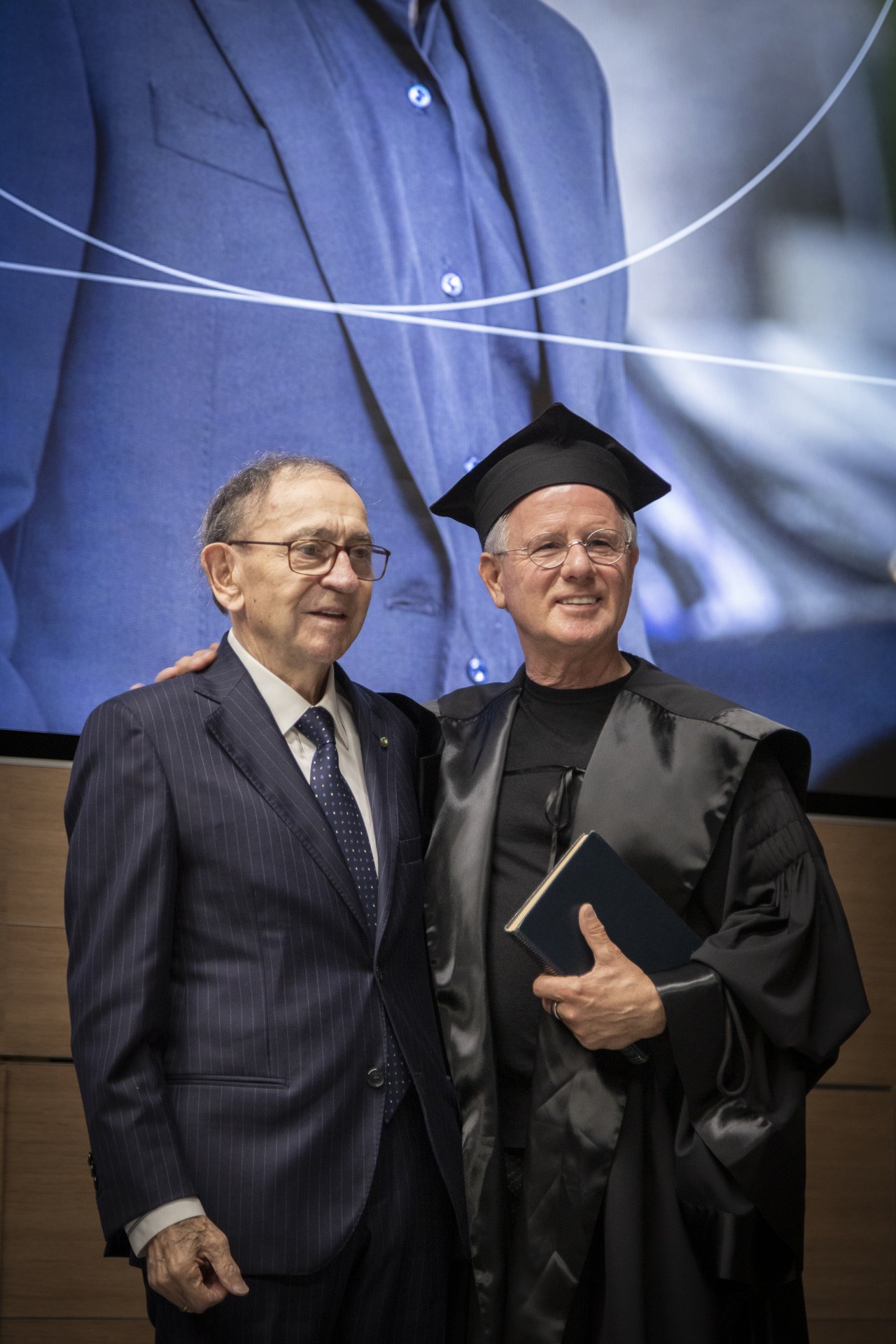
From a rudimentary taller on a family land, in the city of Casilda, in the province of Santa Fe in Argentina – building vehicles such as the Mini-Moto or the Buggy Dauphine with scrap materials – to the most advanced composite materials (aluminium sheets, plastic and fibreglass), such as a fibreglass cabin for the Radio Casilda Camper Van, to manufacturers such as Lamborghini and beyond, all the way to the Olympus of hypercar manufacturers. This is the legendary trajectory followed by Horacio Pagani, founder and Chief Designer of Pagani Automobili, to whom the Politecnico di Milano awarded a Honorary Degree in Design & Engineering on October 21st 2025.
A ceremony that demonstrated how much his life path is synonymous with excellence, talent and genius for motorsport enthusiasts: hundreds of students and admirers flocked to listen to his words, the intense account of his beginnings, his revelation upon discovering Leonardo da Vinci and the union between art and science, his arrival in Italy, and his business management that allowed him to become one of the pioneers of the hypercar sector.
The Italian-Argentinian entrepreneur has in fact innovated the automotive industry thanks to his creative flair, with bold designs, high engineering content and cutting-edge composite material choices such as carbon fibre, fibreglass and Kevlar. A journey that began in his home country, with the design and construction of a Formula 2 single-seater in 1979, built in an artisanal way in the workshop at his home.
One day, leafing through issues of Reader’s Digest, he discovered Leonardo da Vinci and his philosophy, according to which disciplines such as art and science could be combined. For Horacio Pagani, that revelation was the missing element he had been searching for and that helped him to have a clear vision of what he intended to do.
Then, the turning point: thanks to five letters of recommendation written by the celebrated Formula 1 World Champion Juan Manuel Fangio, Pagani arrived in Italy in 1983, starting his career as a third-level worker.
It was in the Italian Motor Valley, in the province of Modena, that Pagani then chose to establish his business, first founding Modena Design (1991) to design and build components for major international brands (Renault, Daihatsu, Suzuki, Aprilia, Ferrari F1) and then to finance the creation of his own supercar: Zonda C12. In 1998 the company evolved into a car manufacturer: Pagani Automobili, thanks to the collaboration with Mercedes-Benz AMG for engine supply.
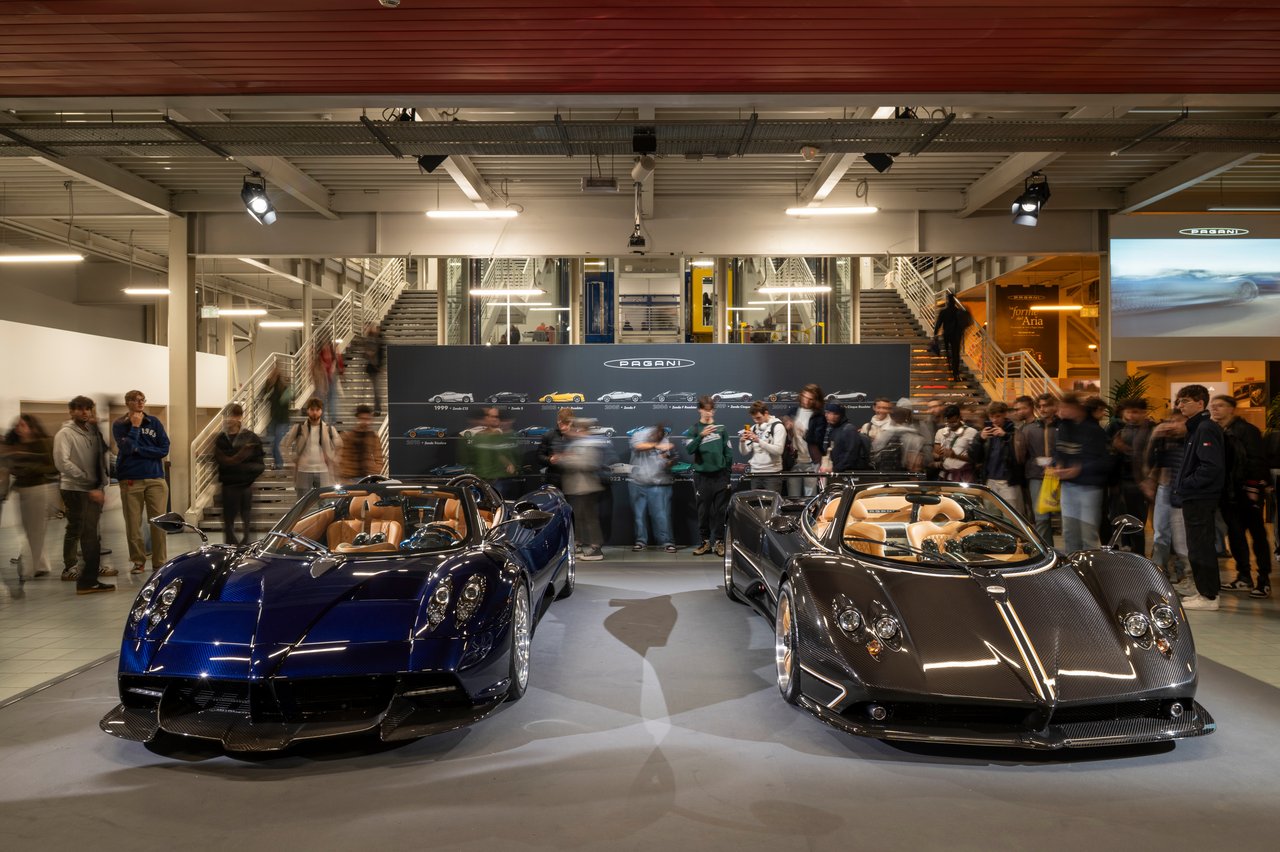
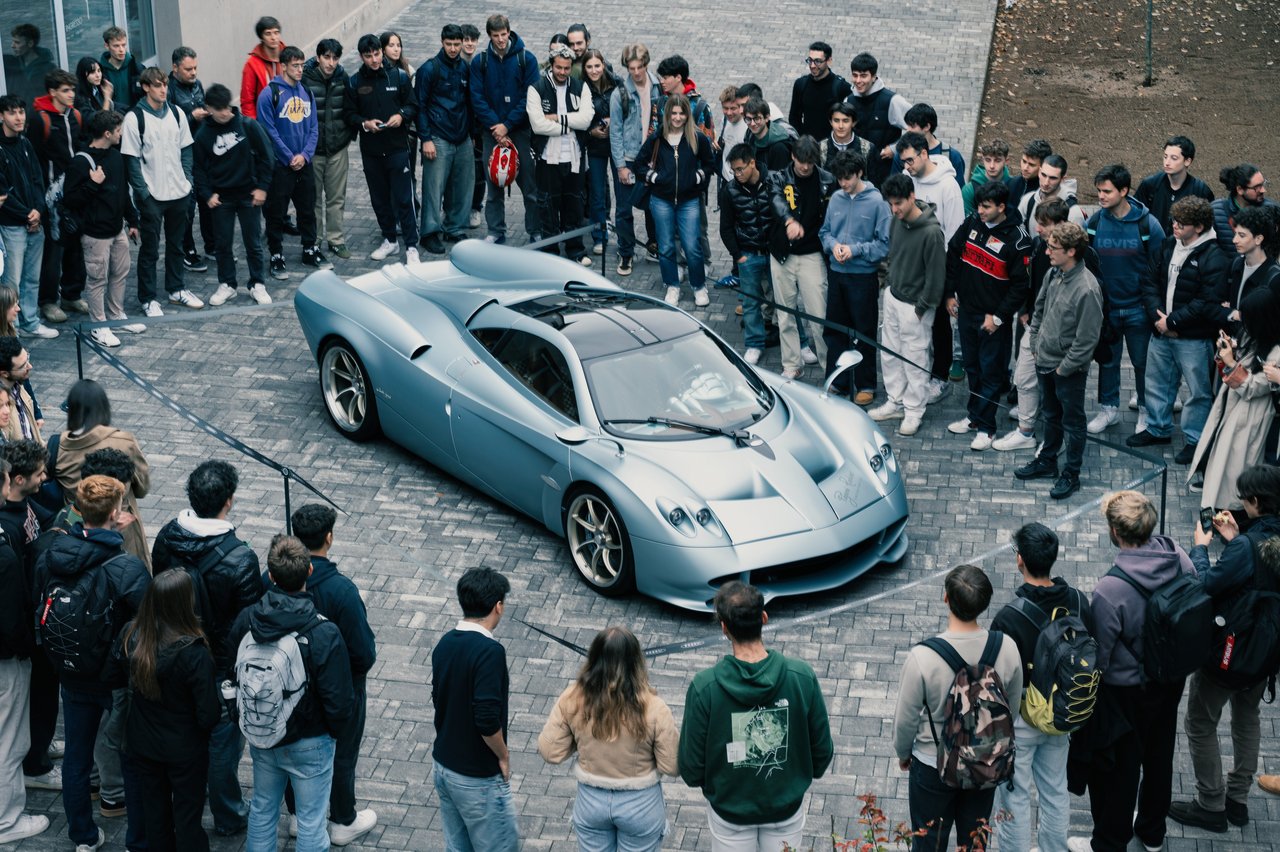
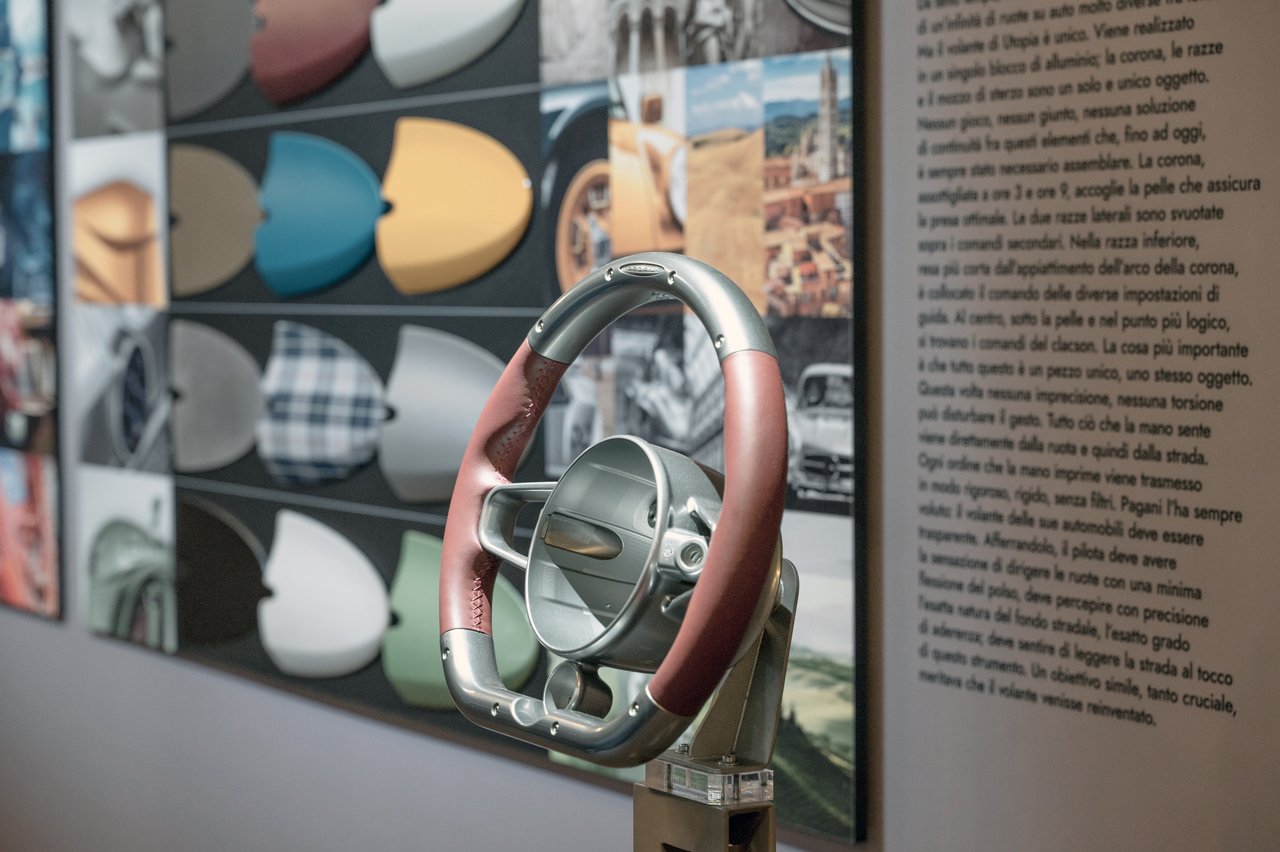
The Zonda, Huayra, Utopia models and their subsequent evolutions are true works of art that have revolutionised the sector: unique limited-edition pieces, with customised handcrafted finishes, extremely high performance, absolutely unconventional lines and relentless research into new composite materials. Some models, specifically Zonda Roadster F, Huayra Roadster and Utopia, were on display at the Bovisa campus for the exhibition “Le forme dell’Aria – Da Leonardo da Vinci a Pagani Utopia”, which opened after the honorary degree ceremony and then closed on December.
Horacio Pagani himself talked to us about his vision and his love for design, starting precisely from his deep interest in the Renaissance Tuscan genius.
I was struck by your admiration for Leonardo da Vinci and your love for art. There’s a widespread stereotype of the engineer as a “square” person, who stays within the lines… Your story (and Leonardo’s), on the other hand, shows the exact opposite – can creativity and technical rigour coexist? Is design, for you, the way to combine art and engineering?
The example of Leonardo da Vinci is truly very interesting because Leonardo was one of the first to highlight the possibility of combining art with science. Two disciplines that generally run parallel or diverge – Leonardo saw that, instead, they could get along together. So, for me, as a young man with a great passion for artistic subjects and also a certain predisposition to express them, together with a great curiosity for scientific subjects, discovering Leonardo’s world opened my mind to the possibility of addressing them together. Because when following an academic path, one either attended mechanical engineering, engineering, architecture, or fine arts, right? Or at least in Argentina it was like that… But you would not find some of one topic within the other, thus making them complementary. That is why I found it fascinating and then approached Leonardo’s world, discovering in this man an incredible story of curiosity, research, suffering, sympathy, the search for beauty in all its manifestations. I find it fantastic and I believe it should be disseminated not only at universities or at a specialist level, but should start early from school, up from kindergartens.
Beyond speed, how much of your experience in Formula 2 and in motor racing is reflected in your way of conceiving cars? What did that world teach you?
The Formula 2 car was an opportunity, when I was 20, to build a car that in some way was simple, because a racing car is much, much simpler than a road car. It really has a tenth of the number of components and therefore it was the only thing that at the time, and with the few means I had, I could do. There I began to learn about mechanics, suspensions, car frames, aerodynamics. But honestly, I was not and am not particularly fascinated by the world of racing. I was interested, as I am today, in the technology applied to racing cars and therefore I look at them with great enthusiasm, curiosity and for the use of materials, even in the most extreme choices.
At Lamborghini, you contributed to the Countach Evoluzione project, their first carbon fibre model – and you entered history. What was your contribution to that project? And how much did it subsequently influence the development of your hypercars?
The Countach Evoluzione was a very interesting project because it was one of the first attempts to build a car with these technologies in the 1980s. In that period, in fact, the first Formula 1 cars were created, the first one being McLaren’s, made with a composite-material car frame. Lamborghini therefore wanted to build a Countach, called Evoluzione, to explore this technology. The initial project was overseen by engineer Rosario Vizzini, who then left the company when the work was still at an early stage. My role was to bring together a small team of four people to realise and build this car, completing the project to transform it into an object that could run and be tested, and then wrap up with a crash test. To the car frame of the initial project, we added the roof and several parts of the car body in composite materials, such as carbon fibre and Kevlar. Then we began to explore and understand that this technology, although very expensive because derived from the aeronautical industry, could also have applications and repercussions on road cars. Many years passed from 1984 to 2011, the year in which the Aventador was presented, the first Lamborghini with a carbon and composite-material car frame, but the company was undoubtedly courageous and pioneering in this effort. After this first experience of mine, Lamborghini did not believe much in this technology, probably due to the high costs and the need to develop and create new materials to reduce processing costs. My work, and that of the team I had created inside and outside the company, was precisely to explore, create new materials and systems, and study painting processes in order to industrialise the process, which required many years.
In terms of performance, what advantages did the introduction of composite materials bring? What mechanical improvements and what aesthetic improvements did they allow?
Composite materials provided the opportunity, at a structural level, to make car frames extremely safer and lighter. And we also see that in their use in Formula 1, or in racing cars in general: how much safety these cars have gained! As to car bodies, composite materials have made it possible to reduce the number of components, that is, to create larger components, and to produce them with much more plastic forms for which, often, with aluminium- and steel-based technologies there are more constraints. Therefore, the possibility of diverse shaping has encouraged designers in their creative imagination. And as to car bodies, too, the weight has been reduced. Technical knowledge in the last 30, 40 years has obviously improved a lot, and this technology is used by all hypercar and supercar manufacturers to a greater or lesser extent. And not only that, also in other fields. When we see our materials (we have developed more than 40 materials in almost 40 years) being used also in artificial limbs for prosthetics – we see athletes who participate in the Paralympics using this technology and our materials – obviously it is something very beautiful, and it’s also very stimulating to know that the technology has not only evolved in the racing world, or in the world of aeronautics or hypercars, but also in other sectors where it has been truly useful.
Your cars are unique, collectible pieces, crafted down to the smallest detail. You have managed to apply craftsmanship to a sector, the automotive one, that is synonymous with the assembly line. How did you manage to do this? What were the difficulties in finding your own methodology and strategy in this sense?
Let’s say that we were a design company and, in addition, a company that carried out the modelling of components in composite materials. People cultivated this manual ability, and at the same time, since this technology is used in the aeronautical field, it led us to follow extremely rigorous procedures applied in that sector. So, there’s a scientific aspect and a very, very important process aspect. From the very beginning, almost 30 years ago, we incorporated the “Toyota Quality System” at company level and this allowed us to create, within an artisanal process, very robust procedures that, combined with manual skills, gave us a great boost at the beginning of the 2000s. Then the company grew, and we began to produce other parts not in composite materials as well: today we produce about 800 parts in aluminium and titanium from solid, which are built in-house, and here too, despite using state-of-the-art machines, many even used in the watchmaking industry, there is always a strong human component. It takes time, and training activity is decisive. People work with great concentration and attention; you can hardly hear noise in the atelier, and there’s music playing in the background. This set of manual activities we think is somewhat Renaissance-like! If we analyse what was the key to the Renaissance, manual intellectuality was decisive. That is, the mind that thinks, that creates and transmits signals to skilled hands that give shape to the idea. But there’s also a passage through the heart that gives an added value, something almost impossible to measure. Therefore, we cannot increase from one day to the next and double the number of vehicles produced, because growth is gradual and linked to the training of people. It’s a slow process.
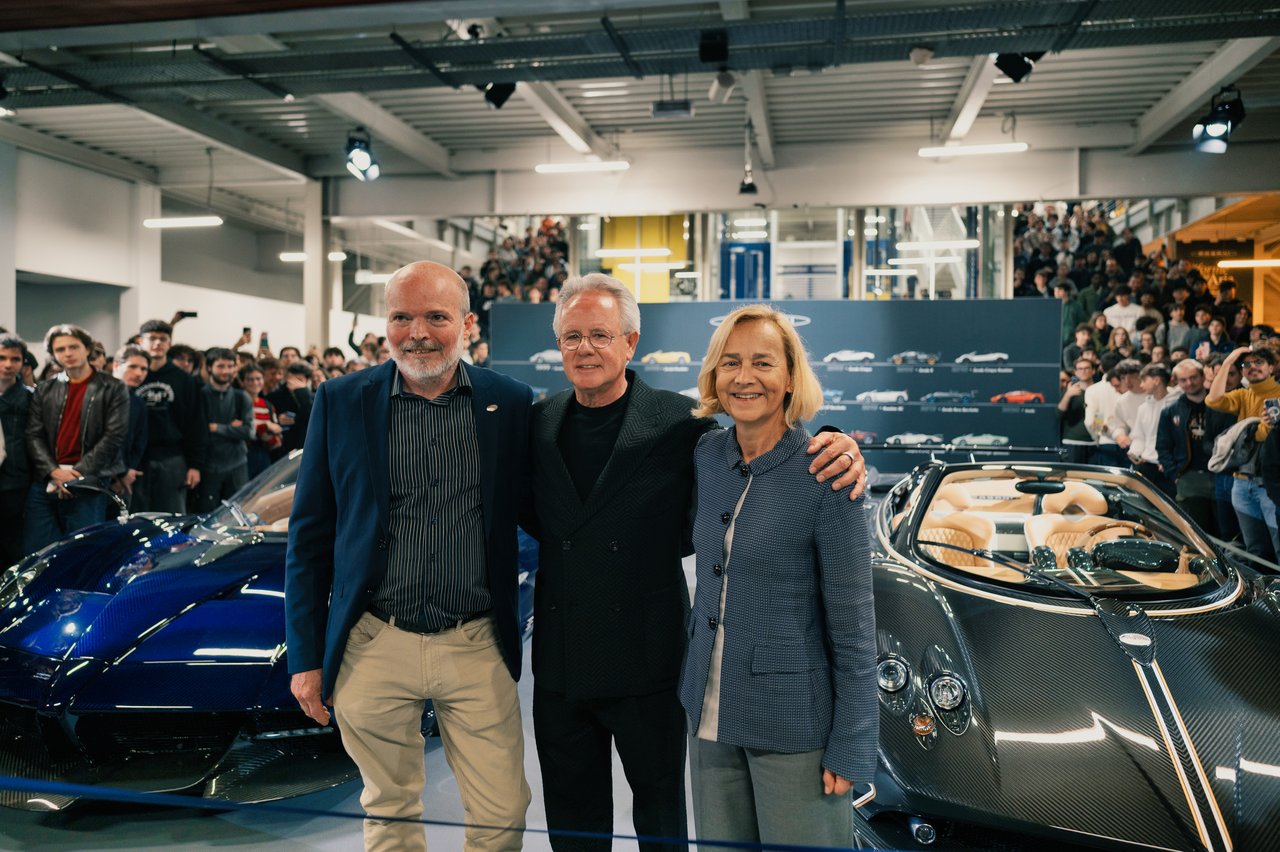
On what basis did you select the partnerships with engine manufacturers? And, in your opinion, why did they believe in your project?
When I started, the means were very limited, and they remained so throughout the construction of the Zonda. Although I was in Emilia-Romagna, in the Motor Valley, where Ferrari, Lamborghini, Maserati and also – in the period when it existed – Bugatti built their own engines, for us it was not possible. There was no budget to do it, there were no people, so for me it was truly impossible. I have always loved Mercedes-Benz, and through Juan Manuel Fangio I managed to reach Dieter
Zetsche, who at the time was a research and development engineer. They had developed this extraordinary twelve-cylinder engine, highly technological, a huge investment. In 1993 I met him and told him about my project; that’s when an extraordinary relationship started, little by little, step by step. I was facing the factory that built the very first automobile, 140 years ago, and I stood there, without any means whatsoever, claiming to have official engines from them. We had to work hard, but I must say that after 33 years we still maintain a wonderful relationship of respect, esteem and love for Mercedes-Benz. It was a great stimulus that did not only stopped at the mere engine: today we use various components, airbags and many others related to safety, which derive from their technologies. These are relationships that are built over the years, and that must always be cared for, embraced: nothing should ever be taken for granted, these relationships must be built day by day, as it happens for every aspect of life.
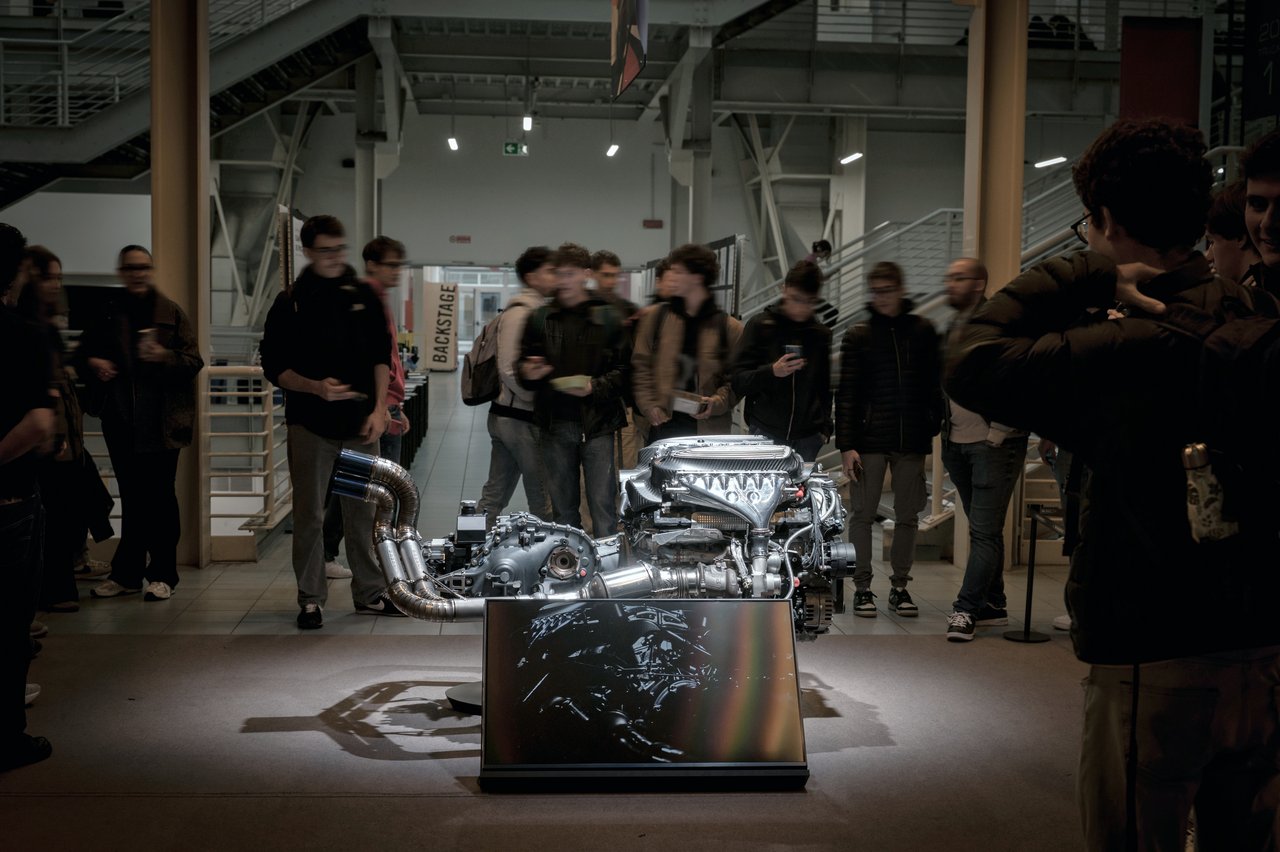
Great speed also means high consumption. Globally, the automotive world is increasingly moving towards electric, also for environmental reasons. How do you see the future of the hypercar sector?
I believe that electric is an opportunity, if it is not managed in an ideological way as it has been in these years, in which we have destroyed, or almost destroyed, the automotive industry due to shortsightedness by imposing that cars must be electric, instead of defining limits on pollution values. It must be seen in the global process, not in the single vehicle, but in the energy balance; in doing so, we have created enormous damage to the industry. That said, in the world of hypercars we started in 2017 to develop the Utopia: the project included a version with a V12 not hybrid, and a fully electric version. We worked on the entire concept of the car, also budgeting a very high amount, but when the time came to actually begin the practical phase and also the study of the industrialisation of the car, seeing no interest whatsoever from the customer, we were forced to stop. We’re too small and therefore we’re not in the situation of other manufacturers who, perhaps, have a fairly complete range and can add an electric car. There have been other attempts in the hypercar world, I must say: all very beautiful and interesting projects, from Pininfarina to Rimac to Lotus, to give some examples. However, unfortunately, the effort, commitment and enormous investments have not been rewarded. Probably, for the world of hypercars, the customer is not ready yet.
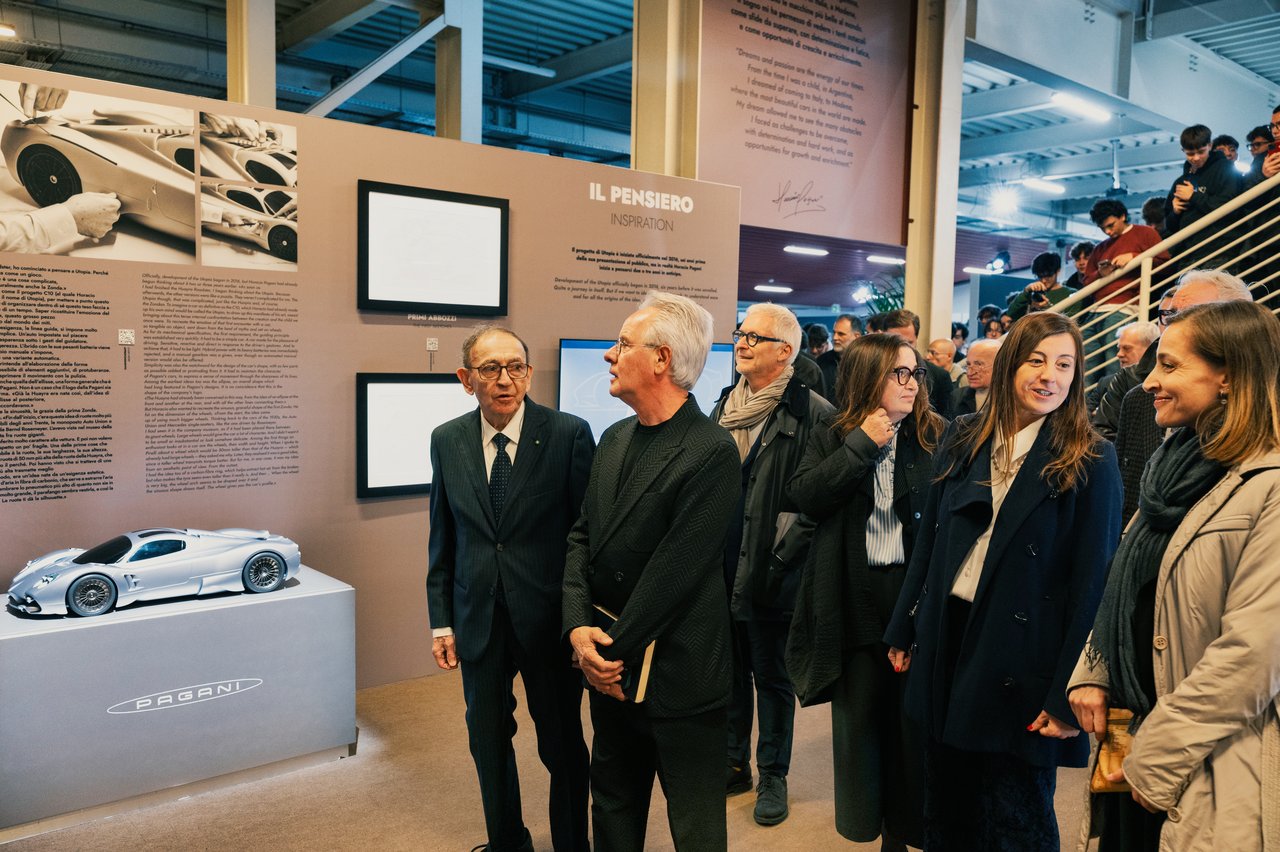
Alongside car design, you have also pursued interior design with Pagani Arte. Did you feel that your creativity needed to find an outlet in new challenges?
Curiosity has always led me to be interested in designing other things, not only cars. In fact, in Argentina I designed caravans, motorhomes, equipment for the agricultural-livestock sector and for the medical sector, furniture, furnishings… I have always been fascinated by design in general. Today we have about 12–15 designers at Pagani and I try to ensure that they too can open up, not only by working on cars but by tackling other sectors. I always set challenges for everyone: those who design clothing, those who work in the field of furnishings, yachts, buildings, in short, a bit of everything. So Pagani Arte is the result of the creativity of all these people. It is also an extremely interesting field that teaches us a lot, because every time you approach a new sector, even if you make hypercars, you can find impressive challenges even in making a bicycle. Being curious is what keeps us alive. Setting targets, setting objectives and letting our creativity take flight.
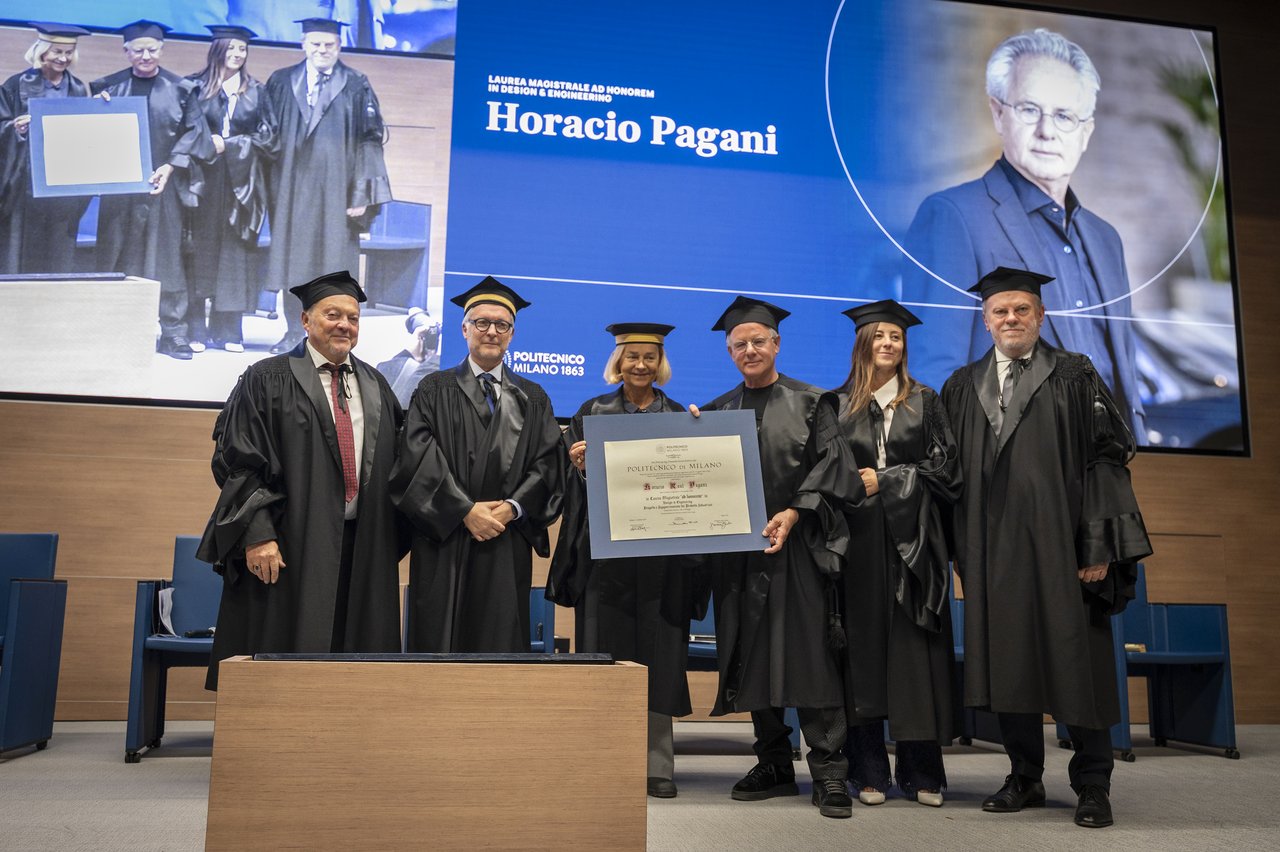
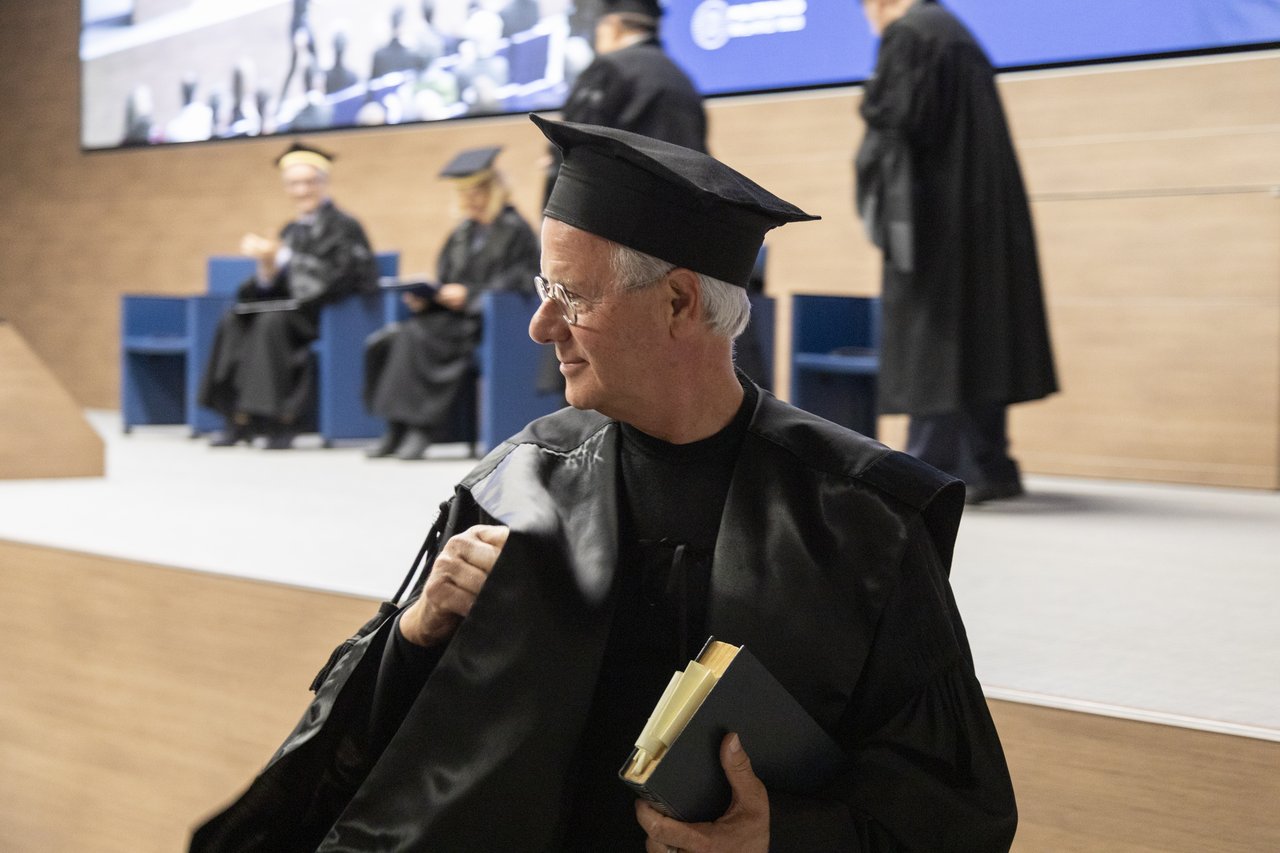
The honorary degree commission for Horacio Pagani. From left: Pietro Marani, honorary professor at the Politecnico di Milano; Francesco Zurlo, Dean of the School of Design; Rector Donatella Sciuto; Horacio Pagani; Barbara Del Curto, professor of Design at the "Giulio Natta" Department of Chemistry, Materials, and Chemical Engineering; Giorgio Colombo, professor of Design and Industrial Engineering Methods at the Department of Mechanics, who read the laudatory address.
One last curiosity: the names of your cars refer to South American culture. Is it a way to celebrate your roots? What is your relationship with your country of origin and how do you see Italy?
Our cars Zonda and Huayra have names of winds that come from South American culture. They’re names we like: each has a story to tell and we have tried to ensure that the cars also told these stories. As for Argentina, I am obviously still very attached to my homeland because my roots are there: I am very attached to my friends, to my city and to the people I meet every time I go there, and who teach me and remind me of many things. Italy is a wonderful place, with a great culture. I am very concerned about the industry, about the methods that are used and about the limited research that is carried out. The small industry, which is Italy’s greatest strength, is increasingly in difficulty. These craftsmen and industrialists are, nowadays, real heroes.
You might also like

Where design engages with living matter: B.Lab and the future of biodesign
The human being as part of an ecosystem. B.Lab, the new laboratory at Politecnico di Milano dedicated to biodesign and materials for transition, originates from this shift in perspective. Among mycelia, algae, bacterial cellulose and waste biomasses, the…
A robot in the barn: automating feeding on farms
Promoting technological innovation to support farms

Building the future, layer by layer
From intelligent 3D printing to bioprinting, Bianca Maria Colosimo talks about the technology that brings together data, space, and life sciences.
The app that tells the story of funerary rites at the Ancient Egypt Gallery
The app developed by the Department of Mechanical Engineering recounts, on an interactive screen installed in the Museum, the complex Egyptian funerary rites, with previously unseen images and detailed insights.

Who do we imagine when we think of scientists?
How gender stereotypes and status differences shape the public image of science