

The invisible price of soy


It seems like just a bean. Small, dry, almost harmless. And yet, when soy leaves Brazil and crosses the ocean toward China, it does not carry only feed: with it come hectares of land, rainwater absorbed by the soil, ecological balances, agricultural transformations, political choices. It takes resources away and tells the story of a global food system in which what ends up in livestock feed has effects far more distant than one might expect.
It is from this interweaving that Camilla Govoni’s research begins, a researcher at the Department of Civil and Environmental Engineering at Politecnico di Milano. In this interview, she explains why an apparently simple crop has become a strategic junction between South America and China, and why behind the global feed trade lies a very concrete question: how many invisible resources are we moving from one side of the world to the other?
Camilla, let’s start with you: how did your interest in this topic begin?
I studied Environmental Engineering at Politecnico di Milano, both for my bachelor’s and my master’s degree. I began working on these topics during my master’s thesis, working with Professor Rulli and with the Department of Veterinary Medicine at the University of Milan, with which I still collaborate today. From there I continued with my PhD, starting from deforestation in Brazil linked to soy and then analysing more broadly the link between the livestock sector, the use of natural resources and potential more sustainable and resilient solutions.
What interested me was understanding the link between agricultural production, livestock farming and changes in land use. Deforestation, in fact, is mainly connected to two factors: cattle farming and soy, which is largely used as feed. In this sense, the livestock sector is the real junction of the issue.
Why is soy so central in this story?
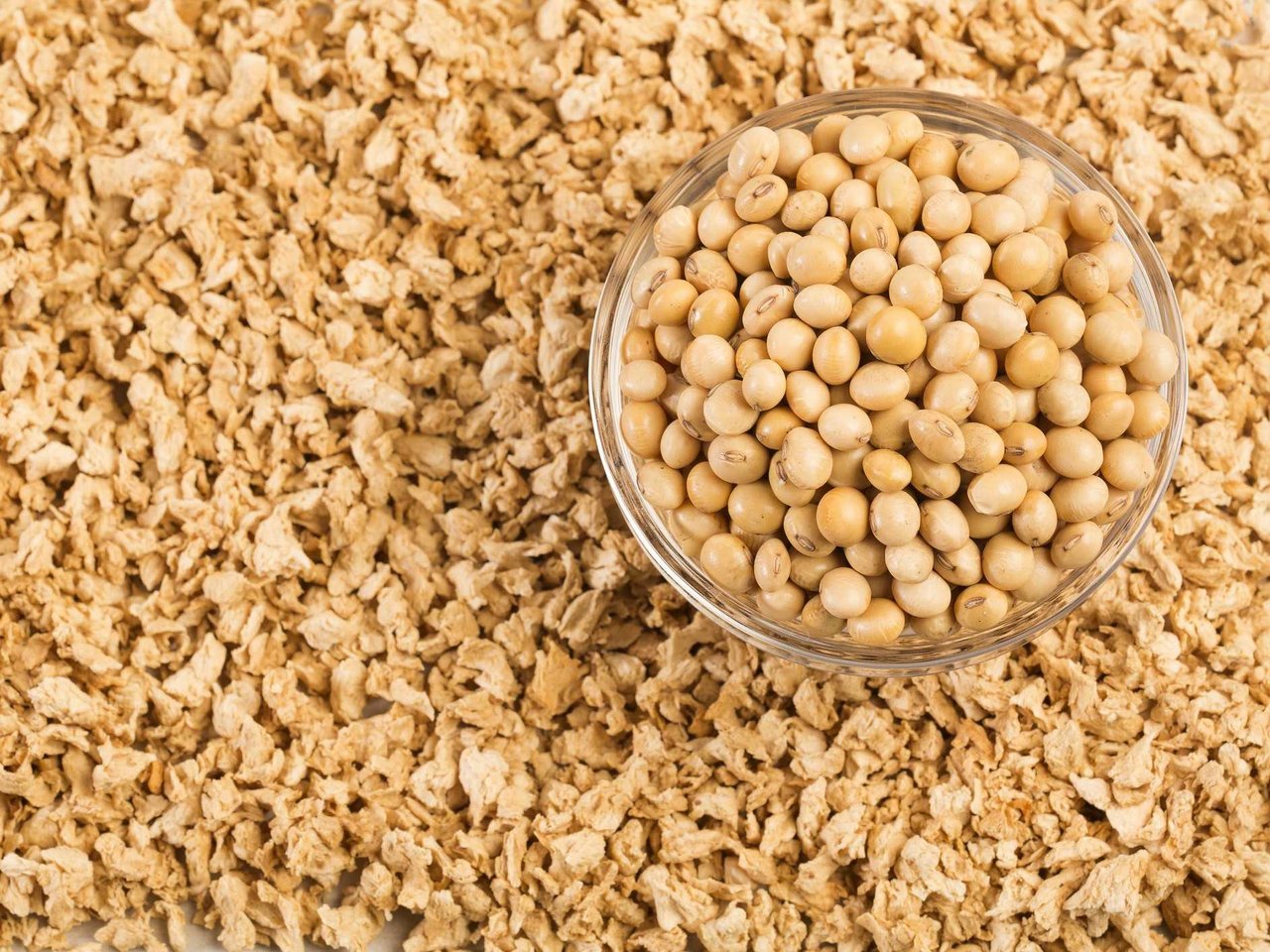
Because it is one of the most efficient protein sources currently available for animal feed, and it is very difficult to replace. It is used mainly for poultry, pigs and dairy cattle, that is, in all those supply chains where a high protein share is needed in the diet.
In recent years, in many countries—especially those developing rapidly—demand for animal-based products has increased greatly. And soy, in fact, accompanies this change: it is a plant protein that is produced on a large scale, exported and then turned into feed for animals.
And is this where China also comes into the picture?
Yes, because China is the current major driver of this demand. A huge share of the soy exported from Brazil ends up there. The question we asked in the research was precisely this: how many resources from Brazil, in terms of land and water, are accompanying this change in diets and lifestyles in China?
The interesting point is that we are not talking only about trade. We are talking about natural resources that are used in one territory to support consumption and production systems elsewhere.
It is often said that animal products have a high environmental impact. Where does this impact come from?
The central point is the animals’ diet. Producing meat, milk or other animal-based products requires large quantities of feed, and therefore large quantities of agricultural resources, starting with the production of cereals and soy itself. That is where an important part of the environmental impact is concentrated: in the use of land, water and crops needed to support livestock farming.
In this sense, the problem is not “the animal” in the abstract, but the entire production system behind its feeding. And this is why soy is so central: because it directly connects the growth of animal production to pressure on territories and natural resources.
One of the most interesting aspects of your research concerns water. Why is it so important?
Because it is often underestimated. When talking about soy, people often say that it is “better” to import it from Brazil because there, thanks to the favourable climate, it is irrigated very little compared with other countries. This is true, but only if we look at so-called blue water, that is, the water withdrawn for irrigation.
In reality, soy in Brazil still uses a great deal of water: green water, that is, rainwater. And this water plays a fundamental role in the hydrological cycle, soil fertility, ecological balances and the functioning of forests themselves. It is not a free or irrelevant resource just because it falls from the sky.
This is where the concept of “virtual water” comes in. What does it mean?
It means that when a country exports a crop or a food product, whether processed or not, it somehow also exports the resources that were needed to produce it. If I grow soy in Brazil and then consume it in China or in Europe, those resources (land, water, energy) physically remain in Brazil, but the benefit of their use shifts elsewhere.
In the case of Brazilian soy, therefore, all that green water used to grow the crop is in effect “incorporated” into international trade. This is what we call virtual water: an invisible resource, but a very concrete one in its effects.
So soy is not only an agricultural issue, but also a geopolitical one..
Absolutely. On the one hand there is Brazil, which uses enormous resources to produce a crop destined for export; on the other there is China, which imports this soy to support its own livestock system. In between there are infrastructures, global trade, power relations and political choices.
And there is also a very strong contradiction: Brazil is an agricultural power, but it continues to have problems of local food security, especially as regards fruit and vegetables. In other words, in many cases it is more convenient to grow soy for export than to produce food for local use.
Over the years there has been a lot of discussion about the soy moratorium in the Amazon. Has it worked?
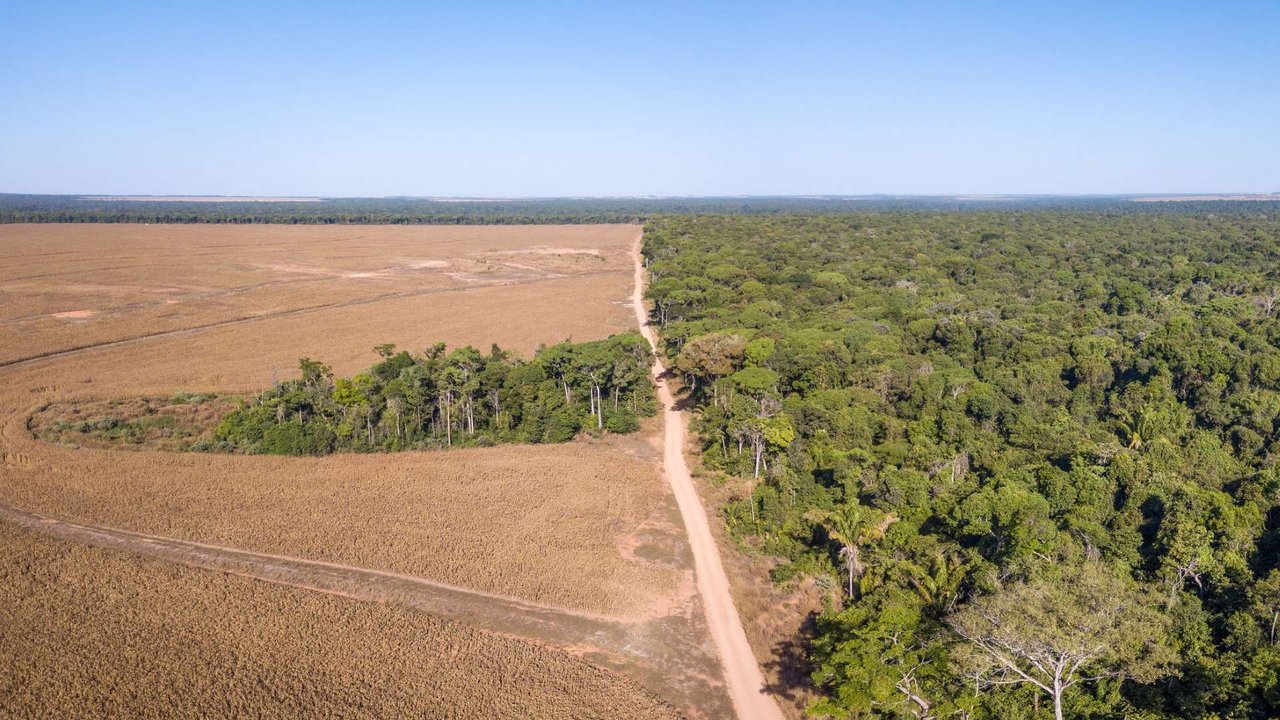
Partly yes: especially at the beginning it had a positive effect in reducing direct deforestation linked to soy in the areas of the Amazon covered by the moratorium. But the problem has not disappeared; it has shifted.
What happened, to simplify, is that soy continued to expand by occupying land that had previously been pasture, while livestock farming was pushed farther away, including toward Amazonian areas. Thus, the direct link between soy and deforestation became less visible, but the indirect link remained very strong.
So today, associating deforestation only with livestock farming risks being misleading?
Exactly. It is not a matter of saying that today deforestation depends “only” on livestock farming and no longer on soy. The point is that the relationship between the two has become more indirect: soy continues to expand, but it often does so by occupying areas already used previously for other activities, which in turn move elsewhere. For this reason, its responsibility does not disappear: it becomes more difficult to see within a broader territorial dynamic.
Looking to the future: what solutions do you see?
The most straightforward solution would be to reduce global meat consumption, and that would certainly help a great deal. But we have to deal with reality: imagining a rapid and large-scale decrease, especially in countries that are growing economically, is very difficult.
For this reason, one important path is to act on animal diets, that is, to find alternatives to soy. Replacing cereals is relatively easier, because there are more options and also many reusable by-products. On the protein side, however, the challenge is more complex.
And this is where your research on insects comes in?
Yes. Insects have very interesting potential as an alternative protein source to soy. They can have a very good nutritional and protein profile and, above all, their efficiency stems from the fact that they could be reared on organic waste and by-products.
The problem, at least in Europe, is above all regulatory and cultural. Today insects are regulated in a very restrictive way, almost as if they were cattle or pigs, and this greatly reduces their advantage. If you have to use “noble” feed to rear insects, you lose much of the system’s efficiency.
So there is no single solution…
No, there hardly ever is. Even putting everything on 100% insects would create other problems. The most sensible direction is that of balance: producing soy within limits compatible with available resources and without new deforestation, and integrating the rest with other protein sources, from insects to alternative meals.
But none of this really works without public policies: rules, incentives and initial support for the transition are needed. Technical solutions alone are not enough.
What does this research teach us?
That food is never just food. Behind a steak, a glass of milk or a feedstuff there are very long chains of resources, territories and decisions. And that often the greatest environmental impact is the one we do not immediately see: not only the forest that retreats, but also the invisible water that travels with goods and changes the balances of entire countries.
The soy that leaves Brazil to feed the world’s livestock forces us to look at the food system for what it really is: global, interdependent and profoundly political.
Related stories

Farmtopia: democratising digital technologies for small-scale farmers
A robot in the barn: automating feeding on farms
Promoting technological innovation to support farms

The invisible price of soy
From Brazil to China, the journey of a crop that consumes water, land and forests

Autonomous driving in agriculture: the role of virtual simulation between research and real-world applications
A bridge between academic research and the applied world of autonomous agriculture.
![[Translate to English:] Progetto I-FERME, lo staff alla fattoria Mpangala in Congo](/fileadmin/user_upload/images/articoli/2025/constrastare_la_malnutrizione/Mpangala-Farm_gruppo-Congo-1536x1152.jpg)
Fighting malnutrition with multifunctional farms
Polisocial: I-FERME Project in Congo
You might also like

From circuit to laboratory
The collaboration with the Politecnico as seen by Autodromo Nazionale Monza

Research Takes to the Track at Monza
The agreement between Politecnico di Milano and the Monza National Circuit creates an open-air laboratory for safety, sustainability, materials, mobility and major events.

Digital sovereignty: why regulating AI is not enough
Interview with Roberto Baldoni, Senior Advisor for Technology and Cybersecurity Policy to the Ambassador of Italy to the United States

The creative force of mathematics, in the words of Sachiko Nakajima
The scientist and pianist is a tireless promoter of topics such as STEM, diversity and inclusion. In this interview she told us about her artistic world and her vision of mathematics.
Circular Fashion-Tech Lab: where fashion becomes truly circular
Integrating design and advanced technologies from a more sustainable perspective