

Fashion and innovation: the timeless vision of Nanni Strada


From the compressible dress to seamless garments: Nanni Strada’s contribution is that of a pioneer who redrew the boundaries of tailoring
Nanni Strada played a significant role in the development of design culture and is part of the cultural heritage that elevated fashion design as one of our nation’s hallmarks of excellence since the 1960s.
These are the reasons Nanni Strada was awarded an honorary Laurea Magistrale (equivalent to Master of Science) in Design for the Fashion System by Politecnico di Milano last March.
During the ceremony preparation, we glimpsed her significance to Italian fashion. This story started in the 1970s when Strada developed cross-disciplinary research, engaging continuously with production, technological innovation, and industrial experimentation, while partnering with the most important companies in different clothing sectors. In the 1980s, Strada opened two single-brand shop chains in Portugal and Japan and the Nanni Strada Design Studio showroom in Milan.
Her perspective on clothing as a “pure element” transcends the conventional rules of tailoring and seasonal trends found in fashion. In 1970, she created the Sportmax line for Max Mara, and transformed the traditional outerwear concept. Strada explored the suit-body relationship in greater depth through geometric, compressible dresses, which were sold in flat packaging.

In 1973, she designed “Il Manto e la Pelle” (The Coat and the Skin) for Calza Bloch, a groundbreaking system of garments created using automated processes and zero production waste. This included one-piece fabric coats and the world’s first garment produced entirely without stitching. The project received the Compasso d’Oro ADI award in 1979.
In 1986, Strada introduced Torchon—compressible, crumpled travel garments that influenced leading figures in conceptual design.
Her work was exhibited in the most prestigious international institutions in Europe, the United States, Russia, China and Japan. In Italy, she has been featured multiple times at the ADI Design Museum and the Milan Triennale.
In 2003, the Triennale held a monographic exhibition titled Abitare l’abito in her honour, and in 2014, it acquired a selection of historical garments from the Nanni Strada Archive for its permanent collection.
As a child during the Second World War, she was relocated to Bellagio, where she took charge of the butter curls in the family restaurant. In this task, she applied the same care and attention to detail that later defined her career.
«I was quite sociable as the only child among adults in a large, loving family. Activity was always the driving force for me – never still except when I was drawing. I was outgoing and found it easy to converse with adults, and enjoyed being in their company. I often thought that if I didn’t pursue my current career, I would like to run a hotel—to work with and for people».

This interaction with people grew when teaching at leading national and international universities.
«I liked large classes. I taught using principles akin to those in sports: I formed groups that engaged in positive competition, rewarding their achievements. Perhaps the only thing missing from my otherwise beautiful and fortunate life was playing a sport».
Earlier, you spoke about your passion for drawing, describing it as “an impulsive game” due to your physical urge to create.
«I always drew. When I had to tell my parents what I wanted to do, I had no doubts. The main challenge was readjusting to the Italian education system after attending Argentinian schools between ages six to 14, and then re-entering the Italian school system in the early 1960s. It was a traumatic experience for me, as I had to adjust from a vast country with a broad perspective to Italy, where everything felt small and outdated».
However, things changed when you attended the fashion sketching school and were introduced to abstractionism by your teacher, Paolo Schiavo Campo. How did you come to discover geometric figures?
«It came about through Max Tilke’s books – the ethnologist who studied oriental clothing, which I found through a friend of mine, Cathy Berberian, a modern music singer. She wore these simple oriental dresses and had Tilke’s books. It was an epiphany, I said to myself “this is it, this is tailoring!” I disliked tailoring, not as a creative pursuit—since French tailors were exceptional artists—but rather the notion of tailoring to a “standard” body with standard measurements: circumferences, chest, waist, hips, and basic model».

Paradoxically, geometric shapes, with their inherent perfection, do not conceal but rather make imperfections better. You consistently aimed for wearability and a sense of comfort in your clothing.
«I wouldn’t describe it as comfort, but rather as freedom. Freedom, because the garments are open and lack fixed points of attachment, allowing the dress to drape with a natural elegance.
For me, the inventor of tights deserved a Nobel Prize. Before their introduction, women had to deal with garters and uncomfortable stockings, so having garments that are easy to wear, elastic, and comfortable made a world of difference».
What is the importance of the process?
«I came to appreciate the importance of the process through factory visits. When prototypes were manufactured, I went there to see how they operated, how things were assembled and sewn, because that’s when you can change things. I wanted to be there, to witness the process, and because the factory was a highly recognisable place. Back then, there was a strong sense of class consciousness and political awareness among the workers, who recognised the value of their labour. Today, we are more individualistic, isolated and disconnected, relying on new technologies that, while useful, also pose risks. We’ve experienced a significant loss of manual skills—of doing things by hand, writing, or drawing. Gradually, we are losing our humanity».
We have transitioned from highly customised fashion, like tailoring, to the fast fashion industry, which stands in stark contrast with its multitude of collections and significant environmental impact.
«This phenomenon is known as consumerism. It is the greatest threat to humanity because it erodes our essence. Even in my own fashion work, we were not driven by consumerism. Marketing has pushed consumerism to its extreme, coining the term “luxury,” which I find rather vulgar».

Crumpled was created by accident when a dress came out wrinkled after being pressed. No one had considered this before, and it turned out to be an inspired discovery.
«There had been similar techniques, but not with the same intention or approach. For example, Fortuny pleated clothes, and so did ancient Greeks. But in this case, it’s the process itself that brings about change. It is within the process that you make decisions—sometimes mistakes—that lead to something extraordinary».
We’ve moved from the era of Anna Piaggi, influential journalism and fashion photography to the world of social media. Do you miss the previous world?
«Absolutely. It was a wonderful time, full of invention, experimentation, and boundless creativity. It was thrilling and exciting. There were challenges, of course. I remember when electronics were not yet available. Photographer Alfa Castaldi would request fruit arrangements for cocktails, but without electronic flashes, only lamps were used. By the time the fruit was arranged, it was often spoiled, requiring a complete redo.” It was a more analogue world, but it was more engaging and adventurous».
Related stories
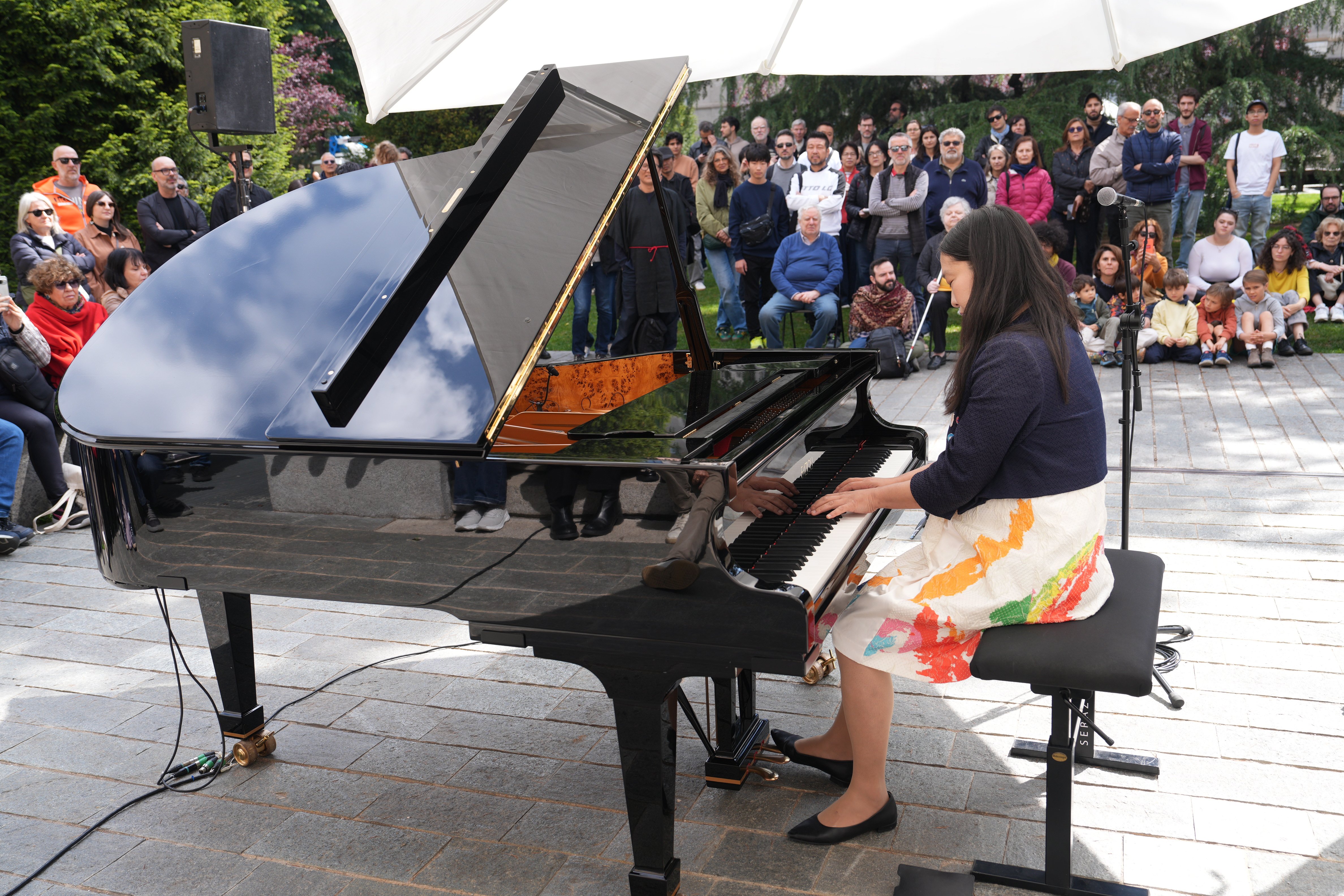
The creative force of mathematics, in the words of Sachiko Nakajima
The scientist and pianist is a tireless promoter of topics such as STEM, diversity and inclusion. In this interview she told us about her artistic world and her vision of mathematics.

Not For Her: When AI Holds Up a Mirror
An immersive experience that uses artificial intelligence to mirror our prejudices: in five minutes of dialogue with three avatars, “Not For Her” confronts us with the invisible dynamics of gender discrimination.

Ostraka: fragments of daily life in Ancient Egypt
What can ceramic fragments with writing, known as ostraka, tell us? The researcher Clementina Caputo, researcher explains it.

Curiosity and determination: the driving force of the architectural historian
Interview with Roberto Dulio, Rector’s Delegate for the Archive, library and museum System

ReverseLab, a space for contemporary art between the prison and the city
Andrea Di Franco e Francesca Piredda talk about Off Campus San Vittore
You might also like
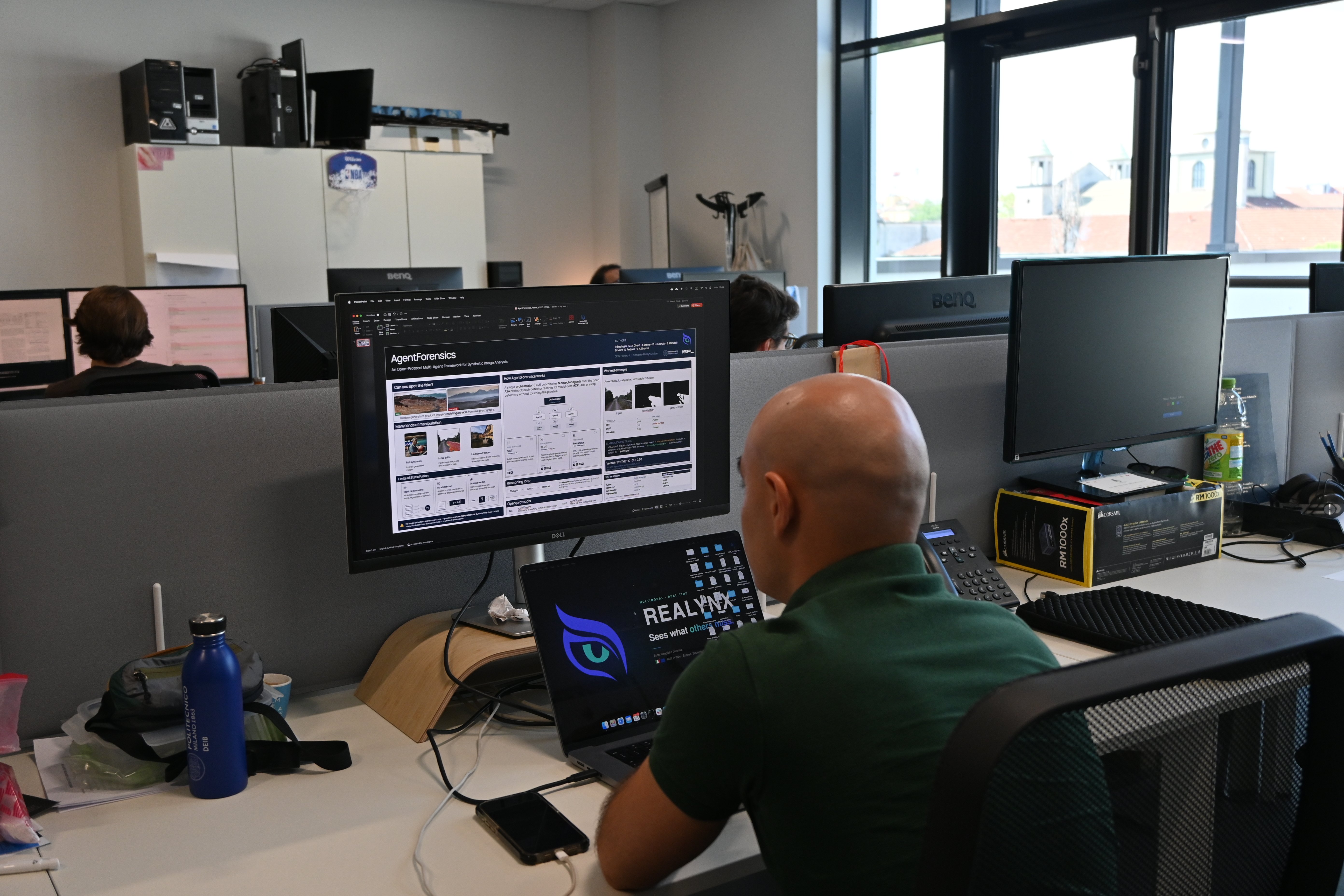
Beyond true and false: recognising synthetic content in the age of AI
From cloned voices to deepfakes, the challenge is no longer just to distinguish what is true from what is false, but to understand how content has been produced, transformed and used.

Who owns Milan? Map reveals forces reshaping the city
The financialization of the real estate market and its effects on urban development dynamics

Technology in the desert: how to map in 3D Egyptian and Roman excavations using photogrammetry
An interview with Alessandro Mandelli, a veteran for Politecnico di Milano's excavations in Egypt

Geopolitical instability, health crises: the risks in the pharmaceutical supply chain, and how to manage them

From circuit to laboratory
The collaboration with the Politecnico as seen by Autodromo Nazionale Monza