

Innovative materials for sustainable transformations

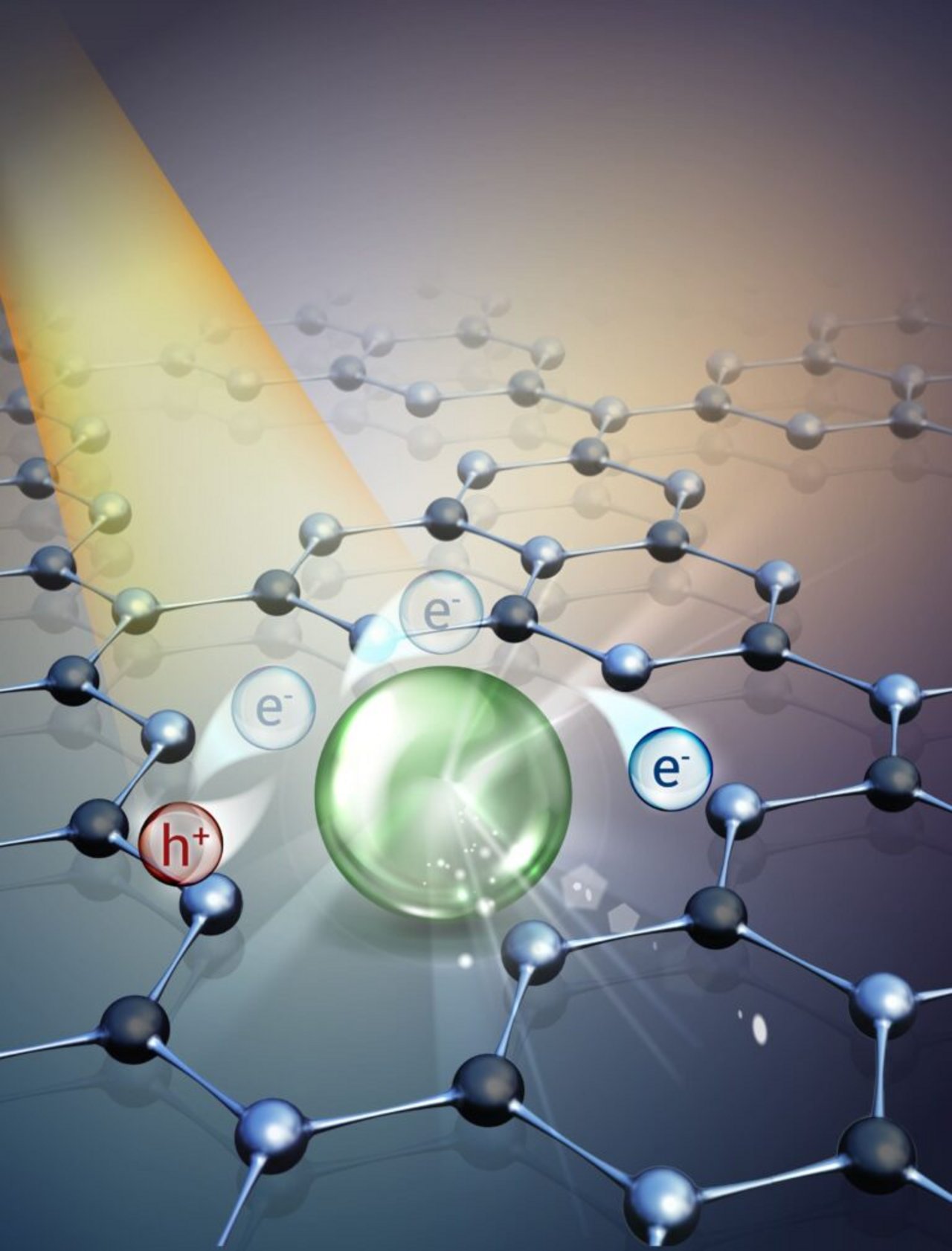
“Single atom” catalysts are innovative materials with great potential for sustainable chemical transformations. Gianvito Vilé’s ERC SAC_2.0 (Single-Atom Catalysis for a New Generation of Chemical Processes) will be dedicated to the understanding of their structure and reactivity, and will also develop new methodologies for the synthesis and large-scale implementation of these materials. The project is interdisciplinary and integrates catalysis, chemical reaction engineering, physical chemistry and materials science. With this study, we are again talking about ERC Starting Grants, European Union funding for early-career researchers with highly promising scientific records and two to seven years of experience since completion of their doctorate.
The 4 selected research projects at the Politecnico di Milano were chosen from among almost 3 thousand proposals received by ERC. This is a great outcome for the Politecnico which, within Horizon Europe, the European Union’s 2021-2027 framework project for research and innovation, has to date achieved the outstanding result of 125 winning projects, 17 of which are with the ERC, for a total value of over 63 million euros. Currently the Politecnico’s application success rate is 19.83%, compared to about 15% at the European level. As far as the number of funded projects is concerned, the Politecnico ranks fifth out of all universities in the EU (Cordis data as of 16/01/2023).
Gianvito Vilé teaches in the “Giulio Natta” Department of Chemistry, Materials and Chemical Engineering. After graduating in Chemical Engineering at the Politecnico di Milano, he completed a PhD at ETH in Zurich. Following a research experience in industry, he returned to the Politecnico where he now leads a laboratory that deals with catalytic processes for sustainable development. He has received several recognitions for his studies, including the recent Afredo di Braccio Prize, awarded by the Accademia dei Lincei. We met him on the frontline to gain a better understanding of what his ERC SAC_2.0 project involves.
How did the basic idea behind SAC_2.0 come about?
To answer this question, first I need to say that 90% of the world’s chemical products are obtained through the use of catalysts, that is, materials that facilitate chemical reactions. These materials contain nano-particles of rare and expensive metals, like platinum, palladium and rhodium. In recent years, my laboratory has contributed to developing a new class of catalysts based on single atoms (unsurprisingly called “single-atom catalysts”), which make it possible to reduce the metal content by several degrees of magnitude. These catalysts are therefore more efficient and less expensive and, in my opinion, they will soon replace traditional materials.
What future developments and what applications are expected of this research?
SAC_2.0 is a cutting-edge project: it intends to understand the structure and reactivity of these single-atom catalysts, to be able to control their properties on the nano and macroscopic scales. This is the only way in which we will be able to use this technology on an industrial scale. Applications include the use of single-atom catalysts to convert carbon dioxide into added-value products and manufacture drugs in a “green” way.
How difficult is it to be awarded ERC funding?
Winning an ERC grant is extremely difficult because you are competing with the best researchers in Europe. The assessment panel itself is made up of the most respected experts in the sector, and often includes several Nobel Prize winners. I submitted my proposal, in its current form, last year, and despite the excellent feedback I received, I just missed out on the funding. This shows that small details can often make the difference.

What satisfaction does it entail for a researcher?
The satisfaction of winning an ERC grant is great, due not only to the size of the grant, but also to the prestige that it brings with it, because this funding often allows recipients to strengthen scientific independence and create/consolidate an independent research group of their own.
Related stories

Limitless energy for coin-sized sensors prototyped by MetaVEH project
Devices that sense vibrations in a bridge and transmit the data to monitor its structural stability.

Wind Tunnel: aerodynamics in pursuit of Sporting Excellence
Journey to the heart of applied research in sport
![[Translate to English:] Andrés Martínez](/fileadmin/user_upload/images/articoli/2025/comunicazioni_veloci/20250416_113533-1152x1536.jpg)
Fast, Secure Communications with Chaotic Light
Data to be transmitted wirelessly thanks to new photonic chips.
From cellulose to a tough, versatile fibre for sustainable packaging
Elisa Marelli’s sustainable research between nanotechnologies and biomaterials.

From mimosa pudica to responsive panels for architecture, the research at MaBa.SAPERLab
Fabio Bazzucchi has been studying this peculiar plant to design dynamic and responsive architectural elements.
You might also like
Building in Balance
Matteo Scagnol and Sandy Attia of MoDus Architects discuss an architecture shaped by the tension between landscape and infrastructure, rules and freedom, materials and climate change.

From circuit to laboratory
The collaboration with the Politecnico as seen by Autodromo Nazionale Monza

Research Takes to the Track at Monza
The agreement between Politecnico di Milano and the Monza National Circuit creates an open-air laboratory for safety, sustainability, materials, mobility and major events.

Digital sovereignty: why regulating AI is not enough
Interview with Roberto Baldoni, Senior Advisor for Technology and Cybersecurity Policy to the Ambassador of Italy to the United States
The creative force of mathematics, in the words of Sachiko Nakajima
The scientist and pianist is a tireless promoter of topics such as STEM, diversity and inclusion. In this interview she told us about her artistic world and her vision of mathematics.