

From circuit to laboratory

On the occasion of the signing ceremony for the framework agreement between Politecnico di Milano and Autodromo Nazionale Monza, we met Umberto Andreoletti, Operations Director of Autodromo Nazionale Monza, to explore the technical and operational perspective of someone who works every day on managing one of the country’s most iconic and complex sports infrastructures.
While the interview with Emilio Faroldi, Deputy Rector of Politecnico di Milano, focuses on research and the scientific prospects opened up by the collaboration, with Andreoletti the focus shifts to the field: the Autodromo’s practical needs, the possible levels of intervention and the value of an ongoing dialogue with the university.
From the Autodromo’s technical and operational perspective, what are the most important questions or needs that a collaboration with the Politecnico can help address?
The Autodromo is an ideal setting in which research and application can come together. There are many areas in which we can develop significant synergies: from architecture to civil and systems engineering, from urban planning to the most innovative materials and advanced technologies. It is a place where ideas can be designed, tested and validated in the field.
Indeed, throughout its history, the Autodromo has already served as a genuine research and development laboratory, contributing to the evolution of innovations that were subsequently applied far beyond motorsport, such as modern guardrails, full-face helmets and flow management systems such as Telepass.
Together with the Politecnico, Monza can become a real-world laboratory for studying infrastructure, safety, mobility and the management of major events. Which areas seem most promising to you?
I believe the work can develop on three levels. The first is strategic: defining a long-term vision that takes into account the evolution of the Autodromo, as well as its relationship with Monza Park, the surrounding area and the urban network, addressing urban planning, environmental and energy-related issues.
The second level concerns design, namely translating this strategy into concrete and progressive interventions through expertise ranging from architecture to civil and systems engineering.
Finally, there is the management level, which concerns optimising operational and organisational processes. This is where strategies and projects become reality, improving the day-to-day management of the facility, safety, mobility and the organisation of major events.
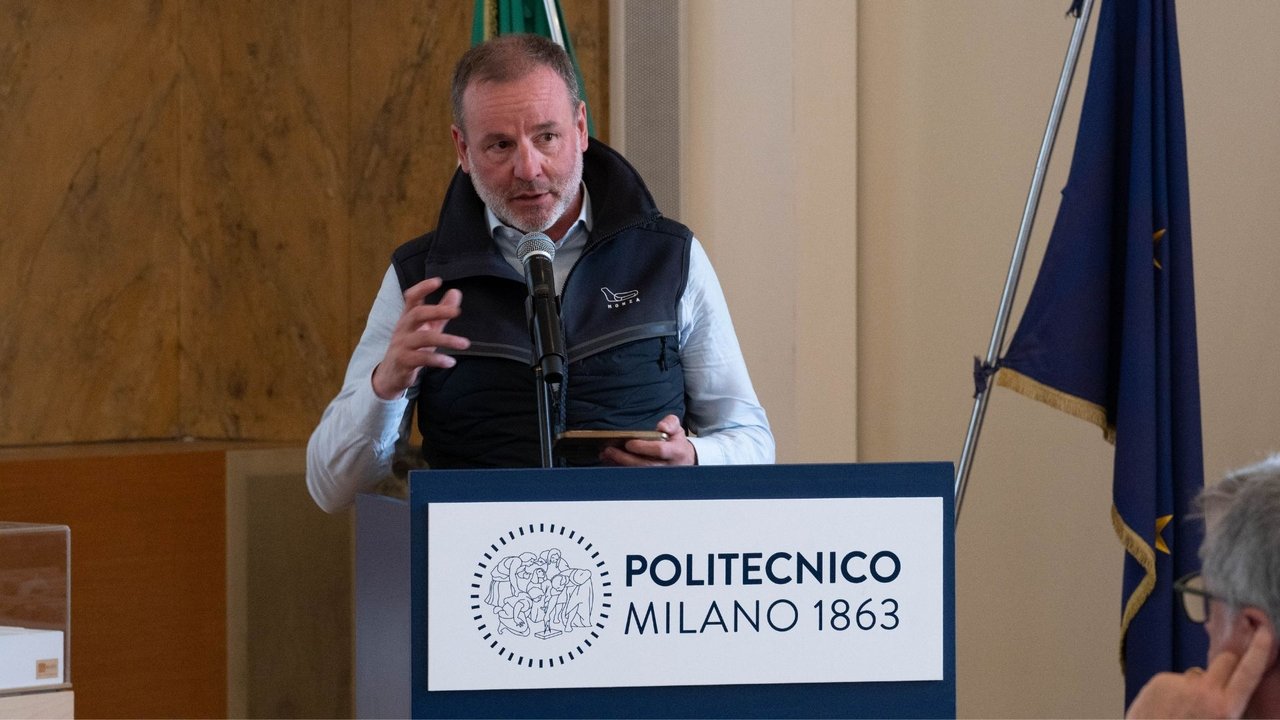
What value does an organisation such as the Autodromo gain from engaging with researchers, students and a range of different areas of expertise, from engineering and architecture to flow management and sustainability?
Engaging with the academic world represents extraordinary added value. It means being able to draw on multidisciplinary expertise and a scientific approach capable of providing solid foundations for future decisions.
But there is another equally important aspect: involving students and young researchers means contributing to the education of those who, in the future, will be called upon to design, manage and innovate not only our facility, but also the motorsport sector and major infrastructures more broadly. It is an investment in the future for both institutions.
Looking ahead to the next few years, what concrete result would you like to see emerge from this collaboration between the Autodromo and the Politecnico?
I would like to see the strategic vision developed together become a reality. It would be a great source of satisfaction to inaugurate a building, an infrastructure or a new management procedure that originated within this collaboration, perhaps developed by students as a thesis project or as part of a research programme.
And I believe the most significant result would be to turn the Autodromo into a genuine extension of the Politecnico: a place where courses, laboratories and master’s programmes can take place directly in the field, transforming the circuit into a permanent laboratory for innovation, research and education.
The collaboration between Politecnico di Milano and Autodromo Nazionale Monza therefore opens up an area of work that concerns not only the track, but the full complexity of a contemporary sports infrastructure: design, management, safety, sustainability and education. It is a setting in which research can engage with real-world problems and in which a historic venue such as Monza can continue to evolve as a platform for innovation.
You might also like

Geopolitical instability, health crises: the risks in the pharmaceutical supply chain, and how to manage them

From circuit to laboratory
The collaboration with the Politecnico as seen by Autodromo Nazionale Monza

Research Takes to the Track at Monza
The agreement between Politecnico di Milano and the Monza National Circuit creates an open-air laboratory for safety, sustainability, materials, mobility and major events.

Digital sovereignty: why regulating AI is not enough
Interview with Roberto Baldoni, Senior Advisor for Technology and Cybersecurity Policy to the Ambassador of Italy to the United States
