

Glaciers as Sentinels of Climate Change


Alpine glaciers are far more than spectacular landscapes; they are sentinels that record, almost in real time, the acceleration of global warming. In this interview, Leonardo Stucchi, a postdoctoral researcher at the Department of Civil and Environmental Engineering of Politecnico di Milano, explains what the ClimateLab does and why monitoring glaciers such as the Forni and Belvedere, through models, satellite data, and field instruments, is crucial to understanding the evolution of the water cycle, mountain hazards, and downstream impacts on water resources, energy, and planning.
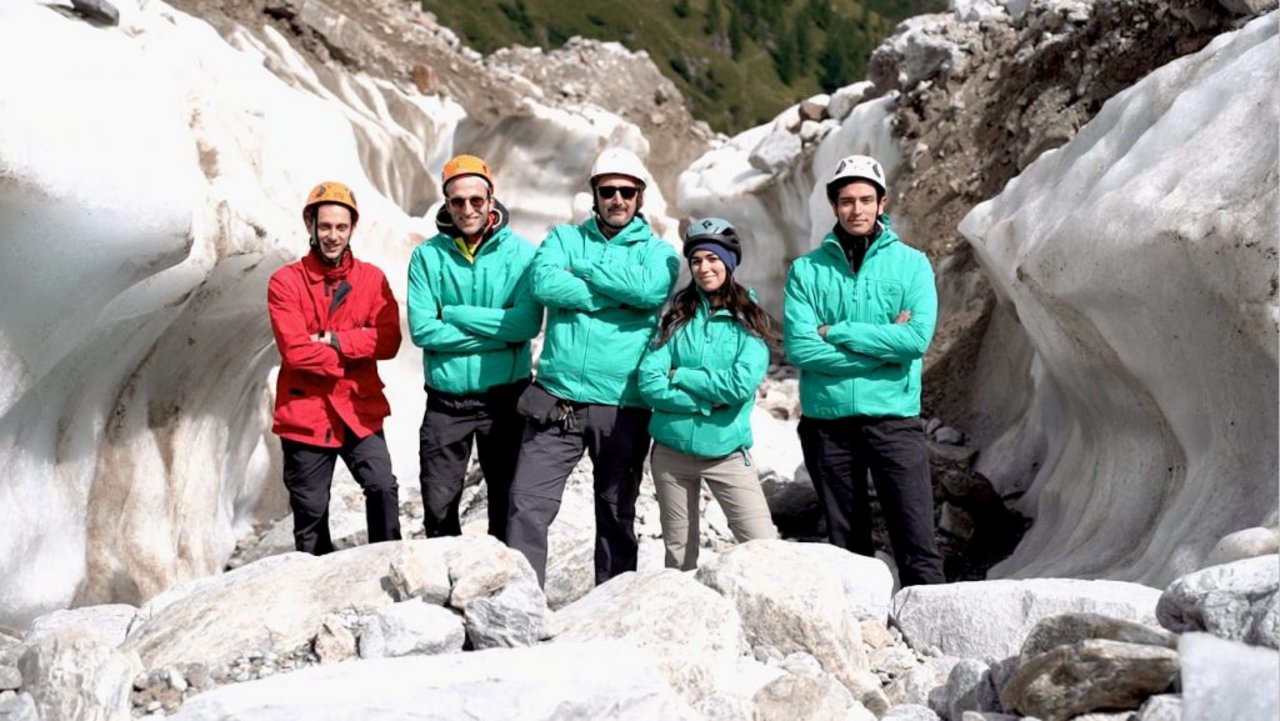
To start with, what is the Politecnico di Milano Climate Lab and what is its scientific mission?
Climate Lab is an interdepartmental laboratory at the Politecnico di Milano. It was created to study climate change and monitor its impacts on the hydrosphere, biosphere, natural resources, and extreme events. Our calculations estimate how these components vary over time, providing data of interest to a variety of figures, including policy makers, water utilities, and hydroelectric plant operators.
One of our current collaborations is with Acqua Novara VCO, a company that manages the integrated water service in about 140 municipalities in the provinces of Novara and Verbano-Cusio-Ossola. In this respect, Climate Lab is conducting long-term studies to analyse climate variations in the area. We have also launched a second line of research to assess changes in groundwater levels and understand how groundwater resources respond to climate change, with a particular focus on extreme events such as the drought in 2022.
Another collaboration concerns Lombardia region – whom Climate Lab is providing with data and analysis to support avalanche risk assessments.
Against this backdrop, what does your research group deal with specifically?
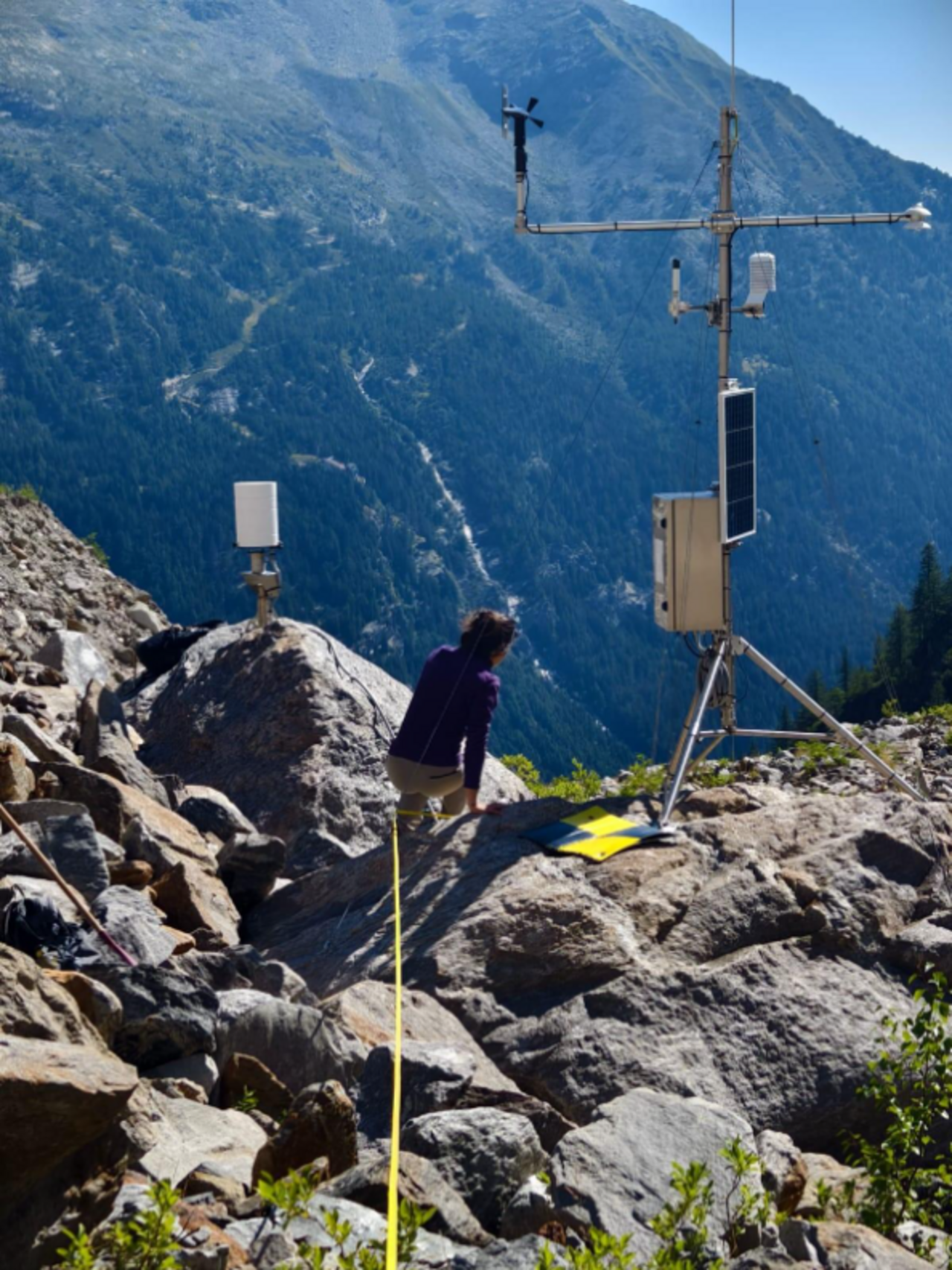
By developing physical or empirical models, we try to reconstruct events such as glacier retreat, river flow rate variations, and increasing temperatures in urban areas. To do this, we use satellite and climate data recorded by weather stations, such as the one we installed on the Belvedere Glacier.
Once we have validated a model for the present using scenario reconstructions provided by global climate models (numerical models that simulate changes in the climate on a planetary scale), we can develop simulations for the future.
Glaciers are often referred to as ‘sentinels’ of climate change. What does this mean and what are the glaciers telling us today?
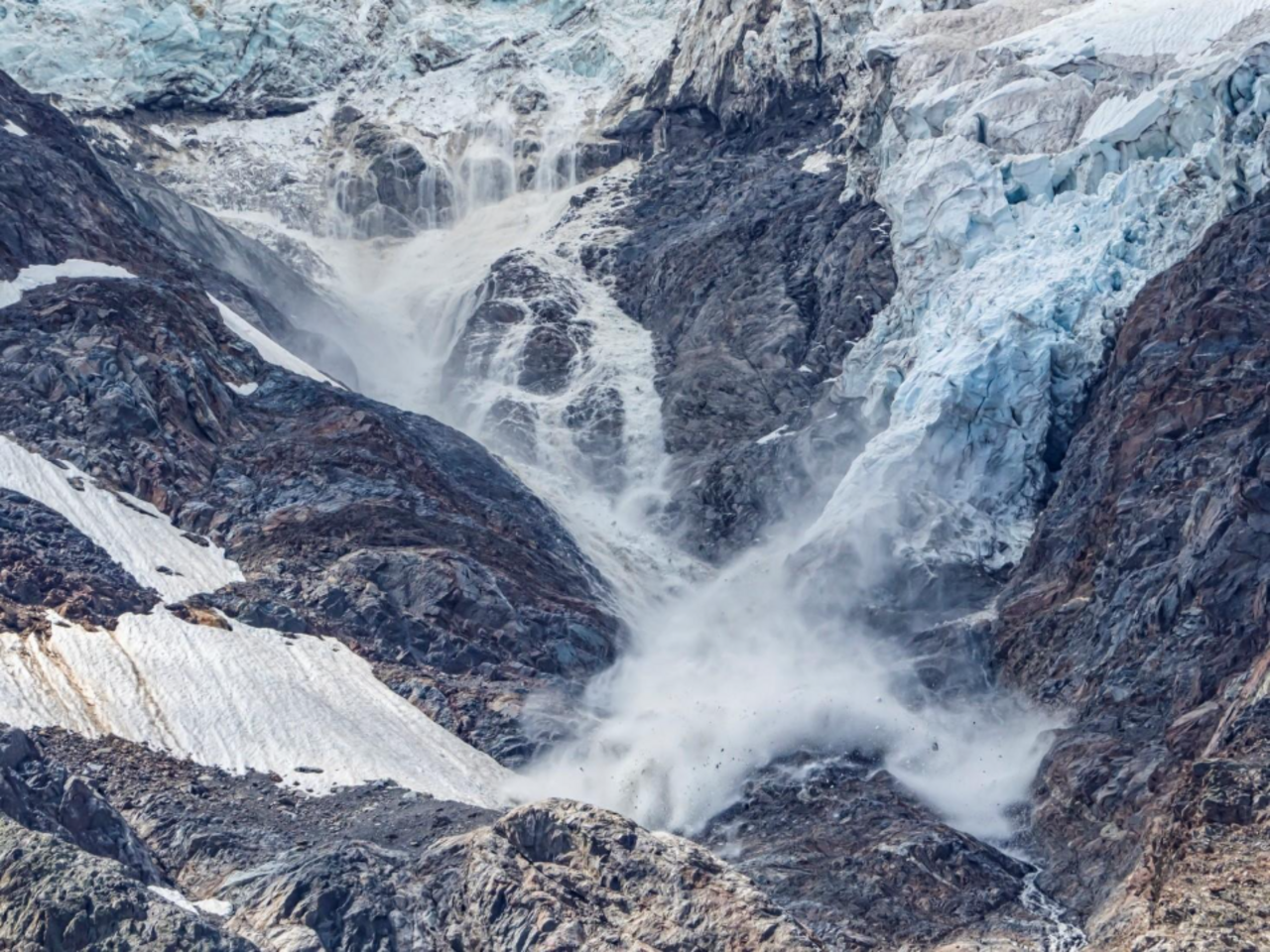
Throughout human history, glaciers have undergone various periods of advance and retreat as a result of local climate variations. The last advance of the Alpine glaciers corresponded to the so-called Little Ice Age, which ended in the mid-1800s. Since then, they have been retreating with increasing speed, in parallel with the rise in temperatures due to anthropic emissions of climate-altering gases. This rate of retreat, which is unprecedented in historical reconstructions, tells us that the current warming phase probably has no comparison in history.
What main case studies are you currently working on?
Among the closest glacial areas in the Alps, we are mainly working in the Alta Valtellina, where the 2026 Winter Olympics were held, and Valle Anzasca, a side valley of the Val d’Ossola. These two valleys are home to some of Italy’s most important glaciers, including the Forni Glacier, the second largest for extent, and the Belvedere Glacier, the largest glacier in Piedmont. The latter starts at the side of Monte Rosa at 4,500 m and descends to an altitude of 1,800 m, making it the Alpine glacier with the highest altitude change. These unique aspects — extent and altitude range — make these two glaciers perfect case studies for the impacts of climate change on Alpine glaciers.
The Belvedere Glacier is covered by a thick blanket of debris. What role does this layer play in slowing down ice melt?
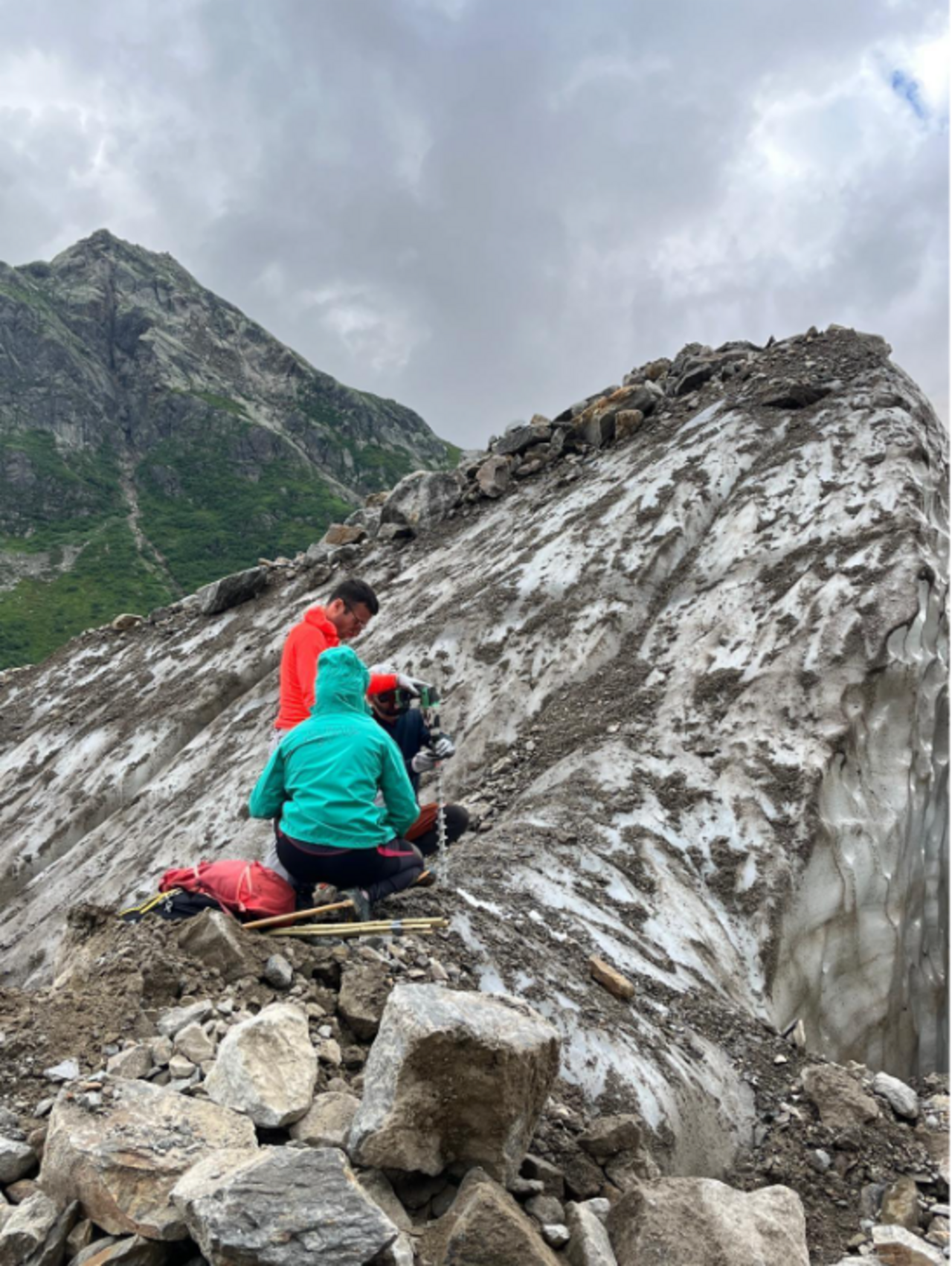
When a glacier retreats, the lateral moraines, that is, the sediments carried by the glacier and accumulated along its sides, lose the stabilising thrust of the glacier and become unstable. In many cases, this slope instability means that debris and sediment are carried on the glacier terminus, which, as with the Belvedere Glacier, becomes covered by debris. The glacier can even be submerged by metres of debris in some places. The debris acts as a thermal insulator, slowing the retreat of the glacier.
Due to this blanket of debris, the glacier can survive at altitudes below 2,000 metres, where alpine glaciers normally no longer exist.
How does this process occur?
The physical process is described through the energy balance of the glacier, that is the sum of the heat entering and leaving the glacier. For a glacier not covered by debris, most of the incoming heat — represented by the interaction with solar radiation and air — goes into melting the glacier. For a ‘black’ glacier covered by debris, however, the debris absorbs the external heat and returns part of it to the atmosphere in the form of infrared waves. Through this process, the glacier acts as an insulating agent, reducing the ice melt. The glacier can therefore survive in low altitude places where the average temperature is above 0°C, such as the Belvedere terminus, which is located at an altitude of 1800 m above sea level.
How do you actually monitor the glacier? What instruments do you use and what climate variables do you observe in the field?
We mainly monitor the Belvedere Glacier using three instruments: i) a weather station placed directly above the glacier, which provides us with real-time meteorological conditions and allows us to accurately estimate energy flows; ii) ablation stakes, which are graduated rods embedded in the glacier, whose emergence over time tells us precisely how the glacier is melting; and iii) thermistors, which are probes that record the temperature of the debris over time and give us information on heat conduction within the debris layer.
What implications do these studies have for downstream areas and managing Alpine water resources?
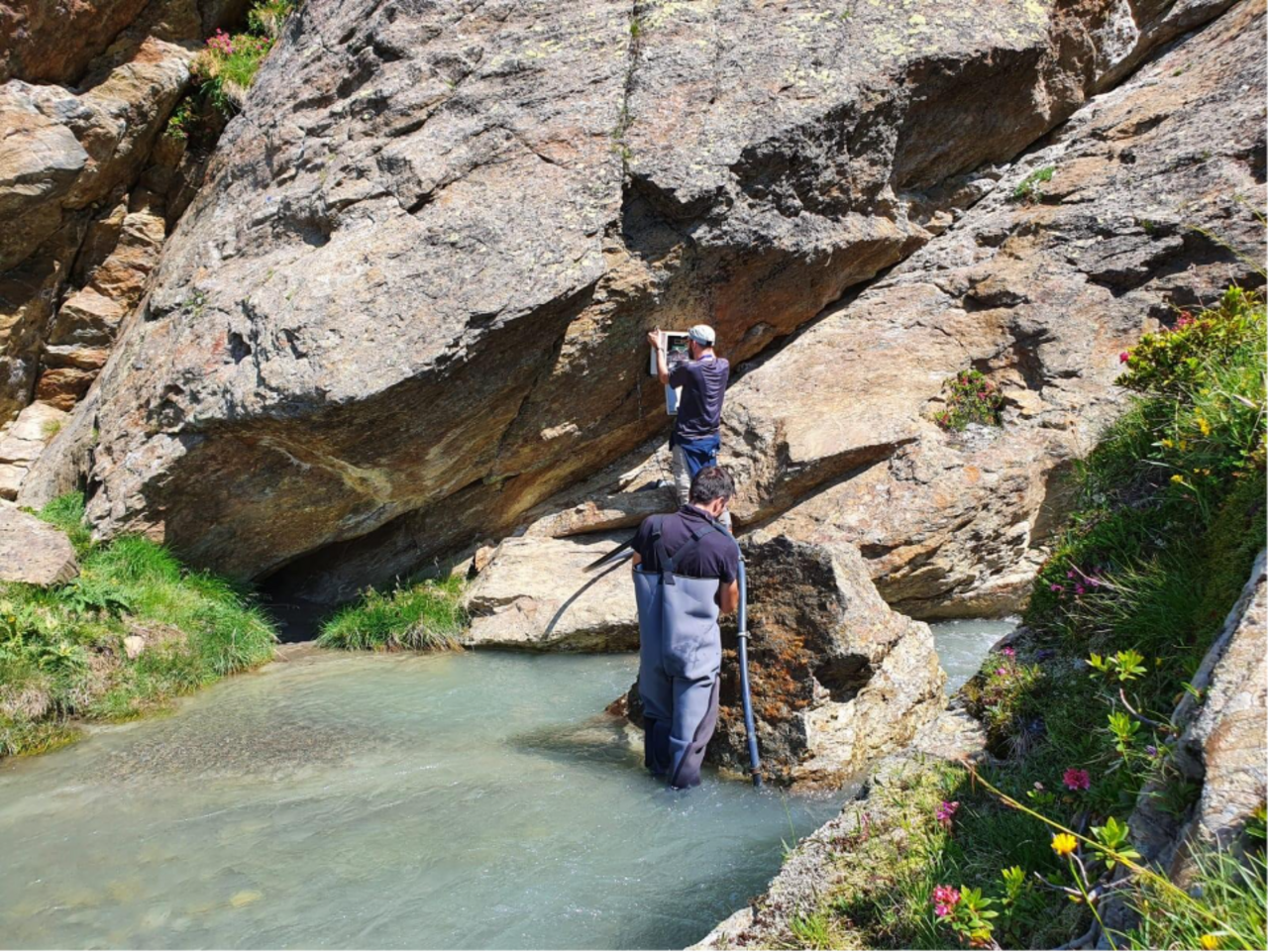
When integrated into a hydrological model, these glacier studies allow us to estimate the flow rate of the streams resulting from glacier melt. Such contributions could be essential during warmer and drier summers, like the one in 2022, when there are no other sources of water.
How can this research support adaptation and mitigation strategies, for example, in spatial planning or natural resource management?
Quantifying how the hydrological cycle will change with increasing temperatures is very important for irrigation consortium entities and hydropower plant managers, who will see changes in the quantity and seasonality of water flows. These estimates can be used to study how irrigation techniques will need to evolve to counteract possible water shortages, or how wind and solar power will need to be developed to make up for the lack of water in summer.
Looking towards the future, what are the main scientific challenges in Alpine glacier studies in the coming decades?
Although glaciers are very well studied, there are still relevant gaps in our knowledge of them, particularly regarding the Italian mountains. We do not have thickness data for many glaciers, so we still do not know exactly how much water is stored in Italian glaciers. We also know relatively little about precipitation at high altitudes, where glacier accumulation zones are located, due to the scarcity of reliable measuring instruments. In addition, studies on the dynamics of darkening – when glaciers become covered by debris – are still underdeveloped, and we do not really know how many glaciers will be covered by debris in the coming years or how this will impact their retreat.
What direction are you taking to meet these challenges?
With the University of Milan, we are developing a study to model the hydrology of glacierized basins in Pakistan, where glacier retreat has been measuring for years. The aim is to extend local analyses based on stakes, drones, and stream level sensors to a regional scale, integrating these data into a hydrological model for estimating the contribution of glaciers to river flows. While the contribution of glaciers is almost negligible for European rivers, the amount of water from melting glaciers in large Asian rivers such as the Indus or Ganges is often of primary importance for agriculture and industry downstream, with tangible impacts on the lives of millions of people.
What sort of academic and professional path did you follow to get where you are now? What is your role in the research group
I earned my degree in Civil Engineering from the Politecnico di Milano. Then I specialised in Hydraulics and began to look at environmental issues. From there, following my Master’s thesis, I embarked on a PhD in Water Science and Engineering. In Professor Bocchiola’s group, I mainly work on Alpine hydrology, with a focus on hydropower and glaciology. Over the years we have also developed river models and studied flooding risks and the impacts of climate change on fish.
How many glaciers have you studied during your career? Which one impressed or excited you the most and why?
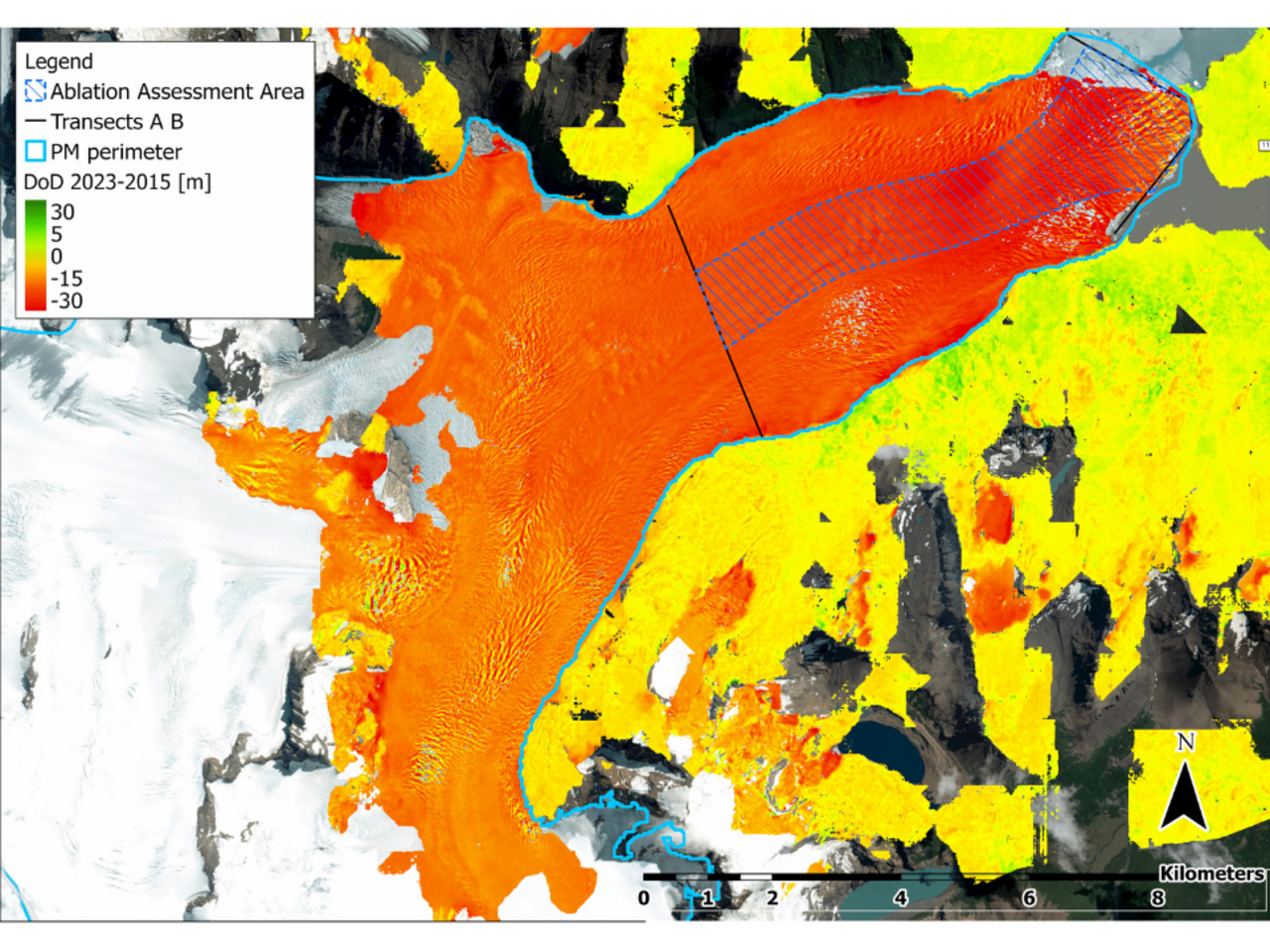
In addition to the Forni and Belvedere glaciers, I have studied the Sabbione Glacier, which is also in Piedmont, and the world-famous Perito Moreno in Patagonia using remote sensing measurements. This was once considered one of very few glaciers not impacted by climate change, so much so that its front had been stable for decades. It was almost considered a scientific mystery. But in the last six years, as the study we are about to publish shows, Perito Moreno has also suffered a major retreat, demonstrating the inevitability of global warming once again. Seeing the Belvedere Glacier as it changes over a matter of weeks is also impressive. Crevasses tens of metres deep open up, showing how the ice is dying under the debris.
What is your favourite part of your job?
Hydrology is a hybrid science that is still being developed. Empirical formulas based on observations and highly complex physical models can often be used to solve the same problems with different approaches. It is this freedom of action, combined with the variety of challenges posed by climate change, that stimulates my curiosity and the study of such phenomena.
You might also like

Geopolitical instability, health crises: the risks in the pharmaceutical supply chain, and how to manage them

From circuit to laboratory
The collaboration with the Politecnico as seen by Autodromo Nazionale Monza

Digital sovereignty: why regulating AI is not enough
Interview with Roberto Baldoni, Senior Advisor for Technology and Cybersecurity Policy to the Ambassador of Italy to the United States

Compostable, edible, made from apples: the label that reduces the environmental impact of food packaging
Italia di mezzo, the research that places the Italian province at the centre
The DAStU project studies territories that coincide neither with large metropolitan areas nor with inner areas, and seeks to build new representations to support their socio-ecological transition