

AI to Touch: when art invites touch


What does it mean to “see” a Caravaggio if you cannot see it? And how do you describe Leonardo’s beard to someone who has never seen that beard? These questions sparked an adventure four years ago that began in a museum in Lecco and made its way to Dubai. At its heart is a laboratory at Politecnico di Milano, a team of students of all ages, an association for blind people, and an artificial intelligence algorithm that, in two minutes, transforms a two-dimensional image into a three-dimensional sculpture: ready to be printed, touched and narrated.
Guiding us through the project is Mario Covarrubias Rodriguez, Associate Professor in the Department of Mechanical Engineering at Politecnico di Milano and coordinator of the Virtual Prototyping and Augmented Reality Laboratory at the Lecco Campus. Arriving from Mexico in 2007 to pursue a PhD on haptic devices—human-machine interfaces that generate tactile sensations (vibrations, forces, movements) to simulate the touch or resistance of real objects in virtual or remote environments—he never left Politecnico. Today, those virtual worlds and those “enhanced” senses have become a concrete tool for cultural inclusion, and a positive example of what AI can achieve when it is placed at the service of people.
Let’s start at the beginning: how did the project come about?
It all began about four years ago, during a conversation with the organisers of an exhibition at Palazzo delle Paure in Lecco. Every year, from December to March, the museum hosts an exhibition, and at one point we asked ourselves a very simple question: how can we involve blind people as well? How can we convey a painting—something entirely two-dimensional, rich in nuances and colours—to someone who cannot see it?
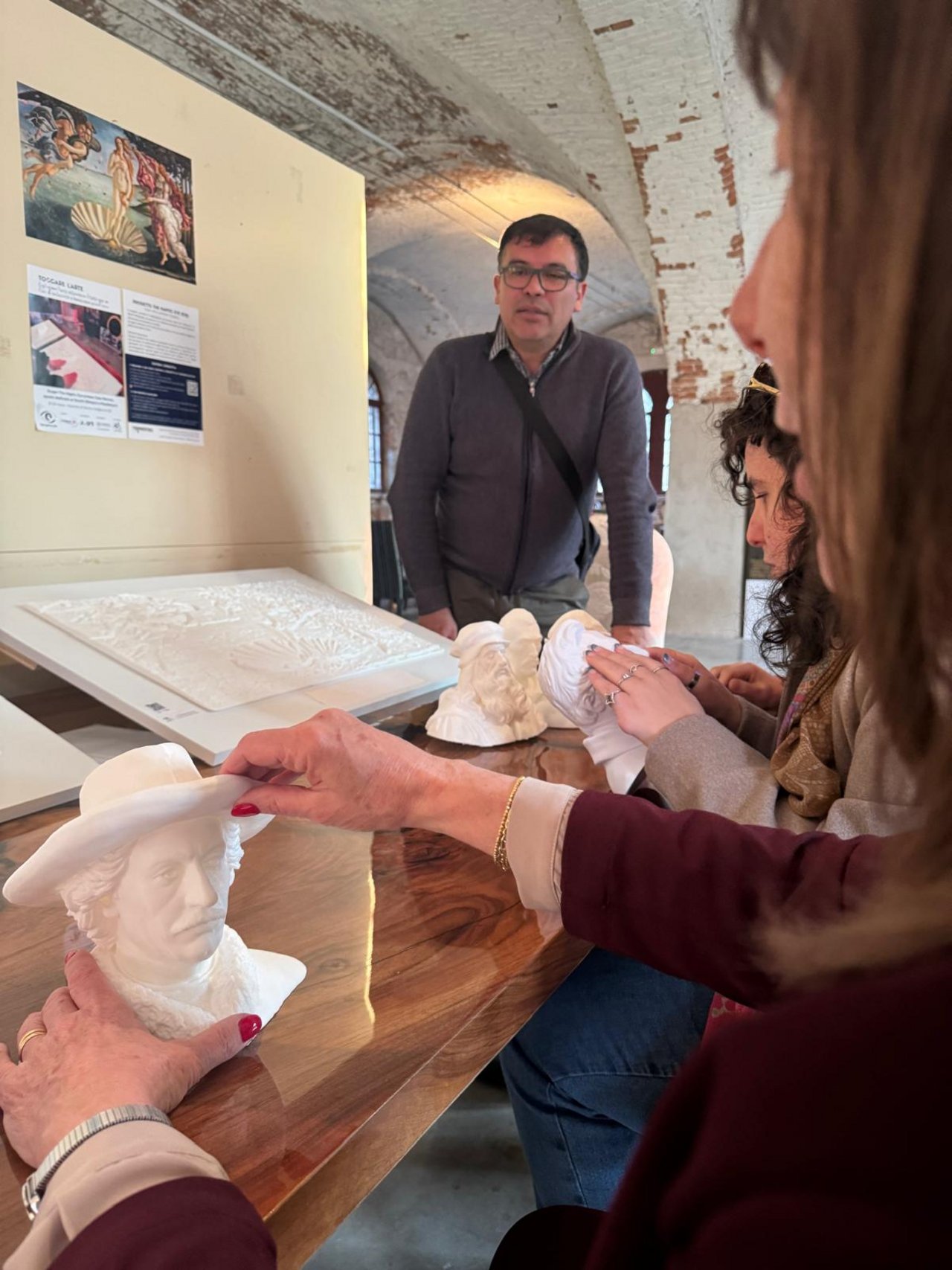
At the time, we did not have an answer, but we began experimenting. The first software tools only allowed us to read the colours in an image: light tones became a positive bas-relief, while dark tones sank into a negative one. From there the first tactile tablets were born: small surfaces on which the painting—while still flattened—finally acquired a geography to be explored with the fingers. Together, we tested many materials and techniques (CNC milling, filament 3D printing, resin printing, laser printing), because the same idea tells different stories on different surfaces.
So the tablets were created as a museum experience, accompanied by a guide.
Exactly. The first time, we brought about fifteen tablets to the exhibition. The guide was Sara, a blind young woman who at the time attended high school in Oggiono. She explained each painting to visitors while touching the tablet together with them, with an incredible level of detail.
To accompany the exploration, we applied the “DescriVedendo” method: the artwork is divided into six sectors—like the keys of a telephone (three on top and three below)—and what is present in each sector is described. It is a way of giving structure to the discovery. The tablet is extremely rich in details and, without a “compass”, it is difficult to understand what one is touching. The guide—or a recorded audio description—is what truly allows the imagination to take flight.
Then, at a certain point, artificial intelligence entered the scene and changed everything...
It changed quite a lot. When we managed to apply some generative AI algorithms, we made a huge leap forward: from the image of a self-portrait, the algorithm reconstructs a complete 3D model—whether it is a Van Gogh, a Picasso or a Caravaggio. It recognises the face, the hair, the beard, even what the subject is wearing, and it reproduces what is not visible in the image, such as the back of the head or the nape of the neck. It is as if the machine “imagines” the missing volume.
And it does so very quickly: from image to 3D model in about two minutes.
Two minutes. And then?
Then comes the more “hands-on” phase, which remains the most fascinating. The digital model is prepared for printing through another software program that generates a code of around ten thousand lines melting temperatures, speed settings, material parameters: everything must be calibrated so that the quality meets expectations.
We then start the printing process in the laboratory. For a prototype about twenty centimetres tall, it takes between ten and twelve hours. The printer deposits material layer by layer, from the bottom up, until the figure gradually emerges.
We mainly work with PLA, a biocompatible material derived from corn. It is a choice that combines print quality with environmental awareness.
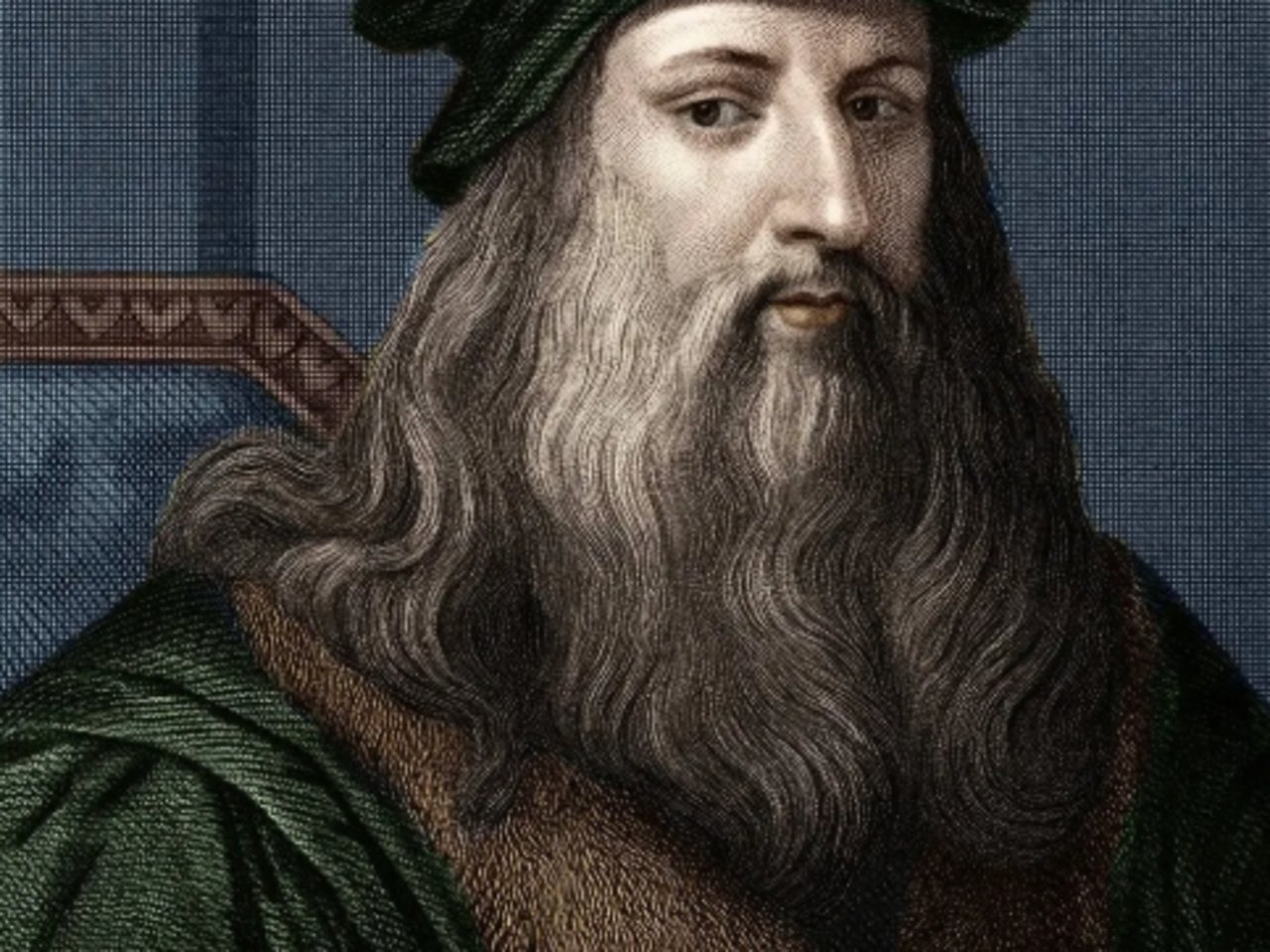
Historical portrait of Leonardo da Vinci used as iconographic source for the 3D model. Plastic-IndexLab project, INDEXLAB, Polo Territoriale di Lecco, Politecnico di Milano.
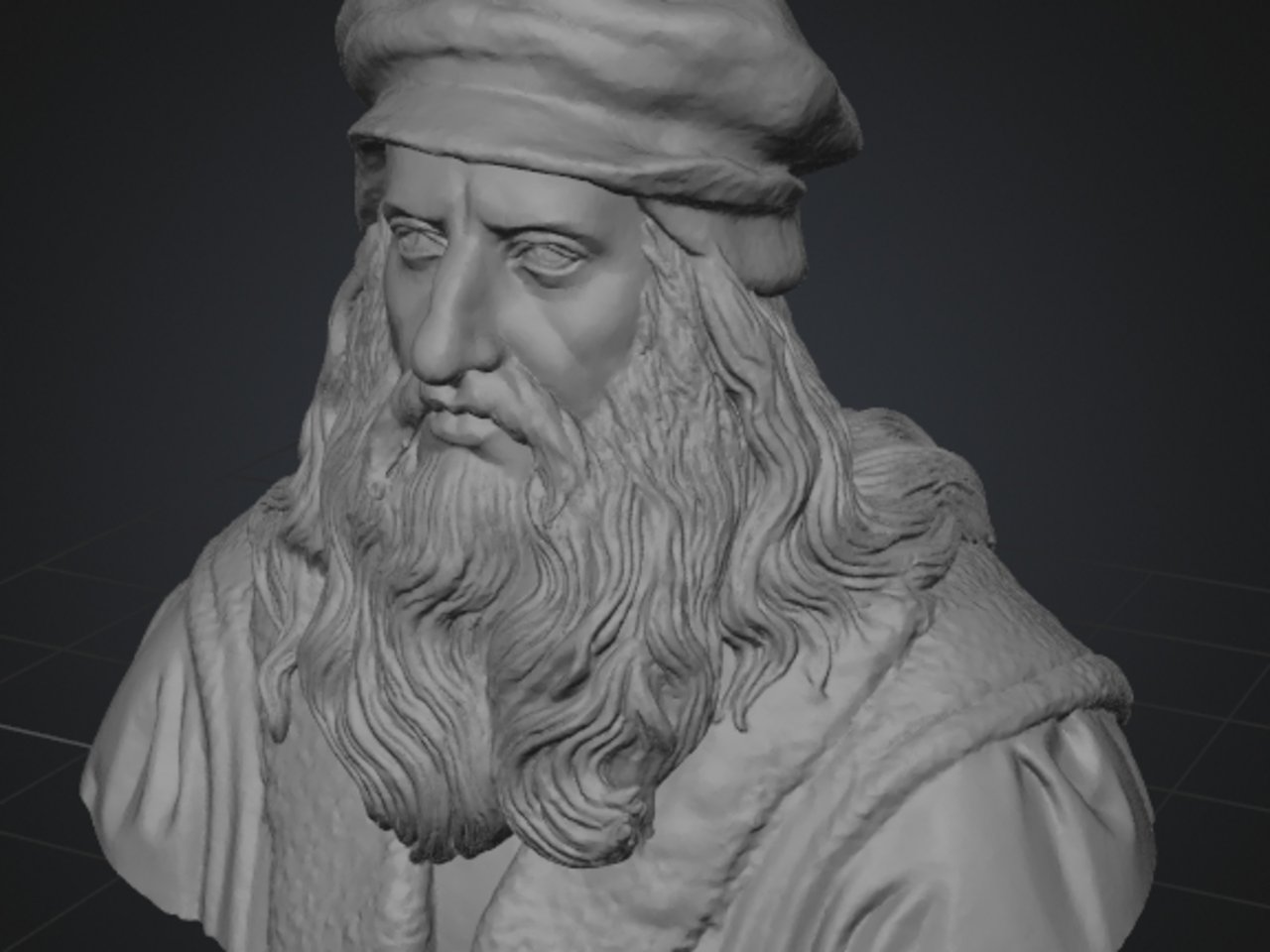
Rendering of the three-dimensional model of Leonardo da Vinci developed for 3D printing. Plastic-IndexLab project, INDEXLAB, Polo Territoriale di Lecco, Politecnico di Milano.
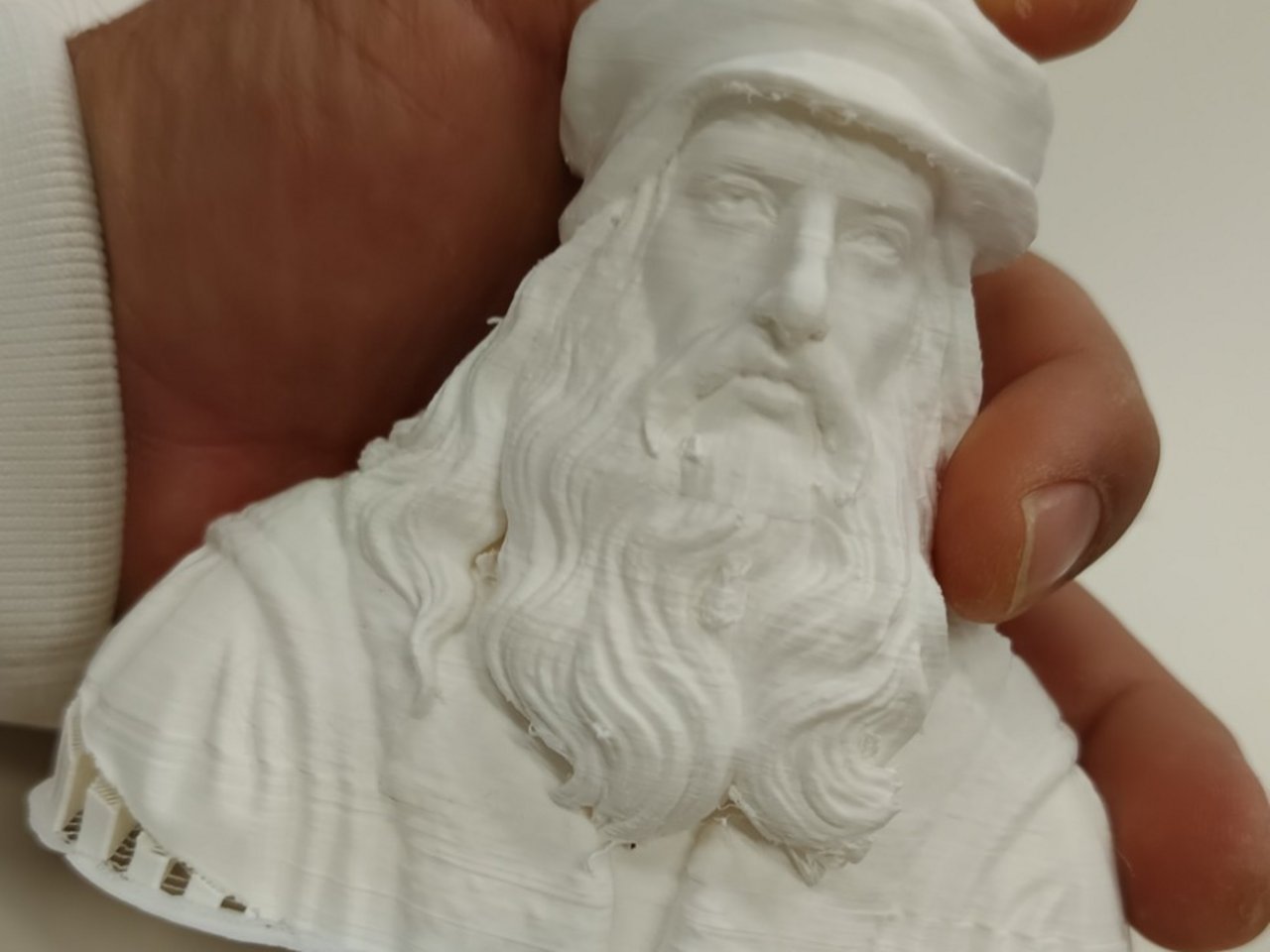
A 3D-printed bust of Leonardo da Vinci. Plastic-IndexLab project, INDEXLAB, Polo Territoriale di Lecco, Politecnico di Milano.
Have you had the opportunity to observe the reactions of blind people when faced with these sculptures?
On 19 December, we officially delivered around forty prototypes to the Italian Union of the Blind and Partially Sighted (UIC): artists, scientists and athletes. For many of the people present, it was the first time they could “see” the faces of historical figures with their hands at such a level of detail. Their emotion was tangible.
From that moment on, the collaboration with UIC became permanent. We work closely with the Lombardy regional president, Silvano Stefanoni, and with the president of UIC Lecco. They are the ones who “test” the sculptures with us, including their dimensions, because for someone exploring with their hands, size is just as important as fidelity to detail.
They are extremely happy and tell us so. In fact, the Triulza Foundation recently discovered the project on LinkedIn and selected it as an innovative best practice for inclusive tourism. Their team sent a professional film crew to document the experiences directly with blind people interacting with the prototypes. Seeing the work recognised by the very people for whom it was designed is the greatest satisfaction.
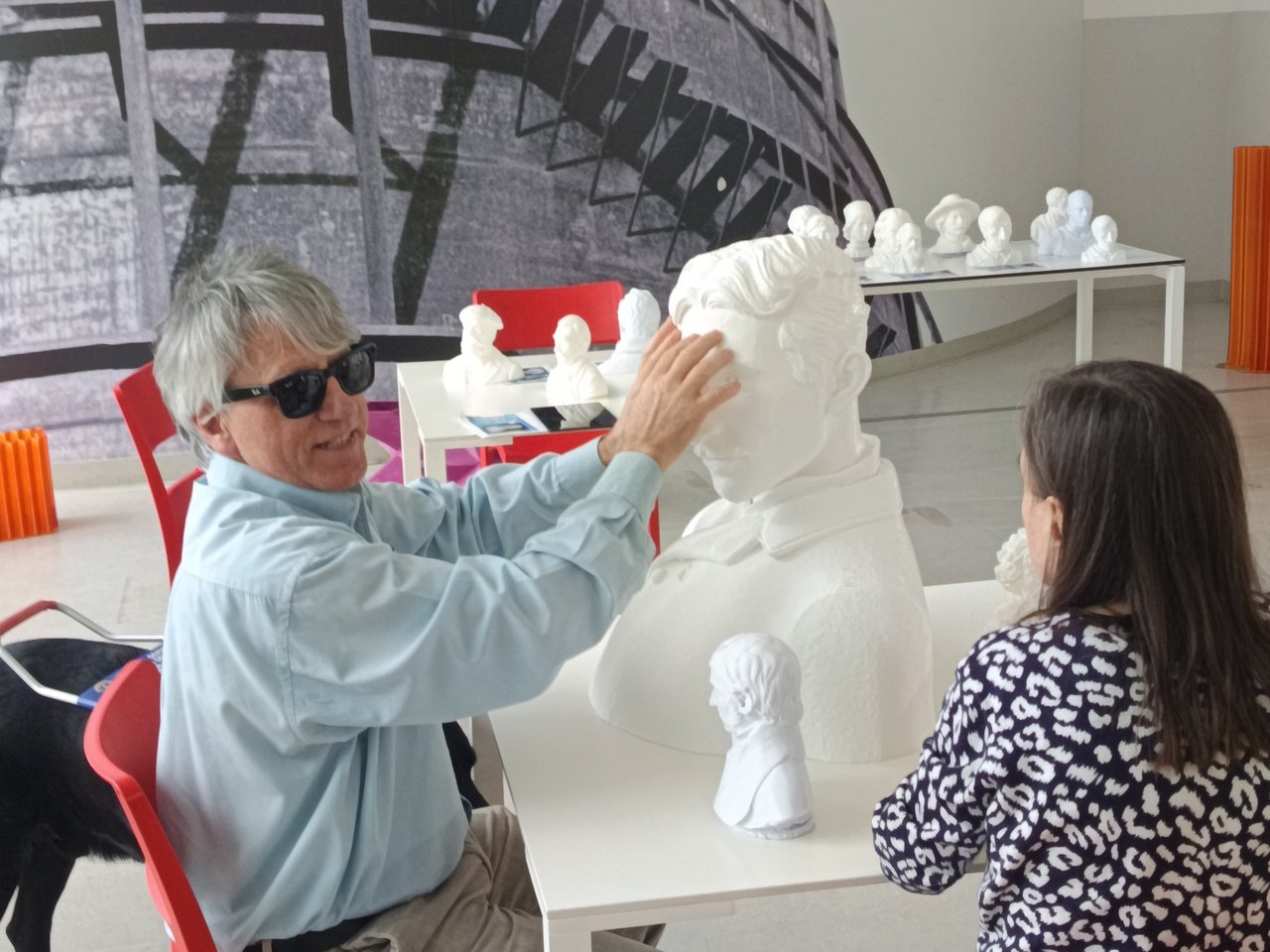
A visually impaired participant, accompanied by his guide dog, explores a 3D-printed bust by touch. Plastic-IndexLab project, INDEXLAB, Polo Territoriale di Lecco, Politecnico di Milano.
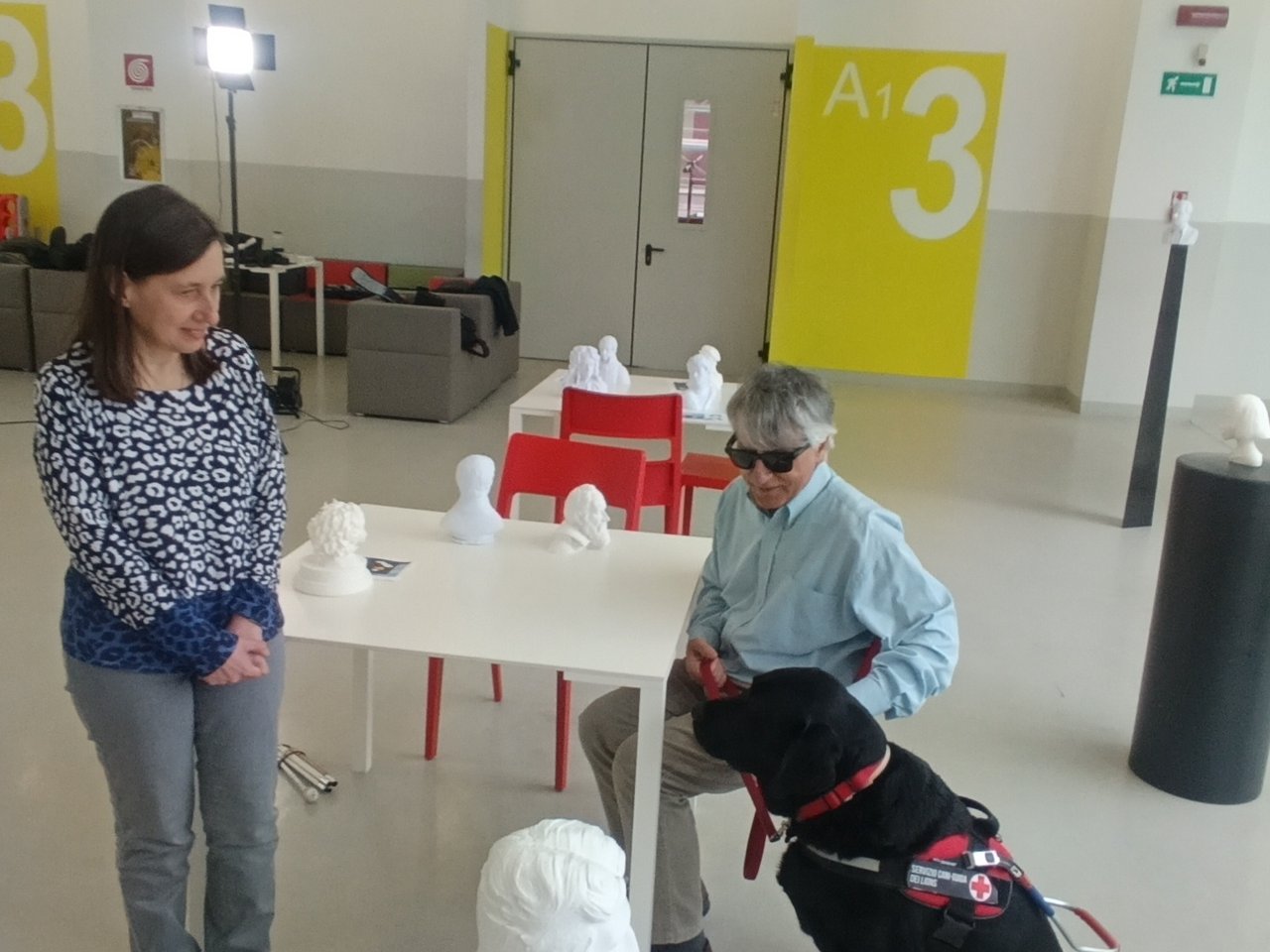
A researcher welcomes a visually impaired participant with guide dog into the exhibition space. Plastic-IndexLab project, INDEXLAB, Polo Territoriale di Lecco, Politecnico di Milano.
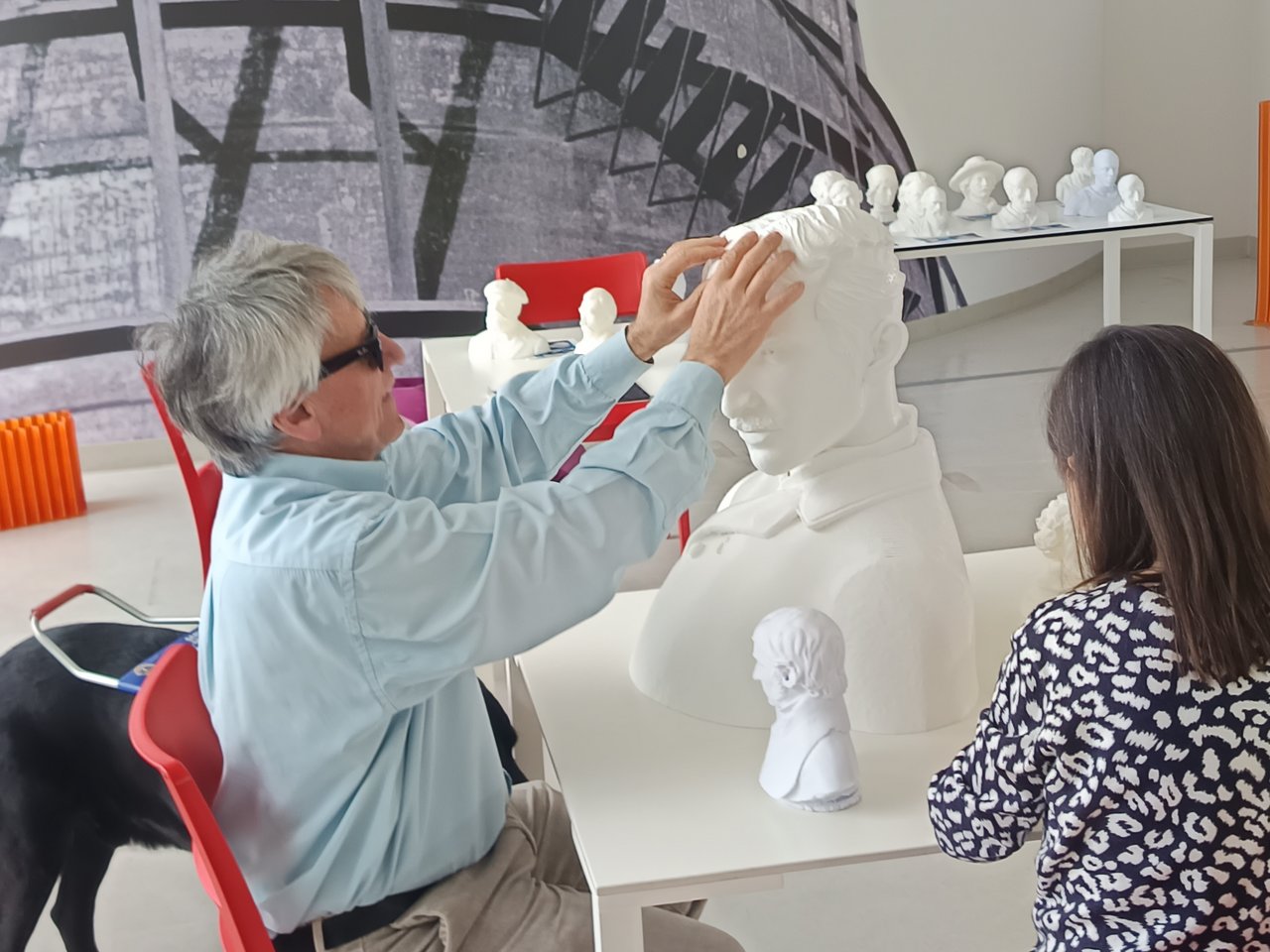
A visually impaired participant, accompanied by his guide dog, explores a 3D-printed bust by touch. Plastic-IndexLab project, INDEXLAB, Polo Territoriale di Lecco, Politecnico di Milano.
Alongside this tactile experience, you also developed an augmented reality app.
Yes, because we wanted the project to speak to everyone, not only to blind people.
By scanning a QR code or a reference image with a smartphone, the app recognises the character and displays it in 3D with all its textures and colours, while also starting the audio description. Users can rotate the model, zoom in and explore its details from every angle.
The audio description is one of the most beautiful parts of the project. It was recorded by our students, and in some cases also by middle school students from Collegio Volta, who learned how to use 3D printers and then lent their voices to the various characters. They may not be professional narrations, but that is not a flaw: you can feel the emotion of the speaker, and that is exactly what we want to convey.
How many students are part of the project team?
Many, and from very different backgrounds. I involved students from the bachelor’s degree programmes in Industrial Production Engineering, Communication for Interaction Design and Industrial Product Design, as well as master’s students in Mechanical Engineering and Architecture and Building Engineering.
These are extracurricular activities: nobody is required to participate. But when you explain what their work will be used for, everyone is eager to contribute. In my opinion, that is one of the most beautiful aspects: seeing how motivation changes when a project has a strong human purpose.
In addition, there are local companies that support us financially, along with researchers and cultural mediators with whom we collaborate in museums.
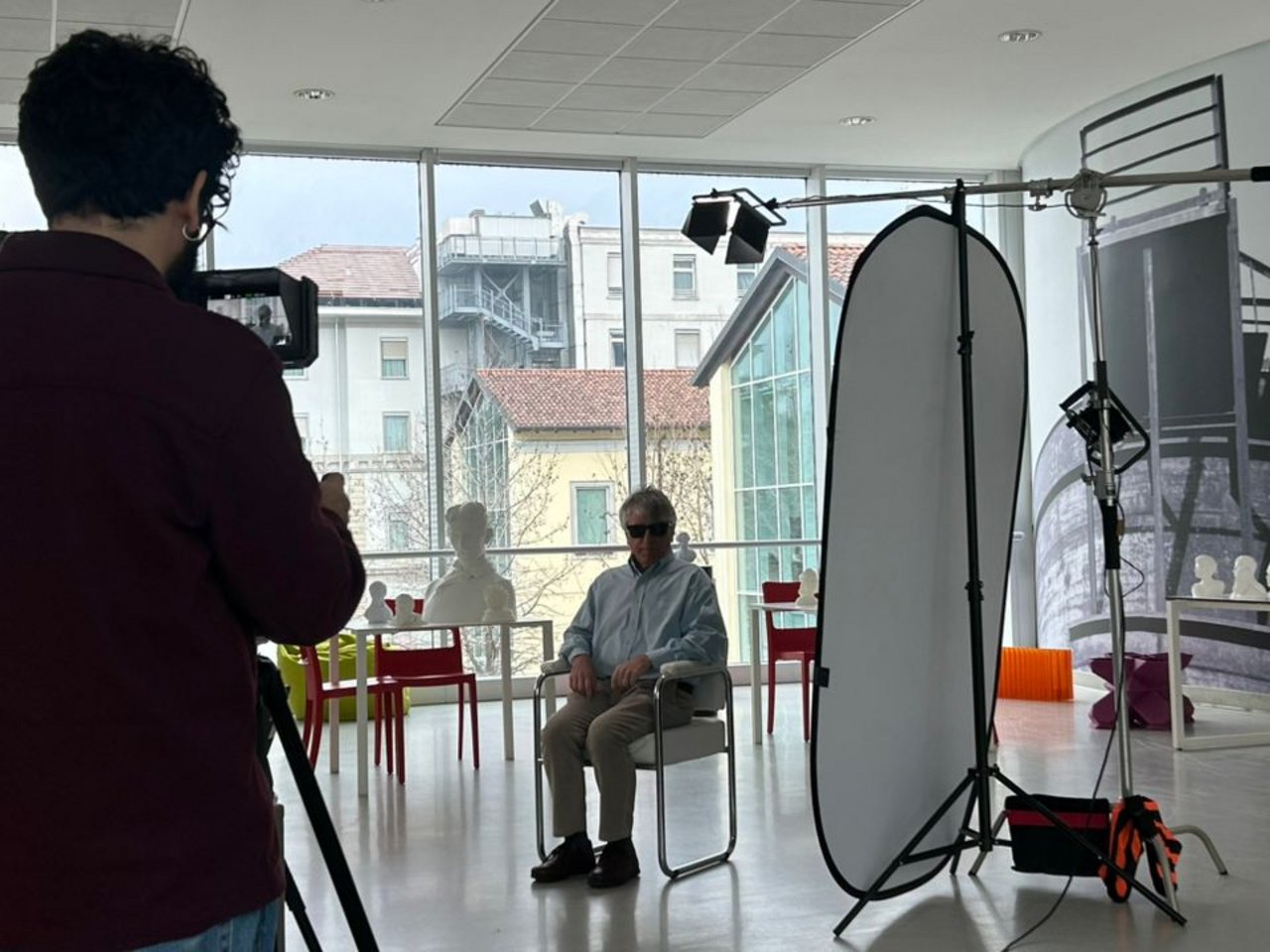
Video documentation of a Plastic-IndexLab session with a visually impaired participant. INDEXLAB, Polo Territoriale di Lecco, Politecnico di Milano.
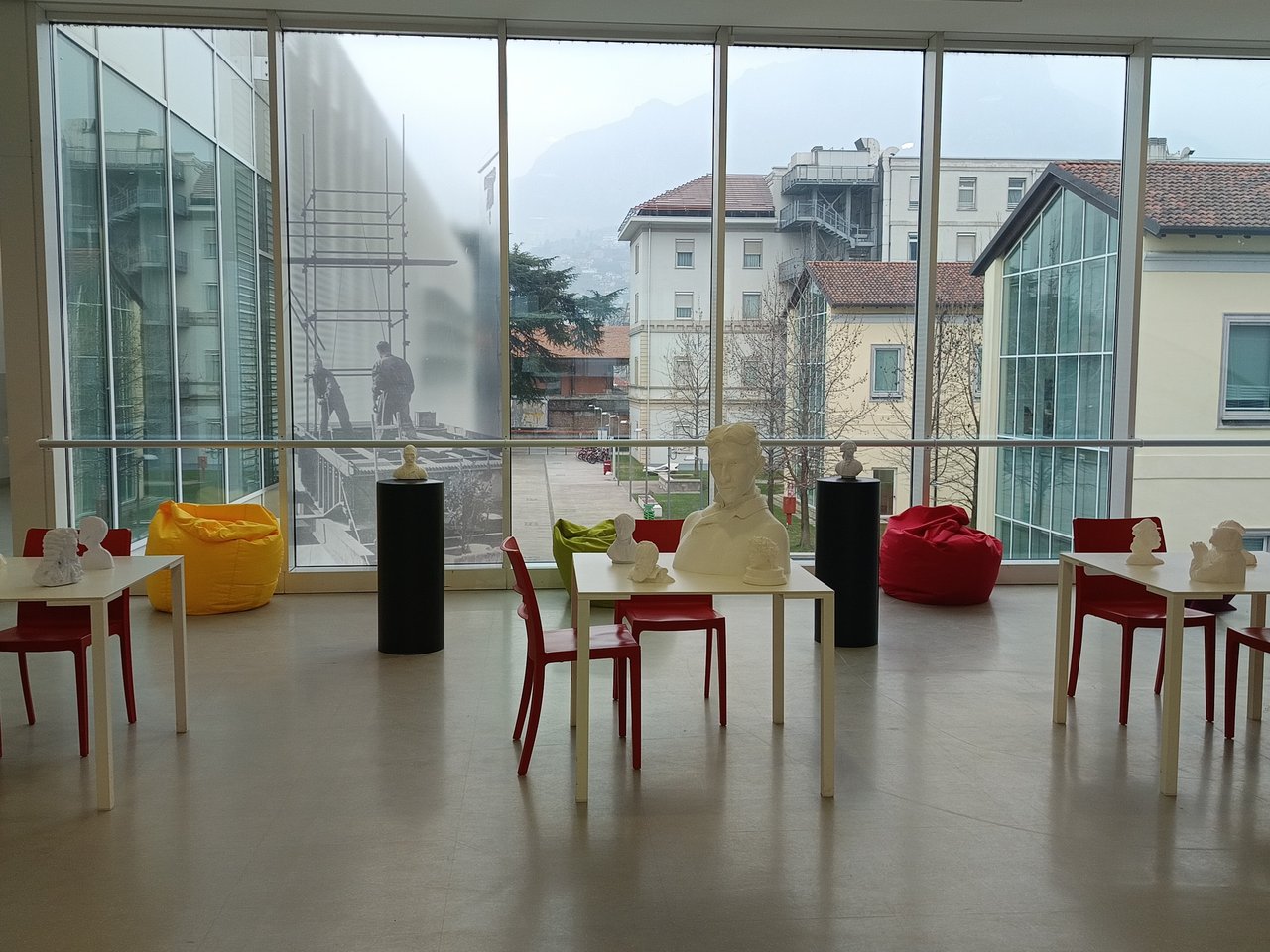
Exhibition space with 3D-printed plastic busts arranged on tables. Plastic-IndexLab project, INDEXLAB, Polo Territoriale di Lecco, Politecnico di Milano.
The project also reached Dubai. How did it go?
We presented it at the Museum of the Future, in an extraordinary architectural setting. The characters travelled with us, and the response was wonderful. Projects like this are appreciated because they show a side of technology that is rarely seen: the side that addresses vulnerability, accessibility and cultural experiences for those who are normally excluded from them. A blind person touching the face of someone who lived centuries ago and listening to a description of their clothes and colours suddenly opens up an entire world.
The Triulza Foundation also chose to promote the project as an innovative best practice for inclusive tourism and sent a film crew to document it.
What are the next steps? What are you already experimenting with?
Several directions. The first is multicolour and multi-texture printing. Today, the prototypes are monochrome and made from a single material, but in our laboratories we are working with three-resin printers that make it possible to digitally “blend” materials and, for example, make hair softer than the rest of the face. It is an expensive direction, but a very promising one.
The second is a fully virtual exhibition, experienced through a headset. Once inside, users are “teleported” into a digital museum where they can grasp the sculptures with their hands (the headset tracks movements in real time), rotate them, enlarge them, shrink them and activate the audio description with a gesture. It is an experience designed also for partially sighted people, who in that context can access a view of cultural heritage that would otherwise be difficult to achieve.
Looking back, what is the lesson of these four years?
That technology, when it works together with people, is capable of very beautiful things. Generative AI, 3D printing, augmented reality and virtual reality: none of these, on their own, would have brought us to where we are today. We brought them together for a specific purpose: making art and culture accessible to those who risk being left out.
We involved engineers, designers, architects, university students and middle school students, museum mediators, associations and local companies.
The message I like most is this: projects like this do not speak only to blind people — they speak to everyone. Because touching a Caravaggio, listening to the emotional voice of a student describing Leonardo da Vinci, or rotating Botticelli in the palm of your hand on a smartphone screen is an experience that also changes those who can see perfectly well.
And that is exactly what we would like to say every time we talk about technology: it is not a neutral tool. It always depends, and only depends, on what we choose to do with it.
Related stories
Financial mathematics, AI, ESG and personal finance – QFinLab’s activities
Focus on financial education with master’s degrees, projects with schools, and targeted informational initiatives.

Theatre: the new language of science
Professor Giulio Magli of the Politecnico di Milano interviews actress Maria Eugenia D’Aquino

“The Perfect Sound? Doesn’t Exist!” — says Nicola Piovani
Oscar-winning musician and composer visits Renzo Piano’s workshop
The eclipse that marked the end of the fourth Egyptian dynasty
Giulio Magli reveals the secrets of archaeoastronomy.

Ostraka: fragments of daily life in Ancient Egypt
What can ceramic fragments with writing, known as ostraka, tell us? The researcher Clementina Caputo, researcher explains it.
You might also like
Building in Balance
Matteo Scagnol and Sandy Attia of MoDus Architects discuss an architecture shaped by the tension between landscape and infrastructure, rules and freedom, materials and climate change.

From circuit to laboratory
The collaboration with the Politecnico as seen by Autodromo Nazionale Monza

Research Takes to the Track at Monza
The agreement between Politecnico di Milano and the Monza National Circuit creates an open-air laboratory for safety, sustainability, materials, mobility and major events.

Digital sovereignty: why regulating AI is not enough
Interview with Roberto Baldoni, Senior Advisor for Technology and Cybersecurity Policy to the Ambassador of Italy to the United States