

Working Across Time Zones: A Hidden Advantage for Science


Scientific research is increasingly a global endeavour. Researchers collaborate across countries, cultures and institutions, often separated by thousands of kilometres. But what happens when they are also separated by several time zones? Contrary to what one might expect, these differences may actually improve research outcomes.
In her recent study, Collaboration Across the Globe: Time Zone Differences and Citations, Professor Miriam Judit Manchin from the Politecnico di Milano explores how time zone differences among co-authors influence the impact of scientific publications. We spoke with her about the origins of this research, its most surprising findings and what young researchers can learn from it.
Your research sits at the intersection of economics, globalization and scientific collaboration. Can you tell us about your academic journey and what brought you to this field?
My research is mainly in international economics, which broadly looks at the movement of goods, services, people and knowledge across countries. Knowledge flows fit very naturally within this area of study. Most of my work has focused on international trade, services and migration, but scientific collaboration is another form of international exchange, so it connects closely with my core research interests.
This particular project originated through a PhD student who was working on international scientific collaboration. We had initially planned to develop the paper together, but after he moved on to a postdoctoral position at Harvard and then to a new job, he became too busy to continue. He encouraged me to pursue the project independently, and that is how I eventually became more deeply involved in the topic.
Although the subject is somewhat different from my previous work, I saw it as a natural extension of my broader research interests.
What motivated you to focus specifically on time zones?
Time zones were not initially the central focus of the project. My PhD student was studying scientific collaboration more generally, and at one point I suggested including time zones in the analysis to see whether they had any effect.
The results were surprising. We expected time zone differences to act as a barrier, but they did not seem to have a negative impact on scientific collaboration.
There was also a personal element behind my curiosity. For more than ten years I have collaborated with a colleague based in the United States. Although our working hours only partially overlapped, we managed to work effectively together by combining periods of direct interaction with asynchronous work.
Another example came from a friend who worked for a multinational company in Brussels. She had to coordinate with both Asian and American offices, creating a sort of continuous workflow across different parts of the world. This reminded me of the concept of a “24-hour knowledge factory”, which appears in the management literature. When I started looking for research on time zones in scientific collaboration, I was surprised by how little had been written on the topic. That convinced me there was something worth investigating.
What surprised you the most about the results?
Initially, I was not even sure whether time zones would have any significant effect. I thought they might behave similarly to geographical distance, which is generally associated with greater collaboration challenges.
Then, as I introduced more controls into the analysis, I expected the effect to disappear. Perhaps, I thought, time zones were simply capturing the benefits of international collaboration or team diversity. Yet the effect remained robust even after controlling for physical distance, the number of countries involved and several other factors.
What I found particularly interesting was the non-linear relationship between time zone differences and citations. The effect follows an inverted U-shape. When researchers are located in very similar time zones, there is little impact. At the opposite extreme, when they are very far apart, coordination becomes more difficult because working hours barely overlap.
The most positive effect appears when co-authors are separated by about four to six hours. At that point there is still enough overlap to coordinate meetings and discussions, while also allowing work to continue across a longer portion of the day. This balance seems to be particularly beneficial.
Your paper suggests that moderate time zone differences can actually improve research impact. Why does this happen?
One possible explanation is that collaboration becomes more continuous. Researchers can work on a project during their own working hours and then effectively hand over tasks to collaborators in another time zone. In this way, progress can continue almost around the clock.
The paper suggests that this mechanism may be particularly important in disciplines where speed matters. In some fields, publication processes move quickly, and the ability to maintain momentum can be an advantage.
Today we also have digital tools that make this kind of collaboration easier. Many researchers work on shared online platforms where documents can be updated continuously. Different time zones can actually help keep the workflow moving forward.
Of course, this requires good organisation, coordination and trust among collaborators. Those aspects were not directly measured in the study, but they are certainly important for making this type of collaboration successful.
What distinguishes a productive international team from one that struggles?
This is more a reflection based on personal experience than a direct finding from the research.
I believe it can be very useful for collaborators to meet in person at least once at the beginning of a project. Building trust, understanding how people work and agreeing on responsibilities can create a stronger foundation for future collaboration.
The overlap in working hours is also important. When there is sufficient overlap, researchers can still meet online, discuss ideas and solve coordination problems relatively easily. If time zone differences become too large, this becomes more challenging, especially for people who have family responsibilities and less flexibility in their schedules.
Technology has made remote collaboration much easier than it was in the past, as we all experienced during and after the COVID-19 pandemic. However, practical constraints remain, and those need to be taken into account.
What advice would you give to young researchers who are starting their careers?
Research consistently shows that international collaborations tend to have greater visibility, receive more citations and generate higher impact. For that reason, I would strongly encourage young researchers to build international networks.
Attending conferences, participating in seminars and establishing contacts with researchers from different countries can open many opportunities. My research also suggests that they should not be afraid of collaborating across time zones, provided the differences remain manageable.
Physical distance is not necessarily the obstacle it once was. Modern technologies make it much easier to work together remotely. If I were a young researcher today, I would actively seek opportunities to collaborate internationally.
These collaborations do not need to involve famous or highly established academics. Working with peers at a similar stage of their careers can be equally valuable. Researchers can grow together, build long-term collaborations and develop their careers side by side.
That, in my view, is one of the most important investments a young researcher can make.
You might also like

Geopolitical instability, health crises: the risks in the pharmaceutical supply chain, and how to manage them

From circuit to laboratory
The collaboration with the Politecnico as seen by Autodromo Nazionale Monza

Research Takes to the Track at Monza
The agreement between Politecnico di Milano and the Monza National Circuit creates an open-air laboratory for safety, sustainability, materials, mobility and major events.

Digital sovereignty: why regulating AI is not enough
Interview with Roberto Baldoni, Senior Advisor for Technology and Cybersecurity Policy to the Ambassador of Italy to the United States
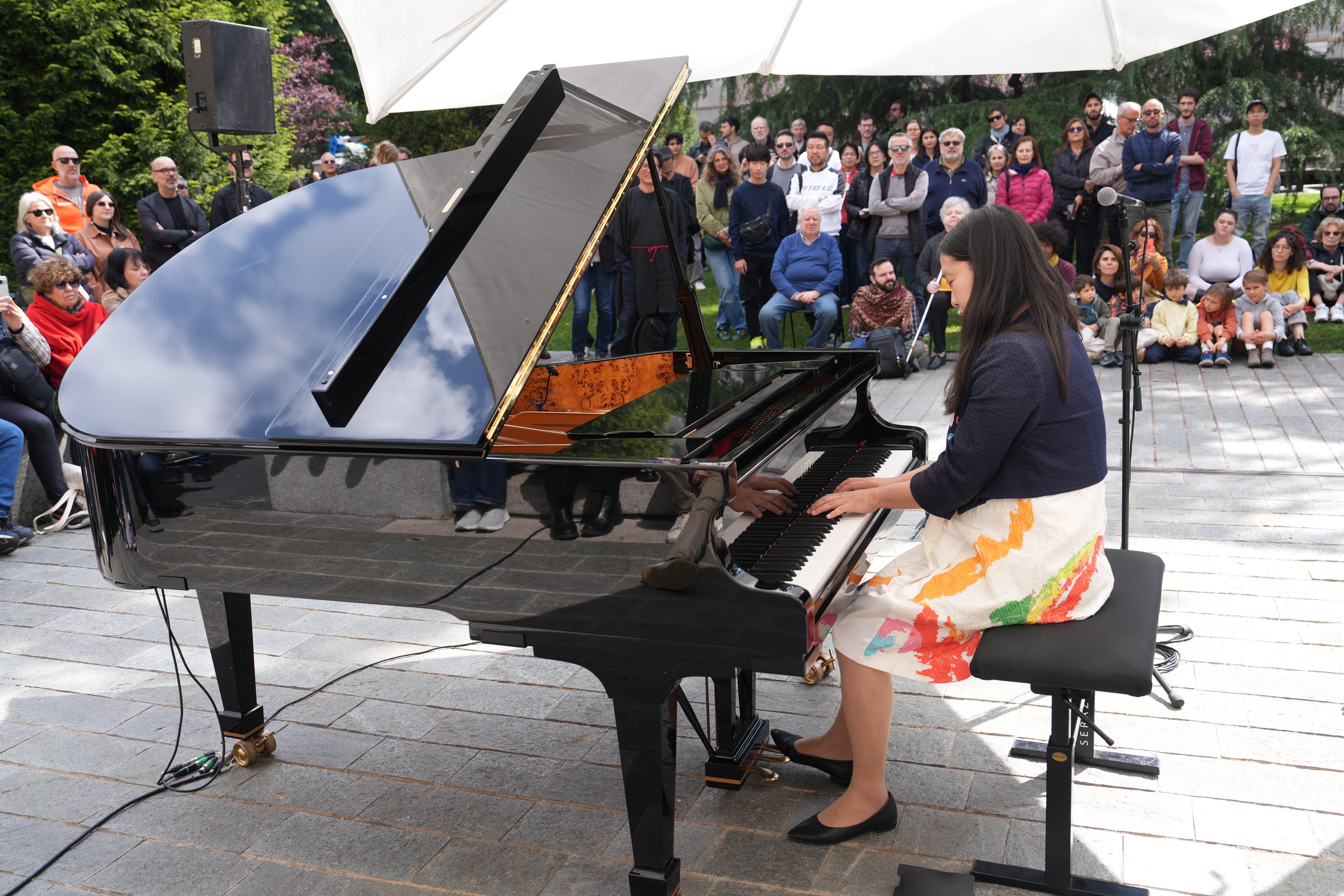
The creative force of mathematics, in the words of Sachiko Nakajima
The scientist and pianist is a tireless promoter of topics such as STEM, diversity and inclusion. In this interview she told us about her artistic world and her vision of mathematics.