

Who owns Milan? Map reveals forces reshaping the city


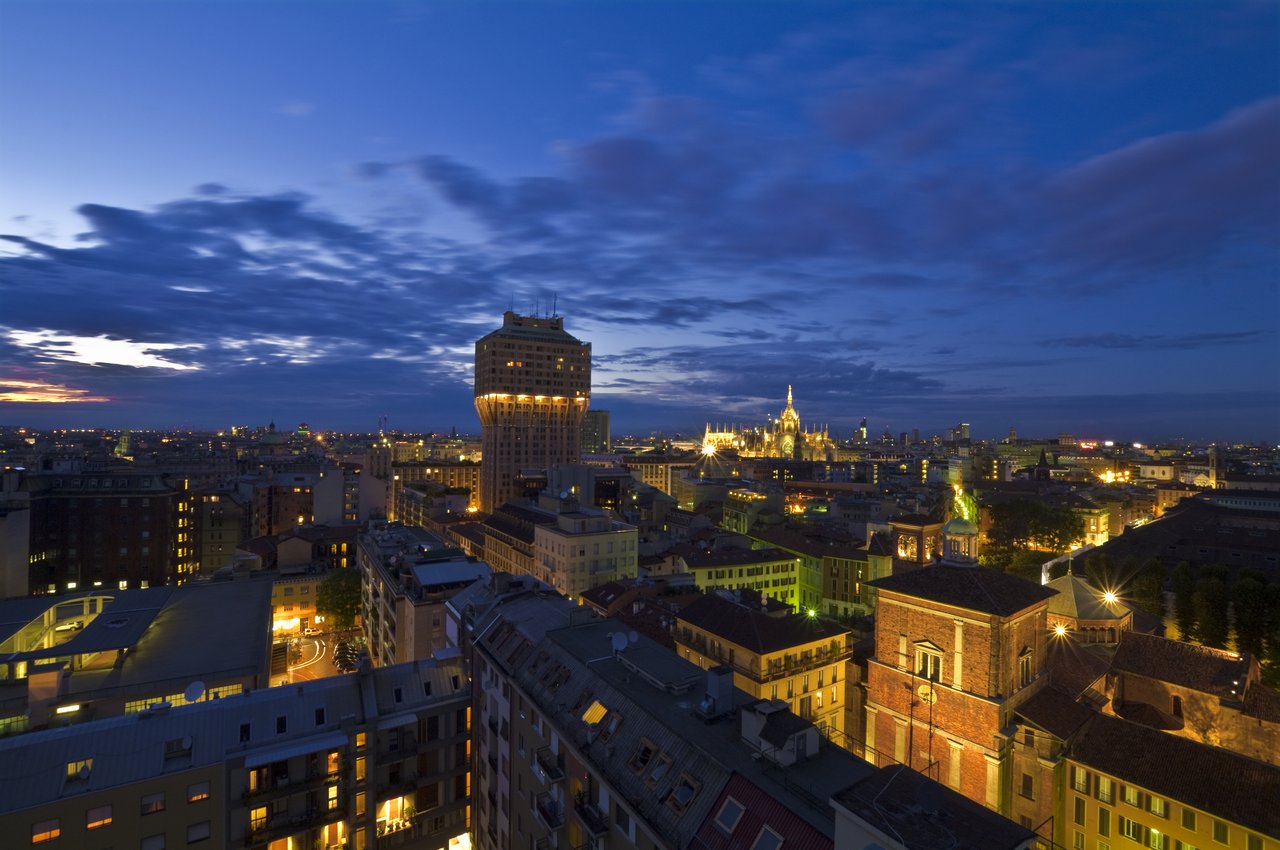
How does financial capital influence urban development and the management of a city's building stock? Research conducted by Gabriele Pasqui and Alberto Bortolotti of the Department of Architecture and Urban Studies at Politecnico di Milano has cross-referenced Revenue Agency cadastral data with an analysis of ten major urban transformation projects, reconstructing the geography of real-estate financialization in Milan and analysing its effects on property values and on urban development dynamics.
What exactly is meant by "real-estate financialization"?
Gabriele Pasqui (GP): Financialization is a mechanism through which real estate assets (buildings or land of various kinds and uses) become financial products, for example by becoming part of investment funds held by entities operating on financial markets. The key point is that a material object — a house, a building, a plot of land — is absorbed into a real-estate investment vehicle.
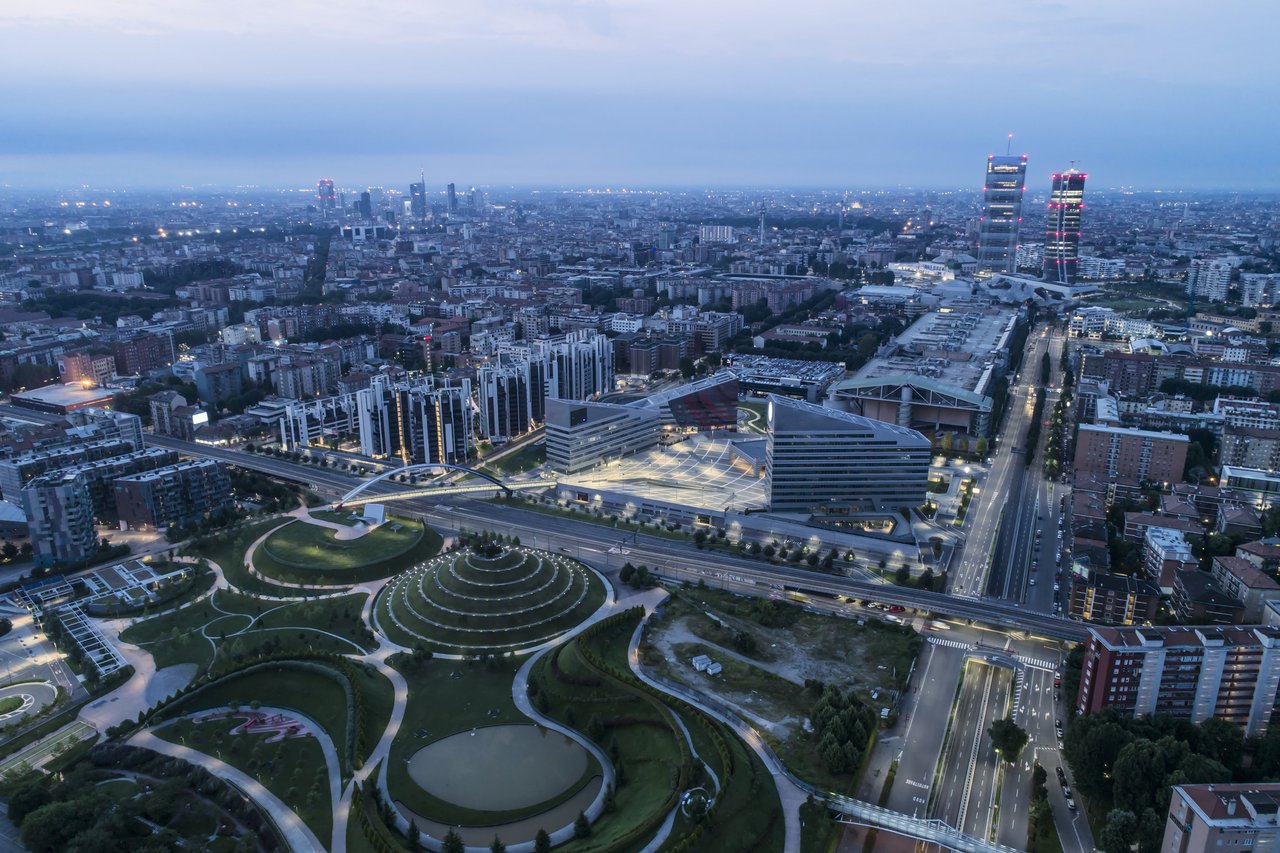
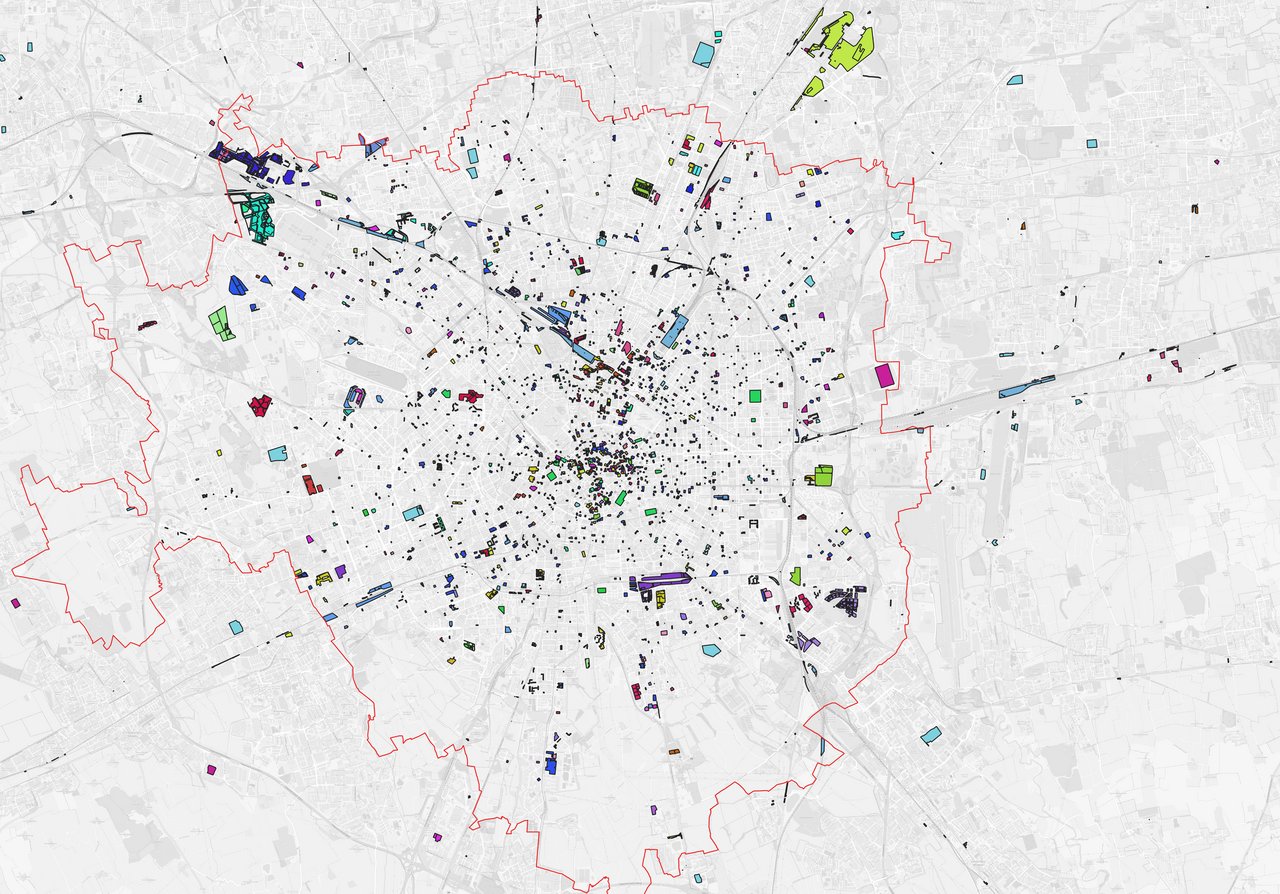
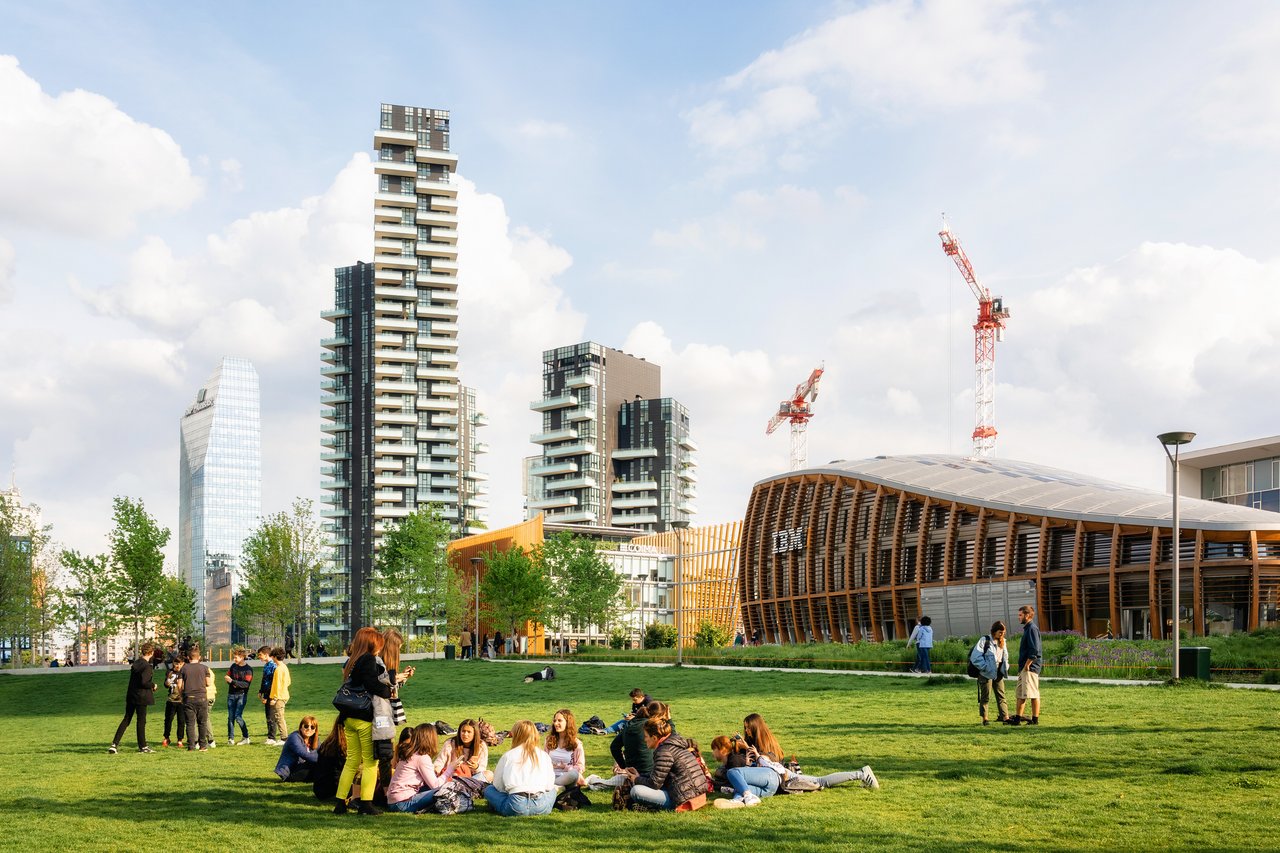
Financialization takes two forms: some funds specialize in property management (including renovation and regeneration), while others combine management with development, using the returns from management to support the launch and completion of major projects, as part of a risk-diversification strategy. Our research focused on both dimensions of the phenomenon in Milan. Using entirely unpublished data, we were able to precisely identify a significant number of properties currently held by investment funds, and to map them with precise georeferencing of financialized properties. In parallel, we examined the city's major transformation projects, to understand how far real-estate development had made use of financial techniques and how this had affected the surrounding context: we analysed ten development projects from this perspective. An emblematic case is Porta Nuova: the entire complex is in the hands of a single Qatari sovereign wealth fund, a clear example of financial logic applied to urban transformation.
Why is Milan such an interesting case study compared with other Italian cities?
Alberto Bortolotti (AB): We started with Milan because it is the most important real-estate market at national level: according to various sources, it accounts for around 50% of national real-estate investment. It is also the only case in which, through financialization techniques, very large urban regeneration projects have been developed that have had, as the research shows, a noticeable impact on the trend in the value of surrounding properties.
GP: Milan really is, for now, the only major Italian city where financialization carries substantial weight across the economy and the real-estate market as a whole. In this respect it resembles some European cities: both very large ones, such as London, and smaller ones with a strong financialized market presence, such as Amsterdam or several German cities. Other Italian cities that are now starting to experience these dynamics are Rome and Venice, above all in the hospitality sector, and Naples for retail; to these can be added certain particularly prized areas of the country, such as parts of the Lombard lakes, where there are major funds achieving very high returns. Lake Como, for example, has become a highly sought-after destination: several large historic villas have been acquired by funds and converted into top-end accommodation facilities, often owned by international funds with no direct connection to that area.
How did you collect the data that allowed you to map this dynamic?
AB: The more quantitative data were collected through the SISTER system, a portal of the Revenue Agency that allows authorized users to consult cadastral data for each property: map sheet, parcel, cadastral income and cadastral category. With the help of the MAUD Lab, the data laboratory of the Department of Architecture and Urban Studies at Politecnico di Milano, we combined the cadastral records corresponding to the same building, so as to reconstruct the building as a whole and establish that an entire building is managed by a single fund. In most cases, the entire property has a single owner of this kind: a single apartment, as a rule, does not generate a return attractive enough to justify the operation. There are then funds dedicated to a single building, such as Torre Velasca, and funds that instead hold scattered portions of properties. What we can say with certainty is what the geography of financialized properties in Milan looks like.
The second methodological step was to analyse the Declared Property Values, again through the Revenue Agency, over a five-year historical series (2020-2025). For each project, we looked at what happens within the surrounding 500 metres: how many sales took place, of what type, and at what value. This allowed us to identify, not in every case but in many, a significant increase in values not only for the properties involved in the transformation, but also for those in the surrounding area.
Does this mean that financialization contributes to rising property values in the city?
AB: Exactly, although it is not the only factor. Closed-end funds, which make up 90% of funds in Italy, are based on an initial capital-raising phase in which investors take part in exchange for an expected return over the life of the fund, typically 20-30 years. The fund therefore has to deliver on that promised return, which generates a logic that tends to push up the value of the property involved: since the market is based on the values of transactions carried out in the surrounding area, financializing a property – giving it a high expected future value – also contributes to raising the value of neighbouring properties.
This is very evident in the areas surrounding major projects and in the city centre, where the market today is characterized by luxury: €10,000-12,000 per square metre, for residential property as well as for shops and hotels. For example, in the residential segment around Porta Romana, turnover was around €20 million in 2020 and reached almost €70 million in 2025: an increase of around 250%, also linked to the bet on the Prada Foundation and the Olympic Village. In cases of already-consolidated areas or older projects, such as Porta Nuova, the effect is more limited: the residential segment recorded a decline of around 7% between 2020 and 2025, after very strong growth in the preceding years.
GP: For us it was interesting to understand not only where the concentration of financialized properties occurs, but also how much this affects broader dynamics, given that in Milan the problem of property costs is enormous. Financialization is not the only explanation, but it certainly does not help to contain prices.
What are the other causes behind rising values?
GP: In part there is a reduction in the supply of rental housing, especially in the more affordable segment: many properties are being allocated to short-term lets such as Airbnb, which further reduces the long-term supply and pushes up prices at a given level of demand. Alongside this, finance has helped develop a market that is highly dynamic and, in a technical sense, speculative. Milan differs from other Lombard cities in being the only one with a large number of international players investing on speculative logic (high return, high risk, short term), as opposed to so-called «patient capital», which accepts lower returns spread over longer periods, as public bodies sometimes do.
Are there areas of Milan where this phenomenon has occurred to a particular degree?
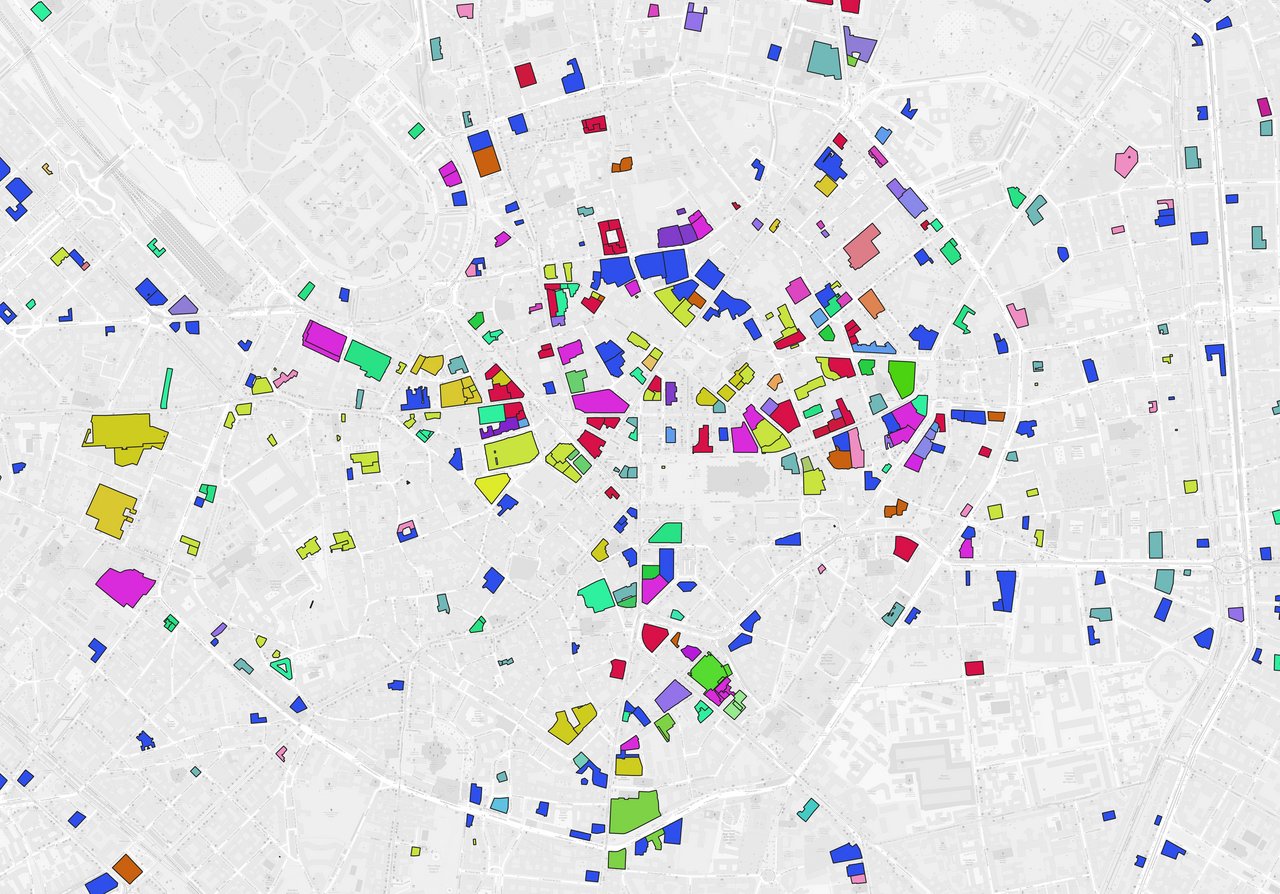
AB: The maps reveal a very strong concentration of financialized properties in the historic centre, beyond the major projects: if you take Piazza Cordusio as a reference point, a large part of the city around it is financialized.
Among the most significant projects are the Porta Romana rail yard and the Farini rail yard – the city's two new business districts – but also more peripheral cases along the north-west axis, such as the former Expo area, as well as the first major drivers of today's financialization, namely Porta Nuova and City Life. The State also mobilizes funds, through the Ministry of Economy and Finance and pension and social security institutions. That said, the key player in Milan remains Intesa Sanpaolo, which holds a large real-estate portfolio, partly because of properties arising from banking inefficiencies – that is, from borrowers no longer able to honour their loans (so-called NPLs, non-performing loans).
What is the best way to slow this trend, or possibly reverse it?
GP: Greater regulation and fairer taxation would be advisable; however, this would require coordination between national and local fiscal policy choices. At local level, my impression is that the room for manoeuvre to counter rising values is now limited; it is nonetheless possible to work towards bringing the logic of the city's transformation back under stronger public direction.
Cooperation is therefore needed among the different levels of government - Europe, State, Region, City - but also greater public direction, because what is striking is that real-estate operators have made substantial gains, while relatively little of this whole value-creation process has remained with the city. It is not that nothing has remained, but this is something that can be worked on, through a fairer exchange between public and private actors.
Our position is that it is possible to build planning policies, including at local level, capable of continuing to attract investment, but within an exchange able to guarantee far more in terms of public goods.
AB: One of the city's problems today is that it is experiencing strong polarization between very poor neighbourhoods and very wealthy ones: the current plan lacks a mixité objective.
How does regulation of this phenomenon by the City and the State fit in?
AB: Two levels need to be distinguished. Planning regulations (what can be built, where and with what volumes) are set at regional and municipal level. Tax rules (how real-estate are taxed), on the other hand, fall under national competence.
At European level, moreover, there is an underlying trend: the European Union wants to increase the weight of real estate within the financial market, in order to foster greater risk diversification in investments. To this end it has introduced common regulations — for example on long term investment funds, funds designed to channel capital towards long-term investments — which each Member State then transposes into its own national legislation.
In addition, there is a specific tax incentive: income deriving from participation in real-estate funds is ordinarily subject to a 26% withholding tax; however, for certain categories of non-resident investors, including specific foreign OICRs (Organismo di Investimento Collettivo del Risparmio, i.e. mutual funds, SICAVs, trusts, etc.) resident in countries included in the so-called 'white list', the regulations provide for an exemption from the withholding tax, provided that the requirements set out by law are met.
Do you have a forecast for how this situation might evolve over the next 5-10 years?
AB: As far as the financialization process in the strict sense is concerned (new property acquisitions by funds), our impression is that it has more or less stabilized in Milan.
GP: As for the broader market dynamics, much will depend on public policy choices. It is difficult to make forecasts, but a share of financialization is now an accomplished fact and there will not be much of a reversal: in the research we report a figure of over 4,000 financialized properties, which, once they become assets, tend to remain so, even as they pass from one operator to another. It is therefore unlikely that these properties will go back to being privately owned homes: they will remain within the financial circuit. It is possible, however, to try to better govern the processes still under way, and to aim for a certain redistribution of the value generated, ensuring a greater supply of rent-controlled housing.
I don't think we will see a further explosion of the phenomenon in Milan, not least because the city is small: if anything, we are seeing external phenomena, such as the luxury tourism that is spreading to other Lombard cities. We believe, and some operators confirm this to us too, that Rome will be very much subject to this phenomenon in the coming years: it already has a number of historic buildings managed by non-financial bodies – associations, professional orders – which could become objects of interest for financial operators.
What is the innovative contribution of your research?
GP: We are not the first to work on this topic. Other approaches, particularly those focused on economics or valuation, have already addressed it. However, we are urban planners, not economists. Our originality lies in the fact that, while paying attention to the economic mechanisms, we try above all to observe their effects in space (hence the idea of mapping). Financialization is very often discussed without actually seeing it: we try to show where it has an impact on the city, in which specific places.
As for future developments, we are extending the same analysis to other cities in Lombardy. We have also submitted a proposal for a national project that would allow us to compare our findings with Turin, Venice, and Rome, in order to understand how these phenomena manifest themselves in other Italian metropolitan areas.
What is your academic and professional background? How did you develop the skills related to the financial and economic side of this research?
GP: I am a full professor at the Department of Architecture and Urban Studies (DASTU) of the Politecnico, but my academic background comes from a completely different discipline: I graduated in Economic and Social Sciences from Bocconi University and in Theoretical Philosophy from the University of Milan (Statale), and I earned a PhD in Territorial Public Policy from Iuav University of Venice. My expertise in real-estate financialization derives precisely from this economics background, even though for many years now I have no longer worked as an economist in the strict sense: what I know about urban and real-estate finance I have learned mainly from Alberto.
AB: During my PhD in Urban Planning, Design and Policy at DASTU I had the opportunity to study the real-estate literature, an academic field still relatively underdeveloped in Europe compared with the United States, where universities such as MIT have entire departments dedicated to the topic. This path allowed me to study financialization in a broad sense and, at the same time, to look more closely at the more technical mechanisms. Conducting interviews with operators also helped a great deal in understanding the practical aspects of these phenomena. Having done my PhD in planning rather than in economics helped me: it is a very hybrid field, straddling urban economics, planning and a more design-oriented component.
Who did you collaborate with on this research?
GP: The research was funded as part of the activities of CRAFT (Center for Research on Anti-Fragile Territories) of the Department of Architecture and Urban Studies, established with funding from the second cycle of the Departments of Excellence programme. Also very important in this process was the MAUD Lab (Mapping and Urban Data Lab), the Department's permanent facility working on territorial data, which made an essential contribution to identifying and analysing the data. We also had numerous contacts with colleagues from other Italian and international universities, thanks to the network built by Alberto during his PhD. Further ahead, we hope to be able to develop the research together with colleagues from other disciplines as well, such as geographers, economists, valuation experts, planners and architects from other cities.
Related stories
Federico Bucci, the architect who has turned Mantua into an international laboratory
Interview with Elisa Boeri, researcher and assistant to historian Federico Bucci

“The Future is in History”: the living legacy of Federico Bucci
In memory of Emilio Faroldi: a historian and professor who combined scholarly rigor with humanity

Re-building the Future: How a Milan District Became a Model for Energy Efficiency
The village of Chiaravalle on the outskirts of Milan is home to four buildings owned by the municipality.

Altre Lombardie: Journey Through Resilient Territories
A project resulting from 28 workshops with approximately 1,600 participants, which focuses on housing, mobility, services and governance

Alejandro Aravena: architecture as a shortcut to equity
To young people, he advised: “Be nerdy, but at the same time, irreverent.”
You might also like

From circuit to laboratory
The collaboration with the Politecnico as seen by Autodromo Nazionale Monza

Research Takes to the Track at Monza
The agreement between Politecnico di Milano and the Monza National Circuit creates an open-air laboratory for safety, sustainability, materials, mobility and major events.

Digital sovereignty: why regulating AI is not enough
Interview with Roberto Baldoni, Senior Advisor for Technology and Cybersecurity Policy to the Ambassador of Italy to the United States
The creative force of mathematics, in the words of Sachiko Nakajima
The scientist and pianist is a tireless promoter of topics such as STEM, diversity and inclusion. In this interview she told us about her artistic world and her vision of mathematics.