

Gérard Mourou’s Nobel lasers

With his studies and inventions, the French physicist Gérard Mourou has opened up new and crucial research sectors, demonstrating an extraordinary capacity for innovation and vision. Thanks to its Chirped Pulse Amplification (CPA) is possible to create laser beams with power up to ten thousand times higher than what was available before, a technology that has made it possible to cure the sight of millions of people.
For this invention Gérard Mourou was awarded the Nobel Prize in Physics in 2018, together with his former PhD student Donna Strickland. Not only did Mourou conceive the idea and carry out the first demonstration, but he was at the center of all subsequent practical realizations of the idea and promoted two applications. We met Mourou at the Politecnico di Milano, on the occasion of awarding the Honorary Master’s Degree in Physics Engineering.
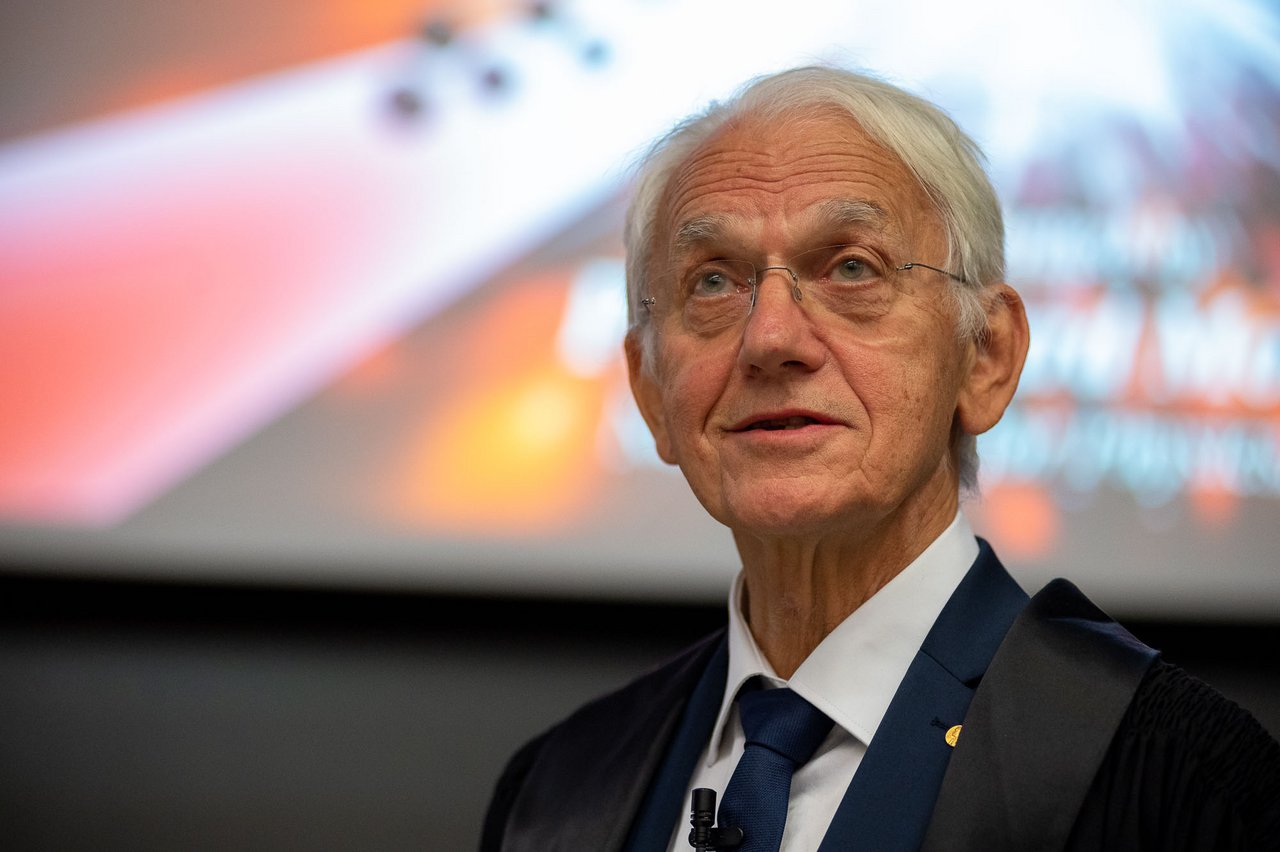
You studied in France and then in the United States. When did your passion for research and laser begin?
My passion for lasers started when I entered for the first time in a laser laboratory in 1967. So it was a long time ago. At that moment, I understood how much I could do, even if at the beginning you can’t see the results, which arrive years later; but I immediately understood that for me all this was exciting. I’ve been working with lasers ever since I’ve never stopped.
When you began working as a researcher, did you have the idea that you could do something important or was it something you found hard to imagine?
I wanted to do something important, but it wasn’t clear to me at the time what that was. At that time, we were still trying to study the laser spectrum over a given time frame. But at that time, we were working on a scale of 50 nanoseconds. I could not have imagined reaching femtosecond pulses, and Chirped Pulse Amplification (CPA), through which we can generate ultra-intense laser pulses with a peak power of a few Terawatts.
It was for this invention that you received many awards. The most important is the Nobel Prize. How has your life changed?
No, not much has changed. Life has changed maybe because I have to travel a lot, we went from one airport to another and travelled around for conferences, awards or lessons. And then COVID hit and we had to stop, that allowed us to rest.
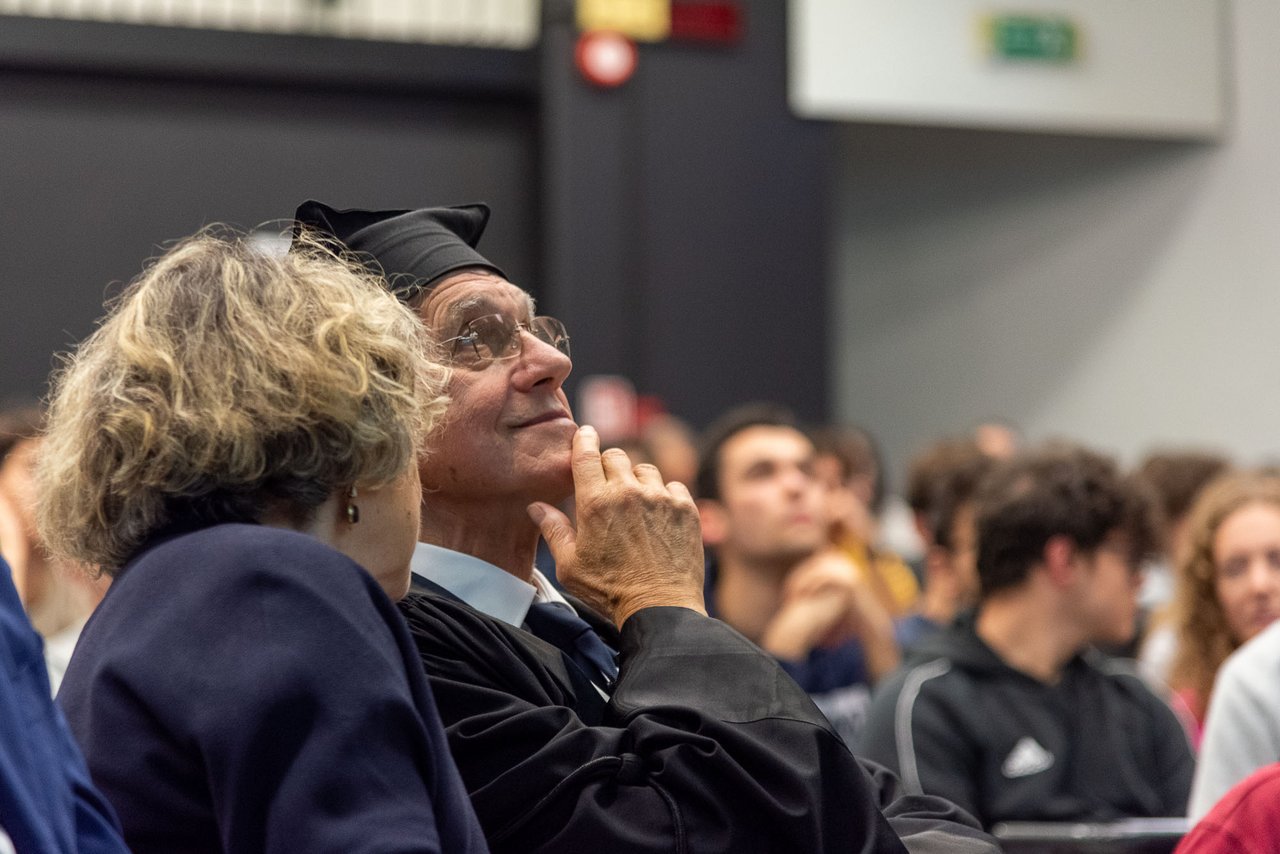
You received that prize with your colleague Donna Strickland. Is there good collaboration between colleagues?
Oh yes, especially with Donna. The thing to mention is that Donna was the third woman to win the Nobel Prize for physics. I also consider this great achievement for me. When I received the call from the Royal Swedish Academy of Sciences, in addition to personal emotion, I was happy to hear that I would share it with one of my former students. I was very proud to have been the advisor to the third female Nobel laureate.
What are you working on now, specifically?
We are trying to transfer the knowledge and technologies studied up to now into nuclear physics. One of the most important applications could be energy. Nuclear energy with femtosecond pulses, so very short pulses. Nuclear energy is powerful if you know how to make it safe and clean. And so, at the moment, I’m studying a new way to do all of this. Nuclear energy with femtosecond pulses, very short pulses.
Looking at your history can give us the impression that you work on things that are difficult for the general public to understand. Then it turns out that your research has a practical impact on everyday life. Is it important to know that there are practical applications that can change people’s lives?
That’s why I love to research. I love research because it leads to unexpected results. In Medicine, my research led to the development of photorefractive keratectomy and precision laser surgery. To correct both myopia and astigmatism of the human eye. Well, that discovery was completely accidental, it wasn’t foreseen. It all happened because, whilst working, one of my students was hit by a laser in the eye. The doctors who examined him noticed that the damage to the cornea was defined and clean, it was then that we understood that it could have an application in ophthalmology. This is precisely what we call serendipity. Like Christopher Columbus: he was looking for the Indies and found America.
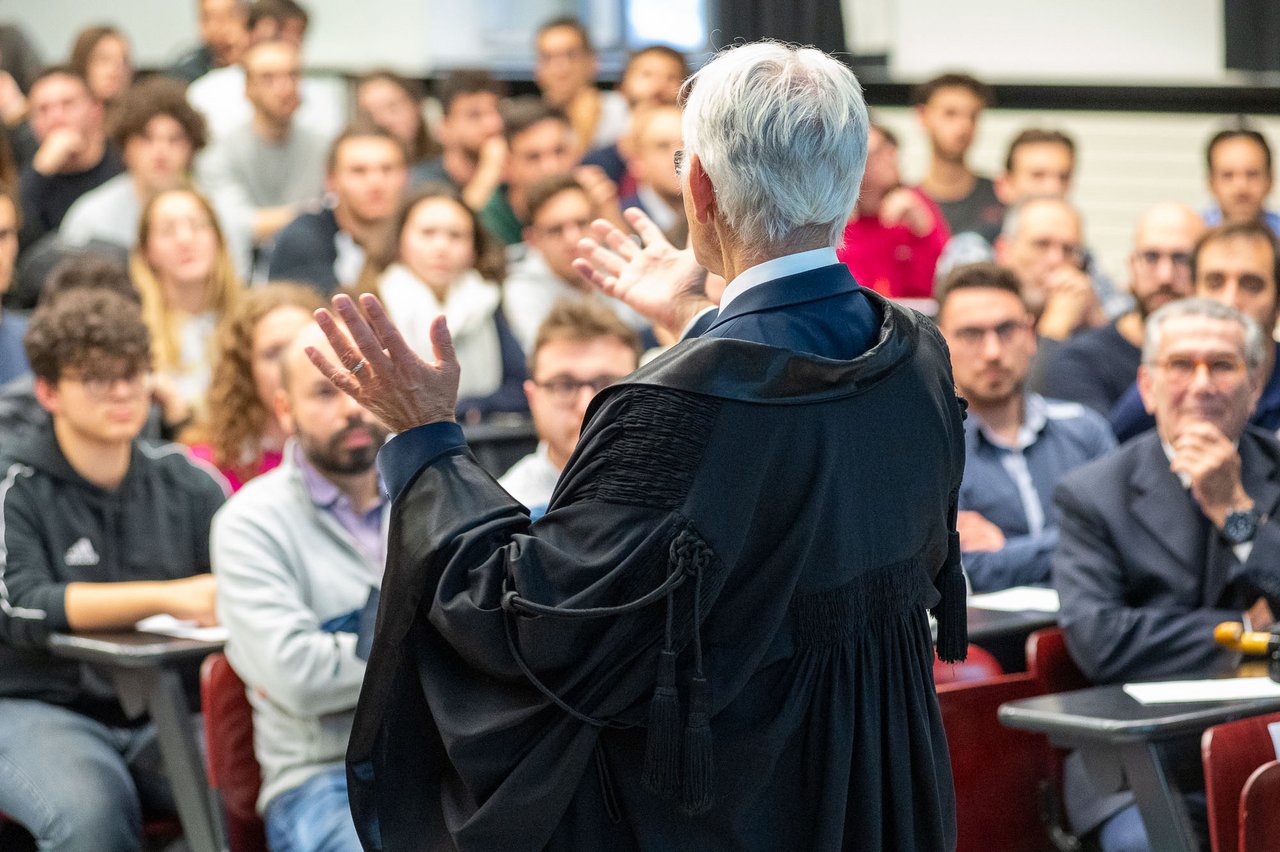
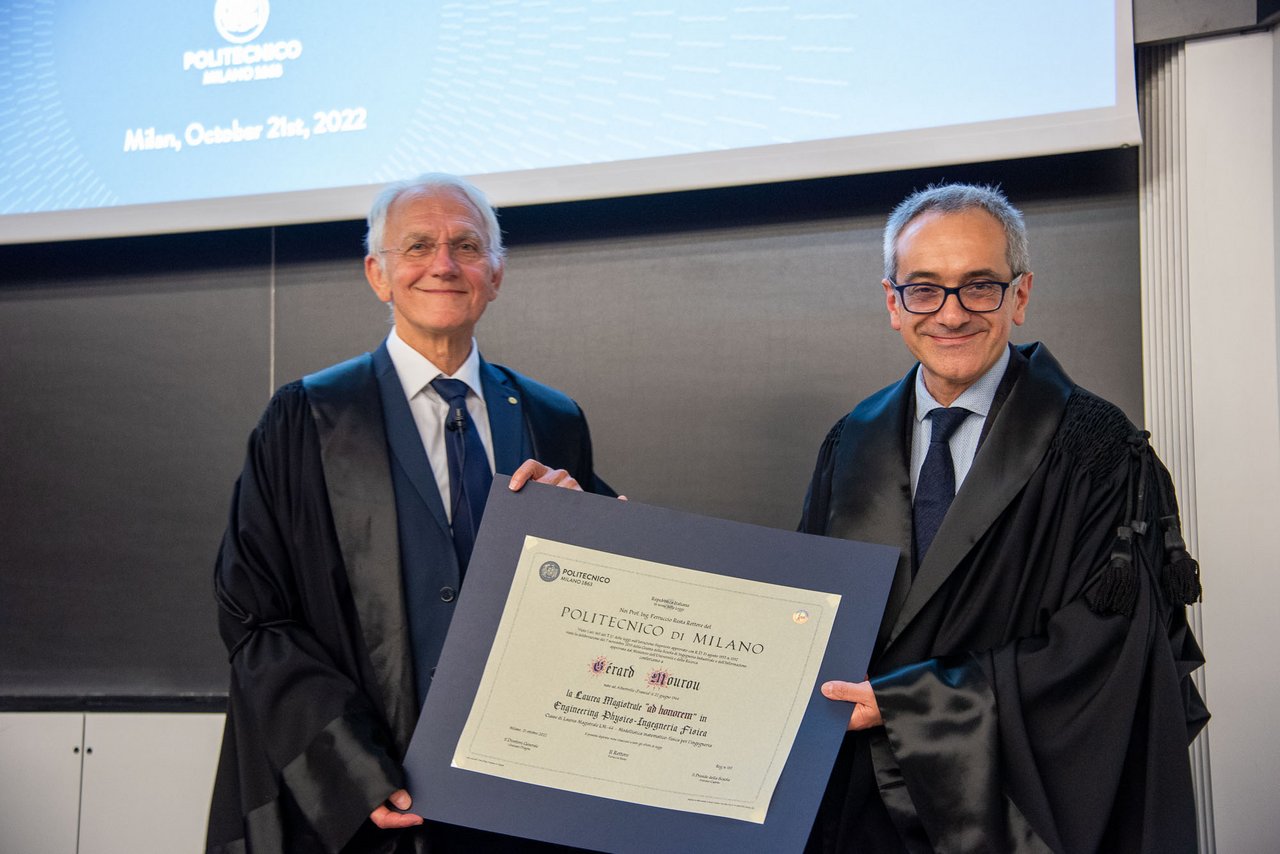
You received an honorary degree from the Politecnico di Milano for your advanced research in the field of physics. What does this mean to you?
These accolades are crucial because that’s how I feel valued. When you receive an award like this, you feel good because you admire the people who give it to you. The photonics researchers at the Politecnico di Milano are among the best in the world, so this is an honour for me.
Related stories

Compostable, edible, made from apples: the label that reduces the environmental impact of food packaging

Where design engages with living matter: B.Lab and the future of biodesign
The human being as part of an ecosystem. B.Lab, the new laboratory at Politecnico di Milano dedicated to biodesign and materials for transition, originates from this shift in perspective. Among mycelia, algae, bacterial cellulose and waste biomasses, the…

From waste to value: CELLS research among silk, sustainability and nanofibres

Inside reactions: how catalysis works
Discovering the chemical process which affects us more than we think
![[Translate to English:] Andrés Martínez](/fileadmin/user_upload/images/articoli/2025/comunicazioni_veloci/20250416_113533-1152x1536.jpg)
Fast, Secure Communications with Chaotic Light
Data to be transmitted wirelessly thanks to new photonic chips.
You might also like
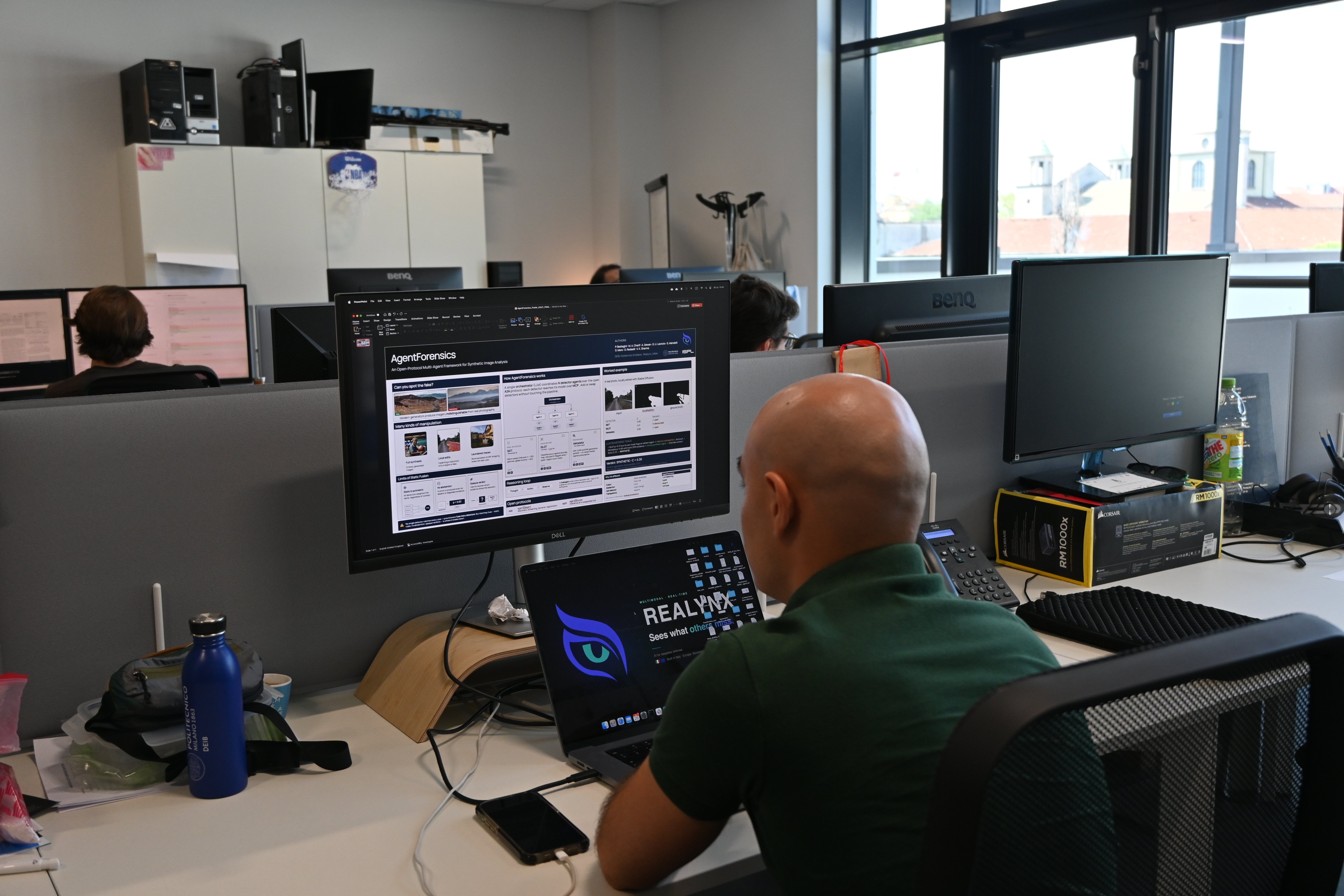
Beyond true and false: recognising synthetic content in the age of AI
From cloned voices to deepfakes, the challenge is no longer just to distinguish what is true from what is false, but to understand how content has been produced, transformed and used.

Who owns Milan? Map reveals forces reshaping the city
The financialization of the real estate market and its effects on urban development dynamics

Technology in the desert: how to map in 3D Egyptian and Roman excavations using photogrammetry
An interview with Alessandro Mandelli, a veteran for Politecnico di Milano's excavations in Egypt

Reading Maps: The Taste of Discovery
Jessica Gritti discusses the research on the Maps section of the Civica Raccolta delle Stampe “Achille Bertarelli”: from cataloguing and new international connections to the value of collaboration between universities and cultural institutions.
