

Discovering EMCLab


We take you to the discovery of the EMCLab of the Department of Information Electronics and Bioengineering.

The Electromagnetic Compatibility Lab deals with electromagnetic compatibility, a specialist subject that studies interference phenomena.
EMCLab has two missions: on the one hand the advancement of knowledge in the field of electromagnetic compatibility, through academic and industrial research activities; on the other hand, pre-compliance consultancy to companies.


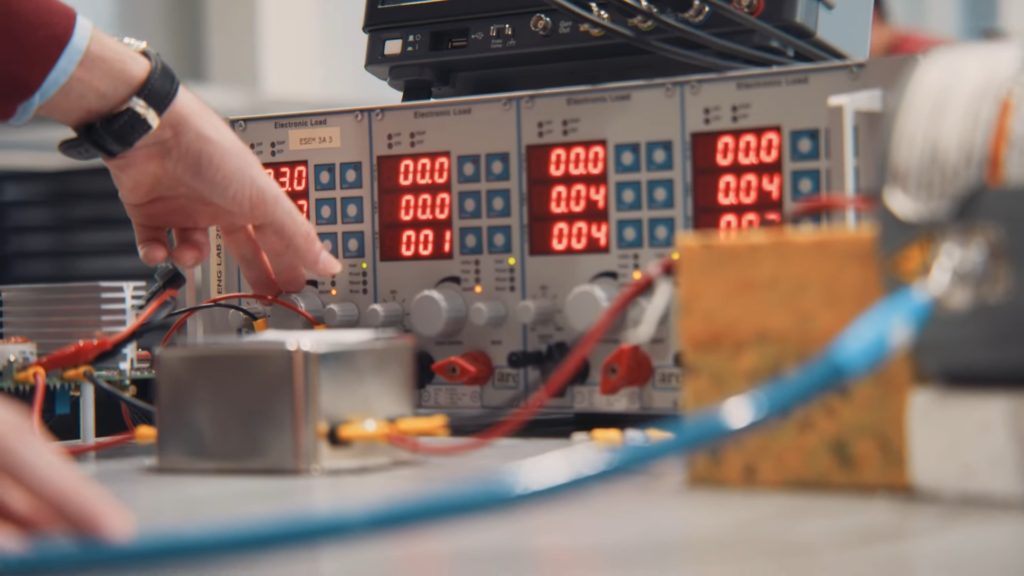
In the laboratory, verification, design and modelling methods are developed to achieve three fundamental objectives: that the systems do not emit or emit electromagnetic emissions in an acceptable way; that a system immersed in an electromagnetic field generated by other systems does not malfunction; that within the system, the subsystems and devices constituting it are electromagnetically compatible.

You might also like

Geopolitical instability, health crises: the risks in the pharmaceutical supply chain, and how to manage them

From circuit to laboratory
The collaboration with the Politecnico as seen by Autodromo Nazionale Monza

Italia di mezzo, the research that places the Italian province at the centre
The DAStU project studies territories that coincide neither with large metropolitan areas nor with inner areas, and seeks to build new representations to support their socio-ecological transition

“I Wanted to Become an Astronaut. Today I Help Astronauts Prepare for Mars”
A simple Holter monitor could track cardiovascular fitness during space missions

Working Across Time Zones: A Hidden Advantage for Science
An interview with Professor Miriam Judit Manchin.