

A modular kit for growing microalgae at home and improving the environment


Is it possible to improve the environment in which we live or work and reduce CO2 emissions at the same time? This is the goal of Struna, the modular kit for the integration and installation of one or more bioreactors for the cultivation of microalgae, developed and patented by the ABClab unit MaBa.SAPERLab at the Politecnico di Milano, dedicated to Architecture, Built Environment and Construction Engineering.
The kit consists of an integrated system, made up of a structure of modular elements spread horizontally and vertically and an integrated system consisting of bioreactors managed by a parallel connection, for the cultivation of microalgae.
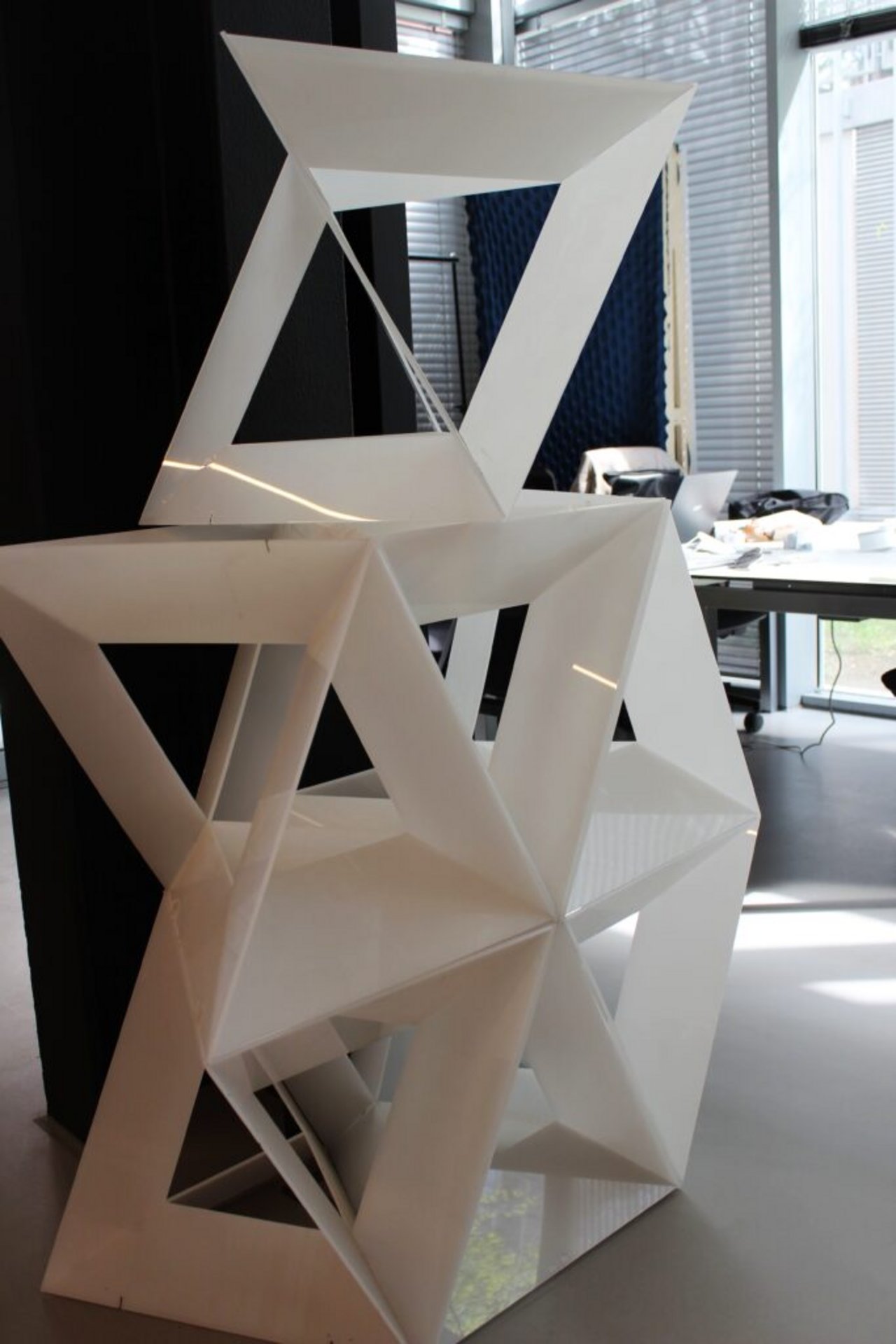
The conception of the kit
The initial idea was conceived at the exhibition “999. Una collezione di domande sull’abitare contemporaneo” (999: A Collection of Questions on Contemporary Living), which was held at the Milan Triennale, in which the Politecnico di Milano was invited to participate with an installation that served as the entrance to the event. The basic idea was to develop an element linked to nature: researchers and PhD students initially started with the idea of using pots with earth, then the idea of hydroponic cultivation. But after meetings with biologists from the State University of Milan, it was decided to try to design something using microalgae.
The benefits of microalgae
Microalgae have considerable air filtering properties and are a possible solution for an environment such as an exhibition, in which numerous people gather in a relatively small space. Not only that, unlike plants, which need sunlight for photosynthesis, microalgae bioreactors filter CO2 emissions 24 hours a day in all seasons, so much so that in some large cities such as Paris, brownfield sites have been reclaimed for the installation of microalgae bioreactors.
Microalgae also have other qualities beyond those linked to air quality: they are also used in the food sector (spirulina comes to the rescue in situations of extreme poverty against malnutrition, since just a few grams help to reach the minimum daily requirements) and in the pharmaceutical sector.
Potential developments also include agricultural applications or the production of heat and at the same time the purification of waste water. Experiments have begun in the use of microalgae as fertilizers or natural biostimulants to improve the biochemistry of the soil and agricultural crops in general. Another experimental sector is buildings: the treatment of urban and industrial wastewater, thanks to the adaptability of the microalgae to different growth substrates; and the production of heat that occurs during the filtering of harmful substances, which is part of the feeding process of the microalgae.
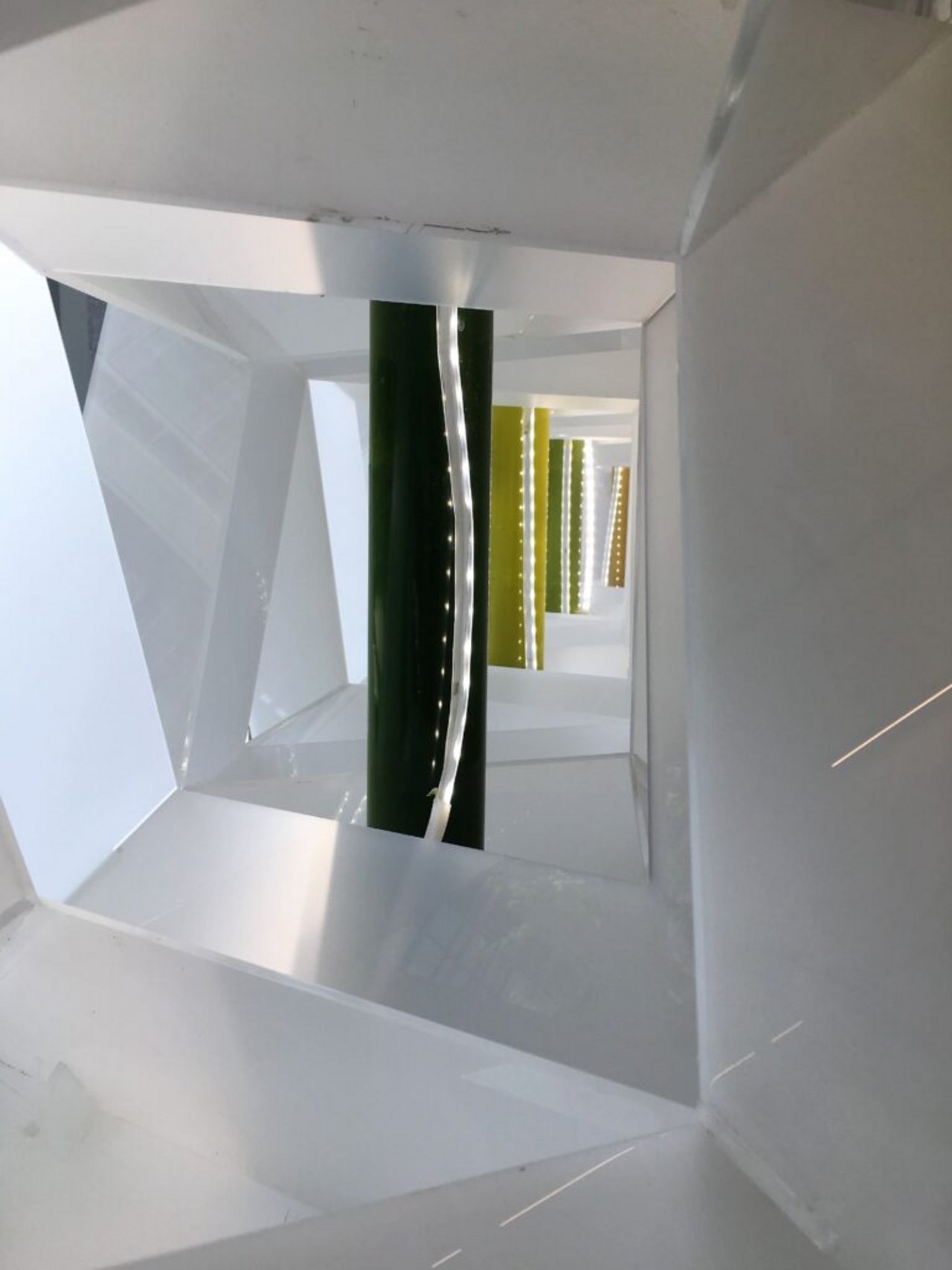
Applications
Thanks to its extreme versatility, the modular kit can be set up both indoors and outdoors, adapting to the shape of the area in which it is installed. It can therefore be used in open spaces to divide the living areas, improve aesthetics, increase air quality and sound insulate individual spaces. The Struna kit can also earn you credits for green certificates.
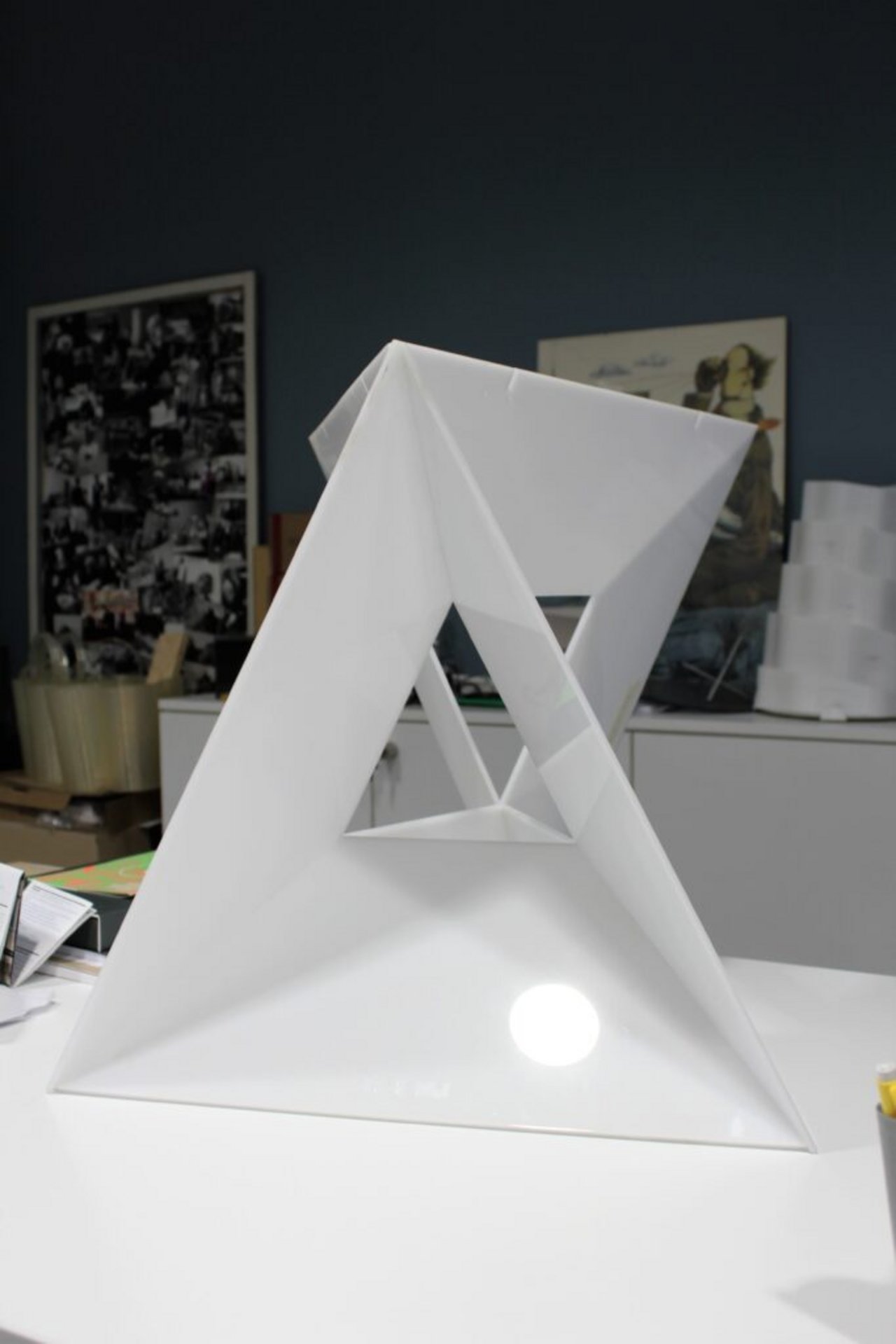
Customization
The form is based on a combination of elements that are assembled dry and without difficulty. Our Department tecnicians are in contact with companies potentially interested in putting the modular element into production; this parametric structure can be customized according to the needs and characteristics of the environment in which Struna is to be installed. The kit can take various forms, both horizontally and vertically and is modular precisely so that it can be customized according to requirements.
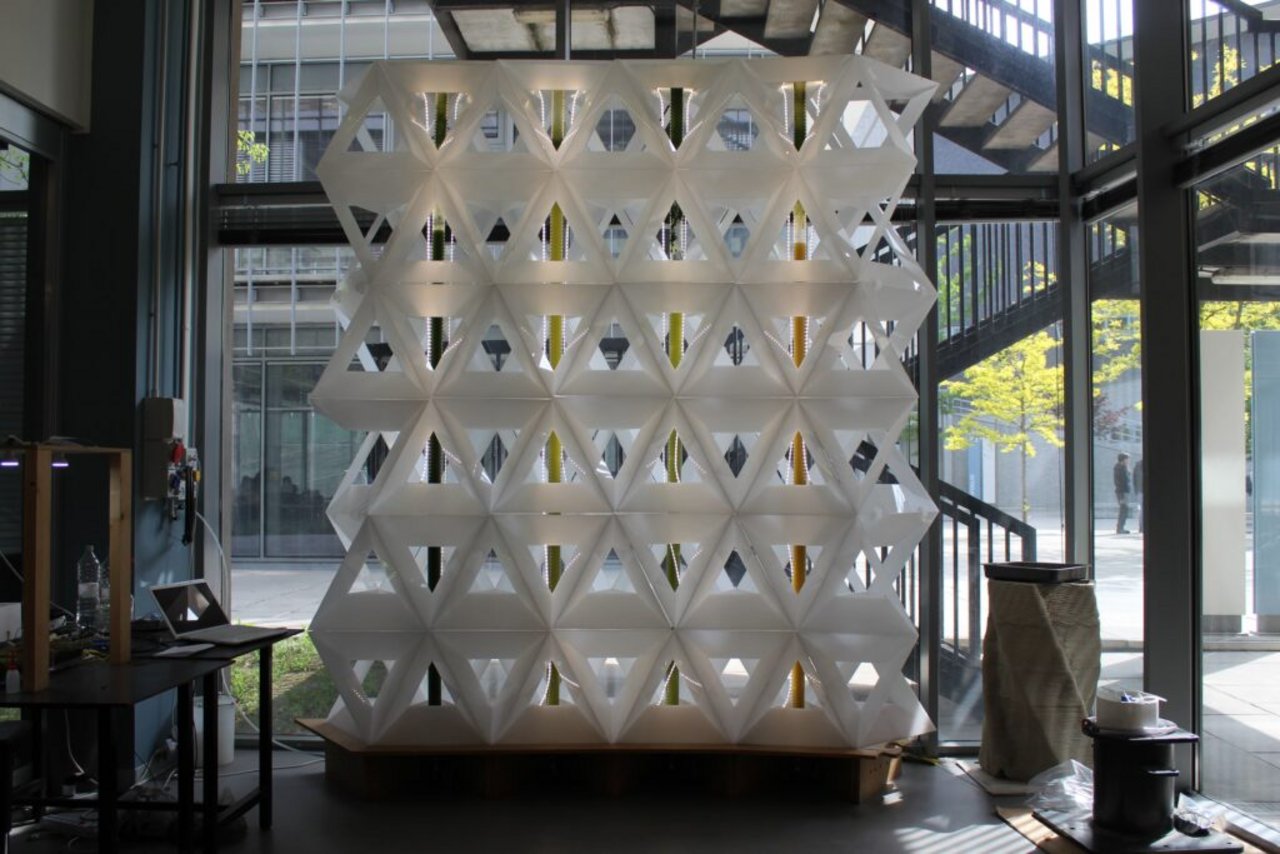
Patent progress
Companies are showing interest in Struna and its production and marketing: at the moment, the only example is installed in the ABC laboratories, but the MaBa.SAPERLab research team, led by Professor Ingrid Paoletti, aims to make the kit increasingly widespread, in part through the development of software to design and install it in any situation.
Related stories

Nano sensor detects forever chemicals hidden in water
With METASENSE project, Margherita Maiuri aims to develop a compact and reusable device for monitoring PFAS in water.

Solar energy and desalination: DESOLINATION’s sustainable challenge
Engineering, chemistry, diplomacy, and project management.

Innovative solutions for more sustainable mobility
Antonio Pagliaroli tells us about a new system for calculating vehicle emissions

Sustainable technology against deforestation in Madagascar
Alternative supply chain transforming organic waste into solid fuels to replace conventional ones

How kites and drones can revolutionise wind energy
Discovering the new frontier of renewables
You might also like

Geopolitical instability, health crises: the risks in the pharmaceutical supply chain, and how to manage them

From circuit to laboratory
The collaboration with the Politecnico as seen by Autodromo Nazionale Monza

Research Takes to the Track at Monza
The agreement between Politecnico di Milano and the Monza National Circuit creates an open-air laboratory for safety, sustainability, materials, mobility and major events.

Digital sovereignty: why regulating AI is not enough
Interview with Roberto Baldoni, Senior Advisor for Technology and Cybersecurity Policy to the Ambassador of Italy to the United States
