

Milan–Cortina 2026: the science behind ski mountaineering at the Olympics


With the inclusion of ski mountaineering in the programme for the Milan-Cortina 2026 Olympics, a discipline that began life in the mountains has now become a very high intensity sport, to be measured in seconds and grams. Engineers and researchers working at the Human Performance – E4Sport laboratory at the Lecco Campus of the Politecnico di Milano have been studying the movements of the athletes, their metabolisms, and the interaction between the athlete, the equipment and the environment. From tests in the field to metabolic measurements, the goal is to discover how to optimise the athlete’s performance without spoiling their individuality, and so building a bridge between research, training and the development of Olympic ski mountaineering.
Professor, can you tell us what you do at Politecnico di Milano, and what is the focus of your research at the Human Performance – E4Sport laboratory at the Lecco Campus?
I’m a professor at the Politecnico di Milano, and I teach and do research in the Department of Mechanical Engineering. The Human Performance Lab specialises in the study of human movement and biomechanics as applied to sport, injury prevention and rehabilitation. Our research involves studying the performance of athletes, both the able-bodied and those with disabilities, with the aim of improving the interaction between the individual, the equipment and the environment. We use state-of-the-art technologies for measuring movement, assessing functions and developing innovative solutions, also working together with the industry. So, the lab acts as a meeting point between academic research, sports applications and inclusion, and I’m coordinating the work of the lab with regard to ski mountaineering.
How many of you are there?
The work is under the supervision of Professor Marco Tarabini, and involves Professor Manuela Galli, who carries out metabolic and biomechanical measurements on athletes, and Professor Diego Scaccabarozzi, who is responsible for mechanical measurements and equipment sensing. The huge amount of work we’ve done so far, both in the lab but especially out in the field, was made possible thanks to the contributions by researchers, PhD students and those writing theses, and in particular Lucia Donno, Carlalberto Francia, Filippo Motta, Greta Baronchelli and Mattia Villa.
Let’s start with ski mountaineering: it’s a relatively young discipline on the Olympic scene, making its debut right now at the Milan–Cortina 2026 games. Why has it become such an interesting object of research, including from a scientific and engineering perspective?
The main reason is precisely because ski mountaineering is new to the Olympic programme: this attracts general attention — not just that of insiders. I find it interesting from a scientific and engineering perspective because it’s still a “young” sport. Unlike sports such as cycling, which has already seen a lot of work in terms of engineering, there’s plenty of room for improvement in ski mountaineering. It means we can do research in an area where real progress can be made — but it’s also a challenge, because everyone else can exploit the same margins and also make rapid progress. It’s important not to lose momentum at this stage.
There are two Olympic formats: the sprint and the mixed relay, very different from traditional ski mountaineering. These races take just a few minutes and are very intense. How has this change affected racing methods, preparation and training patterns?
These are relatively new types of event and have just a short history compared to the long mountain competitions. The sprint lasts for approximately 2½ to 3 minutes for the top athletes (with men at around 2½, and women at around 3). The mixed relay is made up of several short legs, of between 7 and 8 minutes for men, and about one minute more for women. These are much shorter events than the “individual” competitions which can last an hour and a half, or races such as the Mezzalama Trophy that take four to five hours.
The patterns of movement and the technique for driving forward are totally different. The metabolisms that are involved also change: very intense short races have more recourse to anaerobic processes, and use carbohydrates in a different way to more sustained efforts, which rely more on an aerobic metabolism and use fat as an energy source. So, it’s essential to understand which sort of metabolism you want to improve with training, because it depends on the duration and intensity of the test the athlete has to face.
What does your lab do to improve athletes? You collect data in the lab and in the field. How do you use these data to make their movements more efficient and effective, especially when it comes to sprints?
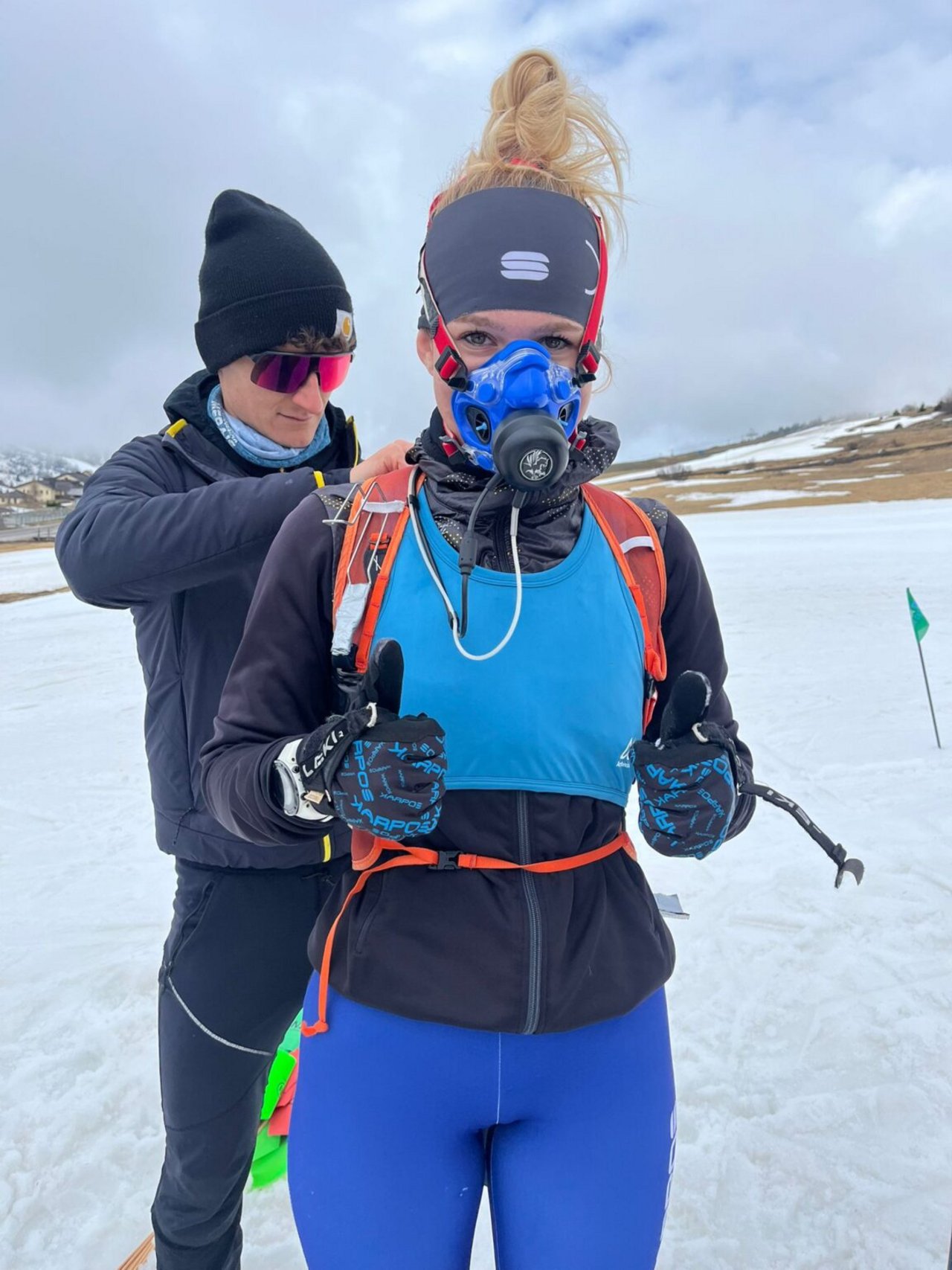
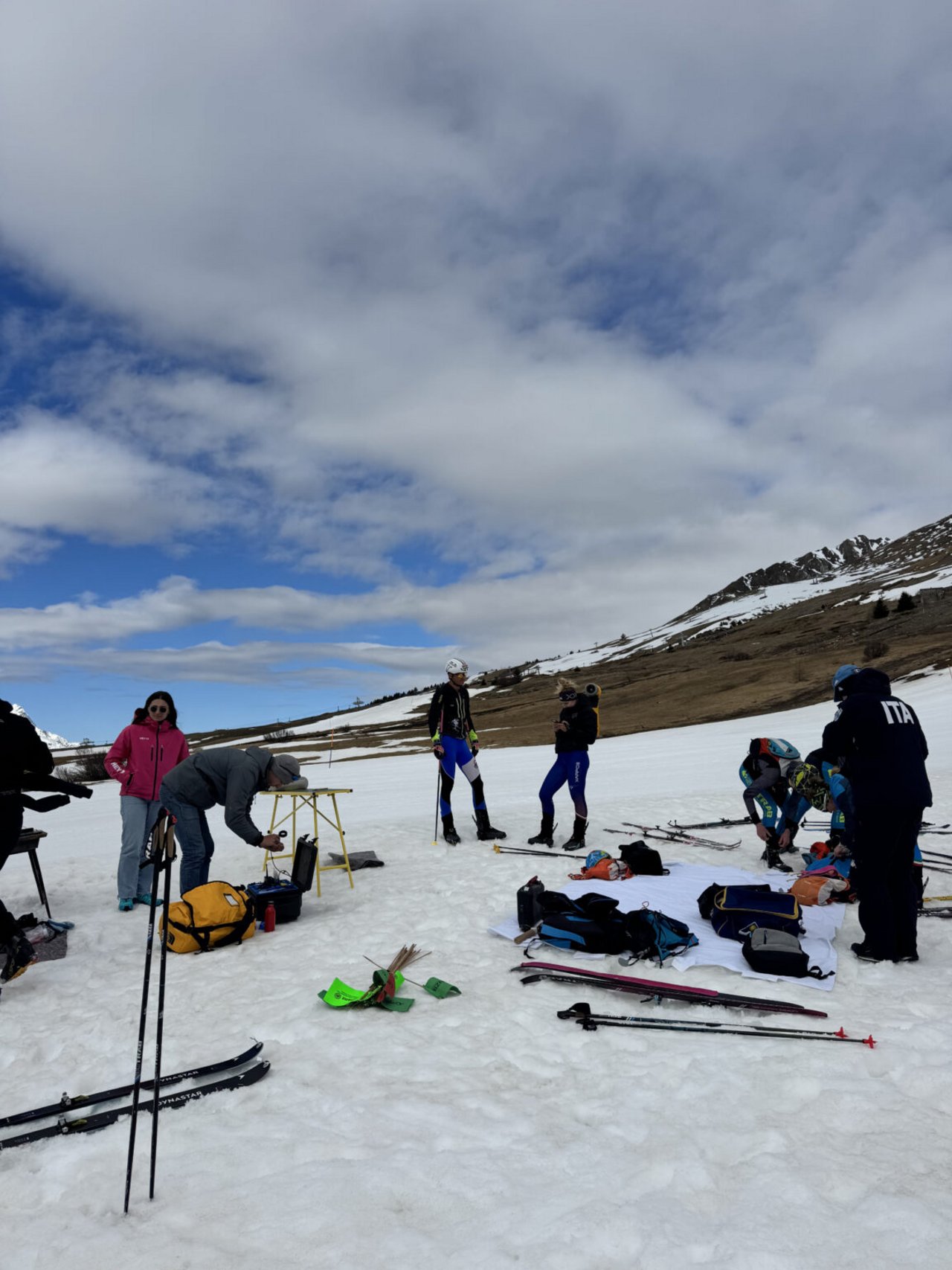
We carry out tests in both the lab and the field (on snow and grass) that also copy the route of a sprint. At each stage of the route we collect metabolic and electromyographic data, lower and upper limb thrust measurements, speed of progress, step rate, centre of gravity position — everything that can be measured. The first thing is to analyse and correlate these data.
However, it’s no easy task to find “the most efficient form of movement”; the differences are often small and vary widely between athletes. There is a subjective element to consider in adjusting movements, so to understand the objective side you need a lot of data on many athletes, collected over time. Our aim is to distinguish what is individual from what is generally applicable, and to pass on useful suggestions to other athletes wherever possible, through our work with technicians and coaches.
Have you already seen any measurable improvements in athletes as a result of your work?
I’m not saying that our data alone has led to large-scale improvements. However, I can say that we’ve supplied some important information to technicians and coaches about how to apply their training. Any progress that can be made comes from combining our studies with the work done by coaches. It’s our joint efforts that can produce real benefits.
One of the aims is to identify the best way to conduct oneself during a race. What does that actually mean?
It means putting together the emerging data to help understand race strategies and management — but we need to acknowledge that every athlete is different. There are different ways of performing even among the best, with different incidences of fast sections and those at walking pace; these are generally alternated — also to take account of the variable nature of the slope. If there were a “single winning” strategy, we would notice that all the athletes on the podium behaved in the same way, but this is not the case. So our aim is to provide knowledge and methods that can be adapted to fit individual characteristics.
Do you also work on the equipment? How much does technology matter to the athlete — for example, the weight of boots, poles with sensors, and so on?
Yes, if you change the athlete’s patterns of movement it then becomes quite plausible that the features of his or her equipment will also affect his or her performance. For example, we are currently focusing on the flexibility of the skis, or initially, on those accessories that modify the way they perform, without actually changing the skis themselves. We’re collecting data in order to discover whether modifying the equipment can improve the athlete’s patterns of movement.
Another important issue is the impact of any measuring instruments; adding weights or sensors can disrupt the athlete’s movement. Athletes are aware of even small variations — especially the lighter athletes, for whom a few extra grams have a proportionally greater effect. So, we’re trying to optimise the measuring instruments that we’re developing for this purpose, and we’re moving towards low-impact wearable devices for taking some of the measurements. It’s vital that we get reliable measurements, but they mustn’t affect the athlete’s movement.

Schematic representation of the computation of the propulsive force, obtained by combining force and angular data. Variations across different speeds are observed: in particular, at higher running speeds the inclination angle increases, resulting in a greater force component in the direction of progression.
Are you involving people with other skills in the research group?
Yes, in addition to engineers we’re starting to involve designers. Design plays an important role in making the devices more ergonomic and less invasive. We are looking for transversal skills within the Politecnico, in order to combine technology, engineering and design. The fact that the research is taking place on a university campus like the Lecco Campus, where it’s easy to meet colleagues with different skills on the same site, enables the sort of multidisciplinary input that is vital for research like this.
Does your research only involve elite athletes, or is it for young people and amateurs as well?
The work we do with elite athletes often transfers to sport at an advanced amateur level and beyond — we’ve seen this in cycling for example. However, we’re especially focused on applying it to young people, and so we’re working with the youth teams of the FISI Regional Central Alps Committee. By working with bodies that are still developing, one can achieve some significant improvements in terms of training. Ski mountaineering also involves many types of performance (from races that take a few minutes to those that last many hours). Profiling is a useful way to determine whether an athlete — due to a genetic predisposition or to certain metabolic characteristics — is more suited for short or long races. It’s better to improve an aptitude that is already there than to try to develop one that is unsuitable for that particular athlete.
What sorts of metabolic measurements do you use for profiling?
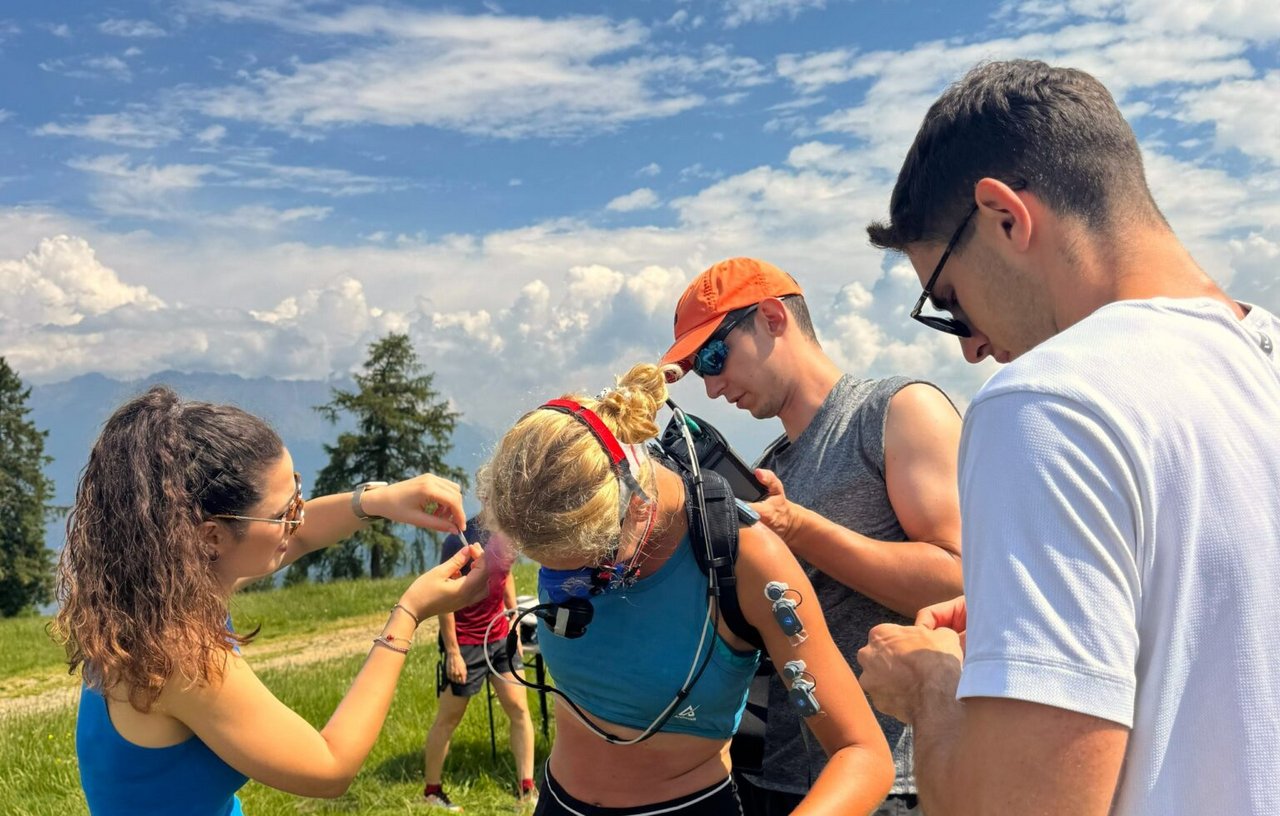
We measure aerobic and anaerobic indicators. An important aerobic indicator is VO₂max, or maximum oxygen consumption, which provides an idea of the athlete’s aerobic capacity. On the other hand, lactate production rate (VLamax) serves as an indicator of anaerobic performance. We’re developing procedures and devices for the latter, including wearables that are specially for ski mountaineering, alternatives to the more invasive methods.
Can these devices and investigations also help the amateur?
Yes, but on different levels. For the amateur, a lot of information is already available from smart watches, but these rely on average models; they’re not precise enough for a high-level athlete, although they’re useful for anyone training occasionally. Personalisation is crucial for top athletes, so you can’t just make decisions about nutrition or capacity on the basis of average data. Cycling is a good example here: for a professional cyclist taking part in a long race, one can calculate how many grams of carbohydrates are required every hour in relation to a particular activity (climbing, sustained riding, etc.), and then adapt his intake based on actual consumption. Applying the same criteria to amateurs who have significantly lower levels of performance can even be counterproductive.
What role can the Politecnico play in developing Olympic ski mountaineering, and what does this project tell us about the relationship between research and sport?
While we’re now looking at Milan–Cortina 2026, we should also be thinking about the 2030 Olympics in France: planning ahead is so important. Countries such as China and the United States, which previously didn’t have much interest in ski mountaineering, have started development programmes since it became an Olympic sport. If federations with lots of resources start to invest, the growth will be rapid.
Lecco is an ideal place for doing this work: it’s close to Valtellina, which has played a vital role in the development of modern competitive ski mountaineering and its equipment; it’s in the middle of the Alps, and it has athletes, companies and institutions that can support research in the field of sport. Our role is not to replace coaches and trainers, but to act as intermediaries; combining technology and engineering with existing technical skills is very important, especially in endurance sports.
Could you mention some of the athletes you have worked with?
We’ve carried out tests with many athletes from the youth teams of the Regional Central Alps Committee. But among those who’ve taken part in our tests, there are also some adult athletes on the committee who are now competing as professionals in the sports sections of the Italian armed forces. I could mention Giulia Murada, an athlete in the Army Sports Centre called to participate in the Olympics; Rocco Baldini, with the same training background, who won gold in ski mountaineering at the Youth Olympics in Lausanne, and Katia Mascherona, an athlete with the Fiamme Gialle group.
Who will be representing Italy at the Olympics?
Unfortunately, we only had the chance to put forward one male athlete, and Michele Boscacci was chosen. The situation was better for women, with a quota of two athletes: Giulia Murada is a sprint specialist and proved to be one of the most competitive athletes at the start of the season, winning three places on the podium in three World Cup races. Meanwhile, Alba de Silvestro was chosen for the relay, together with Michele Boscacci, but she will also be competing in the sprint, where she has shown she can achieve important results. Clearly, there are complicated criteria for the selection process and the very limited number of places available to individual nations for the Olympics has prevented us from bringing all the excellent athletes we would have wanted to.
A final point of interest: you said you’ve taken part in amateur races from time to time. How would you match up against elite athletes?
It’s an interesting notion; because of the relatively limited number of people who take part in ski mountaineering competitions, amateurs can well come up against professionals in open events. It is always pleasing for an amateur to be able to compete with professionals, even if the contrast can be harsh. If you imagine an uphill race, with a height difference of around 600 metres, the world’s top specialist in this discipline might finish in a time of around 18 minutes, leaving the first in pursuit almost a minute behind: a huge gap when compared to the duration of the race. The best female specialist might be about three minutes behind, and would be in the part of the ranking where high-level male athletes still appear. If we scrolled down the rankings, we’d start to find her pursuers mixed in with the very best amateurs, with times of around 24 minutes. Even lower down the rankings, we might also find some veterans of over sixty, with a time of 30 minutes. The time difference is obviously abysmal from a competitive viewpoint, but it is still a surprising performance in the eyes of much younger people who practise ski mountaineering as a tourist sport.
You might also like

Where design engages with living matter: B.Lab and the future of biodesign
The human being as part of an ecosystem. B.Lab, the new laboratory at Politecnico di Milano dedicated to biodesign and materials for transition, originates from this shift in perspective. Among mycelia, algae, bacterial cellulose and waste biomasses, the…
In the laser museum where physics tells its story
Period instruments and pioneering prototypes trace a century of research, all the way to ultrafast lasers and attosecond science.
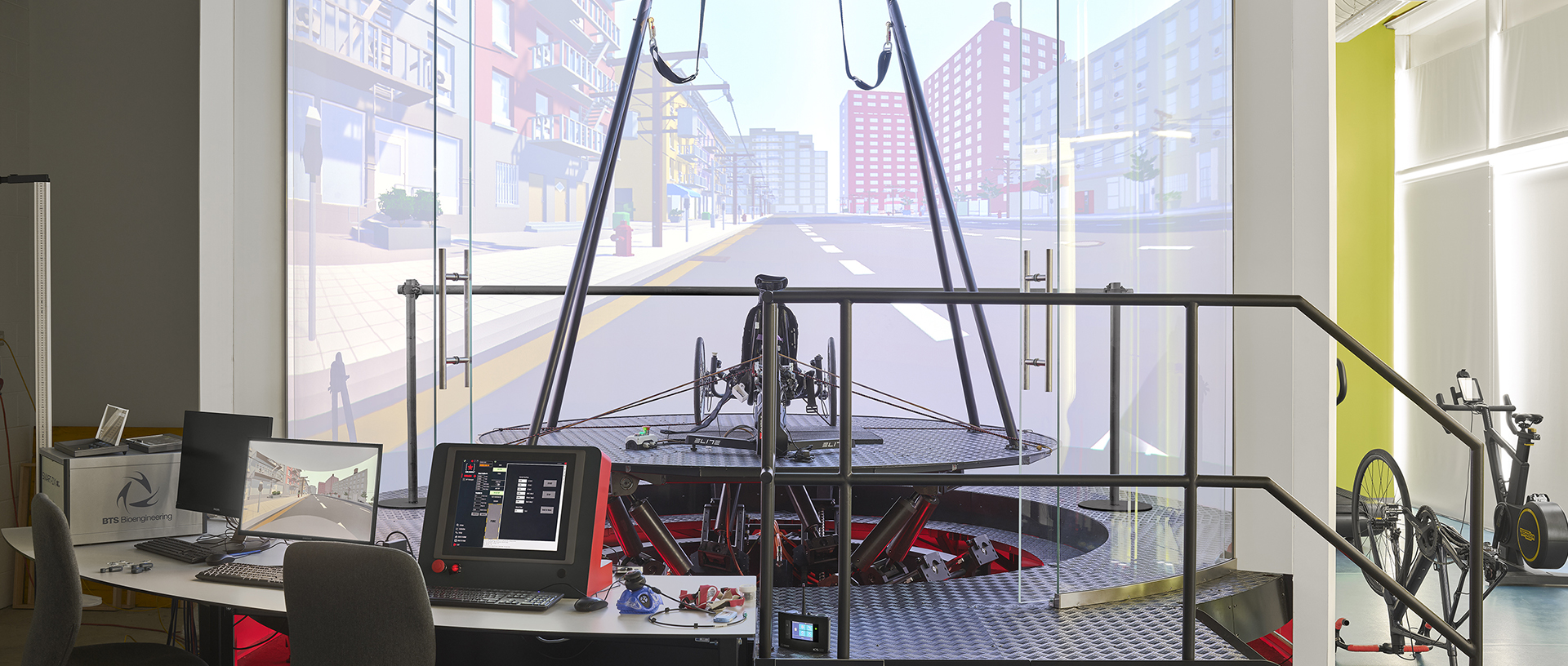
Bobsleigh, bicycles, wheelchairs and feet: Lecco’s HexaLab is the world’s most advanced multi-sport simulator
The HexaLab at the Lecco Campus is based on the “human-in-the-loop” approach, whereby a human operator can control the simulator and physically interact with the equipment and the “simulated” environment around them
Art, science and technology in the unique design of Horacio Pagani’s hypercars
A close-up with the Italian-Argentinian entrepreneur, founder of Pagani Automobili, who revolutionised the automotive sector with his talent