

 by
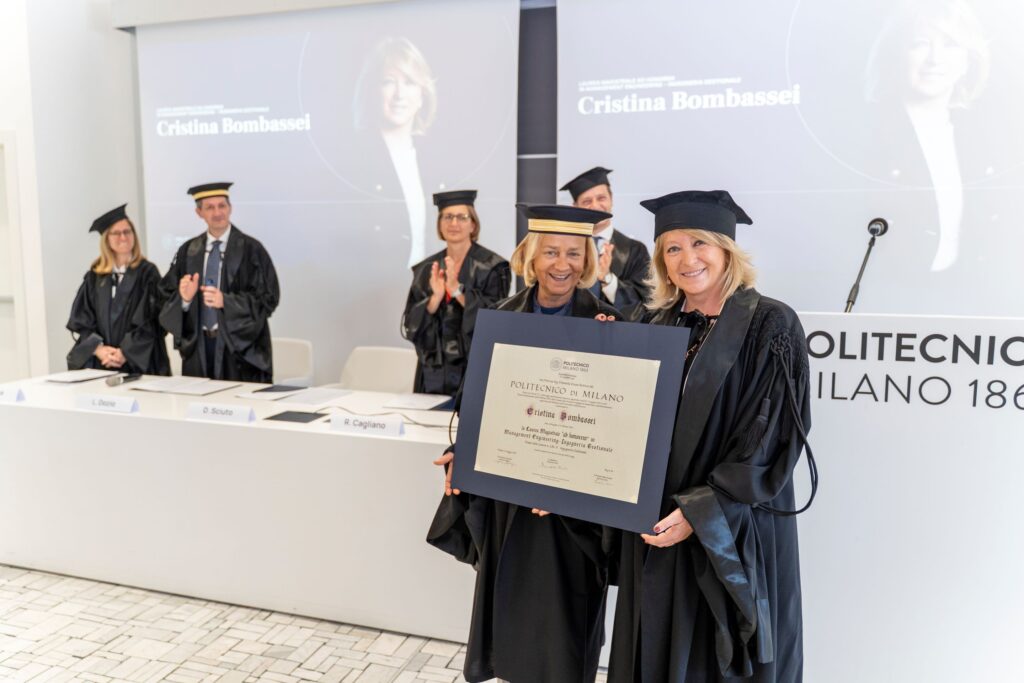
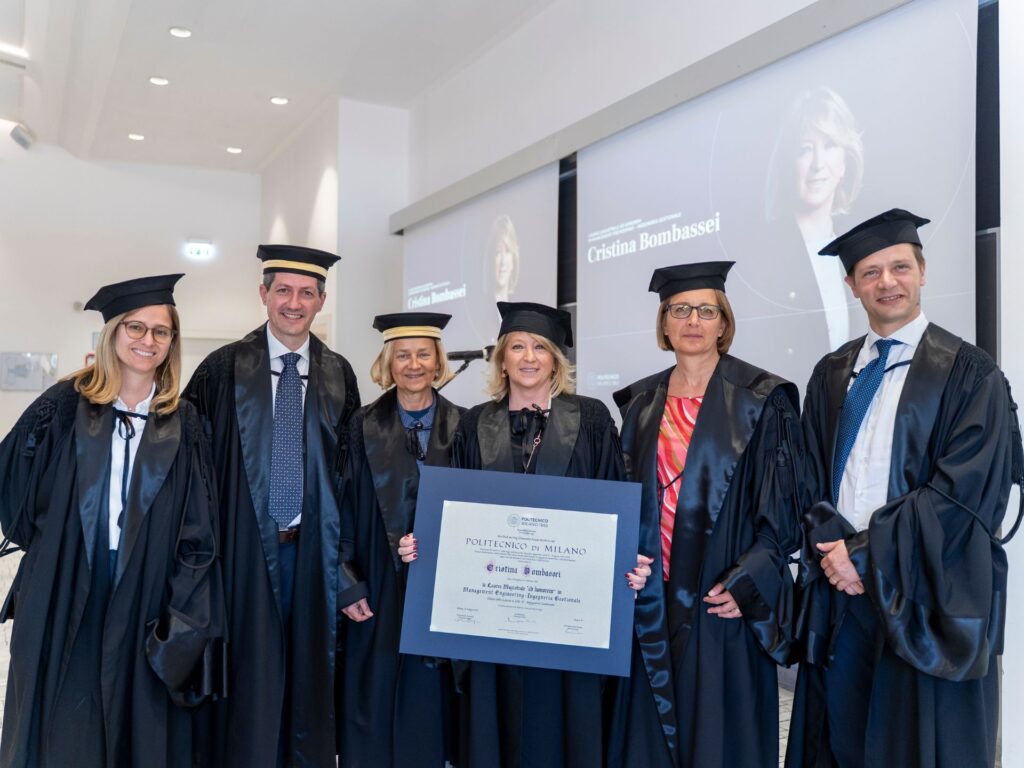
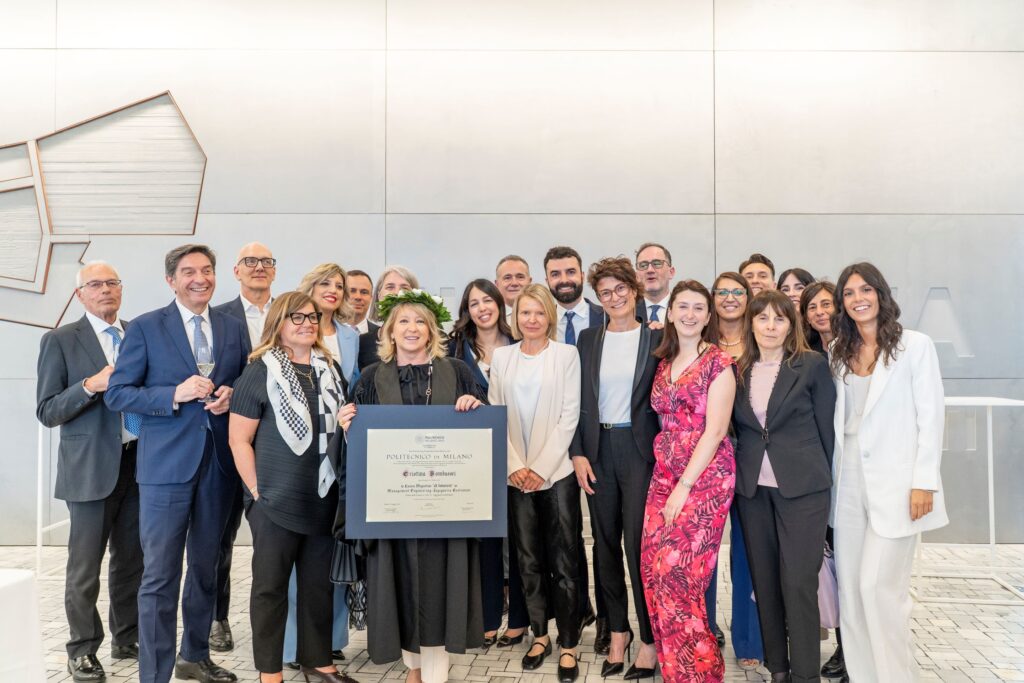
by One of Italy’s leading entrepreneurs, Brembo Director and Chief Legacy Officer Cristina Bombassei has been awarded an honorary degree in Management Engineering. She is the first woman to receive this honorary degree from Politecnico di Milano.
A long-standing sustainability advocate, she has been instrumental in shaping Brembo’s strategy in this field, spearheading numerous social and environmental initiatives. Her leadership played a pivotal role in enabling the Group to pursue sustainable growth amid global challenges and transform the automotive sector.
Throughout her career, Cristina Bombassei has held several strategic roles in areas such as communications, internal audit, and governance, earning recognition for her managerial acumen and ability to influence the broader national system. Her commitment extends beyond business performance, encompassing sustainable development, corporate social responsibility, family-business relations, and generational transition. These contributions have garnered her numerous accolades, including the title of Commander of the Order of Merit of the Italian Republic. Her professional journey reflects a dedication to innovation and sustainability and promoting ethical and responsible business models.
We spoke to her following the conferment ceremony to learn more about her story and vision of the future.
When we met a few days ago, you were already excited; today even more so. How did you feel after the event? Was it as you imagined?
It was even better. It was an intensely emotional moment, mixed with a touch of tension, given the importance of the occasion. I was pleased to see an audience of friends, entrepreneurs, colleagues and partners who shared this journey with me.
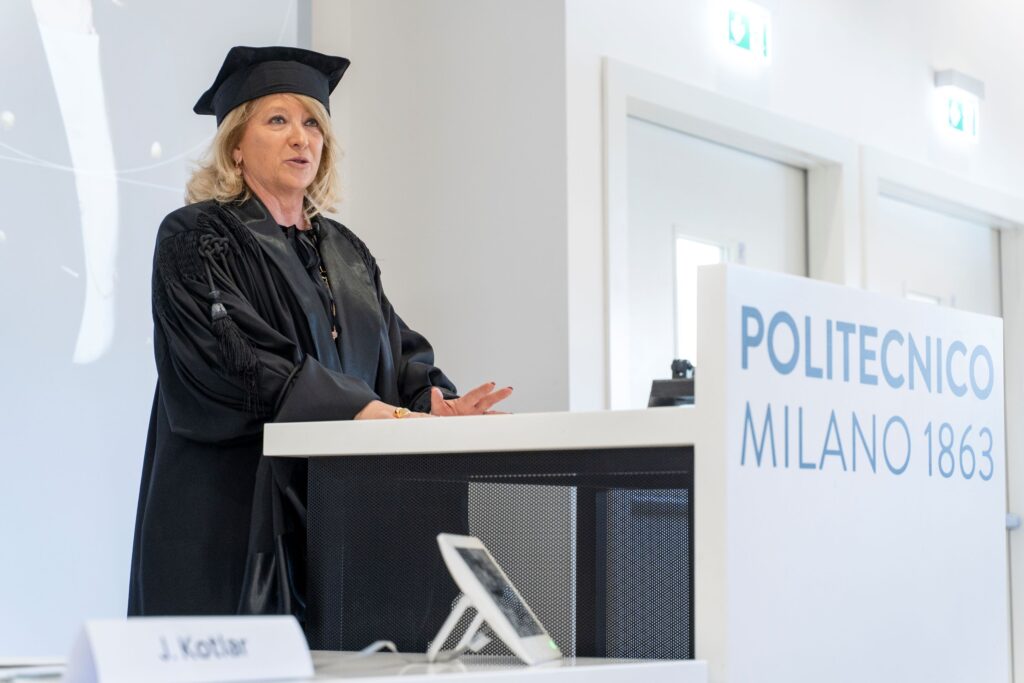
Professor Marika Arena and Rector Donatella Sciuto’s words moved me deeply, while instilling a profound sense of responsibility. Being the first woman to receive an Honorary Master’s Degree in Engineering from Politecnico di Milano carries significant weight for the next generations of women.
We talked about legacy, the ability to pass something meaningful on to future generations. I’m curious: as a child, and a teenager, how did you picture your future? Did you always expect to follow in your family’s footsteps or was it something that unfolded unexpectedly?
From a very young age I followed in my father’s footsteps. Our family life was deeply intertwined with the company, and I witnessed first-hand the evolution of our group from a small local enterprise into the international organisation it is today. I felt a strong desire to contribute to this remarkable story. As soon as I had the opportunity, I joined the company, seeking a path that suited my abilities and allowed me to make my own mark.
It has not always been easy. As the daughter of the company’s founder, you must earn the trust of employees and carve out your own role that must be proven through action, irrespective of your background. In my case, tenacity, healthy curiosity and deep passion were never lacking. Those are qualities that define Brembo’s people.
It wasn’t unexpected. My path, which has increasingly specialised in sustainability in its broadest sense, evolved naturally in step with the transformations within an ambitious sector such as the automotive industry. What came as a surprise, however, was the extraordinary success Brembo has achieved throughout this fascinating journey.
It is wonderful to hear about the sense of family that characterise your company culture. Is this spirit present within Brembo?
Absolutely. As a family business, we have deeply rooted values that we strive to pass on to 16,000 of our employees worldwide. This legacy, which we hold dear, is coupled with a strong sense of belonging and professionalism throughout the organisation. When we walk through Brembo’s doors each day, our hope is that every employee feels part of a shared project and strategy, where their skills and passion help the Group meet significant challenges. Ultimately, success belongs to the entire team. That is Brembo’s greatest strength.
Do you think your children will follow in your footsteps or take a different path?
My children are still young, they will have complete freedom to choose their own path. What matters most to me is that they develop a keen awareness of their opportunities in life and carry a strong sense of responsibility.
During your Lectio Magistralis, you emphasised the idea of “being good ancestors,” a concept you repeated with remarkable passion. It suggests a strongly rooted sense of responsibility. What does it mean to you? and what should it mean for a company in today’s world?
Being a good ancestor is something that has resonated with me for some time. It felt natural to place it at the heart of my Lectio Magistralis, as it challenges us to look beyond the immediacy of the present and ask a fundamental question: what can we do today for those who will come after us? For me, it means assuming daily responsibility, carefully considering the long-term consequences of our actions and making conscious decisions that will create a positive, lasting impact, even for those we will never meet. In the corporate sphere, this is achievable through transparent and accountable governance, an agile organisation capable of adapting to change, and strategies firmly rooted in the company’s founding values.
Brembo’s is a successful example of generational transition. An area where, unfortunately, many others have faltered. Given that family businesses are a cornerstone of Italy’s economic fabric, what advice would you offer? What is your “secret”?
Generational transition must be built over time. There are no secrets, only careful planning: starting early, fostering trust and expertise, clearly defining roles and responsibilities, and sharing vision and values. It is about preparing for change in advance, rather than reacting to it.
You were a sustainability pioneer at Brembo. What inspired you to establish the Group Sustainability Department?
When we set up the Sustainability Department in 2012, the topic was far less mainstream than it is today. I already felt a strong sense of urgency to tackle social and environmental challenges in a tangible way. It wasn’t just about responsibility, but the determination to make a real difference that could positively impact future generations.
It was a strategic decision. Sustainability quickly became an integral part of Brembo’s culture, progressively permeating every function and process until it evolved into a genuine driver of competitiveness, innovation, and reputation. For me, this step reflects a broader vision. Being “good ancestors” contributing through responsible business decisions to building a fairer, better future which transcends our present and leaves a tangible, enduring legacy.
Is it possible in today’s business landscape to innovate while staying true to one’s principles and integrated strategic vision? And how?
Yes, it is entirely to innovate while staying true to one’s core principles and cohesive strategic vision. Innovation only holds real meaning when it aligns with the values that define a company’s identity. In the case of Brembo, innovation is not about chasing novelty but making deliberate choices, guided by a clear vision and a sense of responsibility towards the future.
It requires investment in skills, people, and corporate culture. Technological innovation without an internal cultural evolution risk being no more than a superficial change. Striking the right balance between continuity and transformation enables us to build authentic, lasting innovation that remains true to our identity.
To adapt to global challenges, you mentioned that an agile organisation is essential. How is this achieved within the complexity of an international group? And how does it relate to the external context, where bureaucracy often seems the opposite of agile?
Agility stems primarily from an organisational culture that promotes innovation and collaboration. It is a structural and strategic issue. Aligning sustainability with corporate vision is crucial to ensure coherence and responsiveness in the face of challenges. When it comes to the complexity of an international group, I believe agility is fostered by creating environments that encourage open dialogue and accountability at every level, enabling adaptation without sacrificing consistency.
Bureaucracy can be an obstacle. What drives us is an ethical approach guided by genuine purpose rather than just regulatory compliance. A company must comply with the law, that is beyond question. But if the sole motivation is compliance, the company lacks soul, that moral compass that pushes us to go beyond. Only by doing so can we truly be good ancestors, thinking of the future, moving beyond formal obligations.
For small and medium-sized Italian enterprises, it is more challenging to make processes sustainable and comply with the latest European environmental regulations. What support do you believe is needed?
For Italian SMEs, addressing sustainability and meeting European environmental standards is more demanding than for larger corporations. The standards are often complex and highly technical, making them difficult to interpret for organisations without the same financial or structural resources.
I think that what is needed is a structured pathway of progressive education, offering simple, clear, and accessible tools to help SMEs understand and practically implement new requirements. Continuous technical and training support is essential to accompany businesses in their sustainable transition without penalising them but rather unlocking their potential. This is the only way to ensure an inclusive and truly effective transformation across Italy’s industrial fabric.
How important is gender equality in the workplace, especially in terms of bringing different perspectives to the same issue?
Innovation has no gender, there are no “male” or “female” roles, there are people, skills and passion. In the automotive sector, where we operate, a field traditionally seen as male-dominated, challenging stereotypes and embracing diversity means enriching dialogue, fostering creativity, and generating value.
At Brembo, we strive daily to demonstrate this, by investing in training programmes and promoting female role models, particularly in STEM fields, where progress is still needed. Women account for 45 per cent of our Board, but the true challenge lies not only at the top. It is fostering awareness at every level that diversity is a genuine asset. Only when multiple voices and perspectives share the same decision-making table can we ensure choices that are fairer, more effective, and forward-looking.
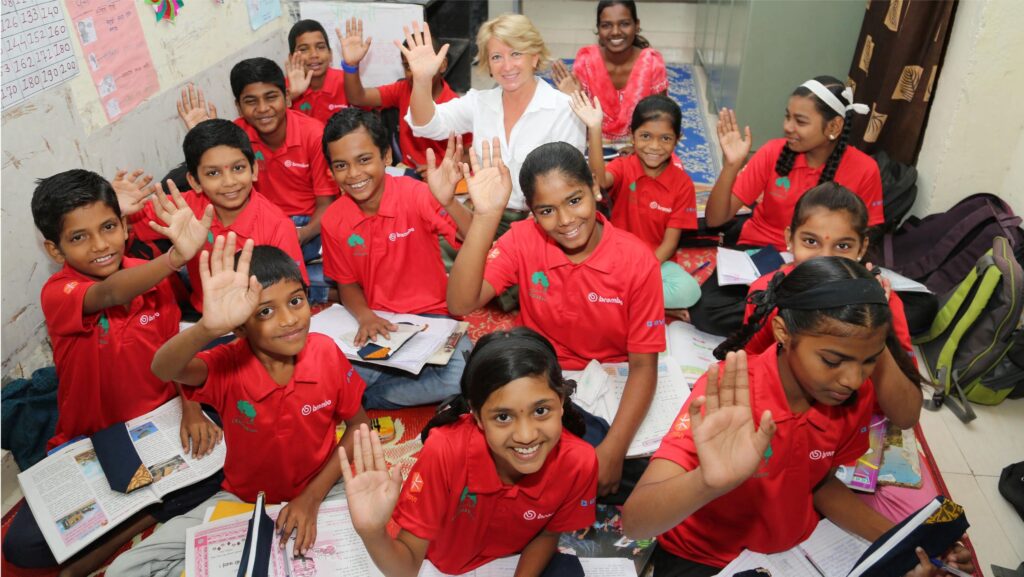
Social impact is clearly a priority for you. There are many projects you have personally overseen on behalf of the company, which one holds the greatest meaning for you, and why? What is the real added value of these actions, beyond financial outcomes, personally and for the company?
One of the initiatives closest to my heart is la Casa del Sorriso – the House of Smile in India. It is among Brembo’s longest standing and most impactful social projects because of its continuity over time, and the profound human impact it has generated. Our long-term presence in India gave us a close understanding of local socio-economic dynamics and the urgent needs of the community.
Building on this awareness, the House of Smile project was launched in 2017 in partnership with the CESVI Foundation, with the goal of supporting women and children in highly vulnerable conditions on the outskirts of Pune. The project includes three educational centres, a dedicated service centre offering social and health assistance, and vocational guidance for the people involved. To date, the programme has reached more than 5,500 beneficiaries, making a tangible and lasting difference to their lives.
The value of such an initiative cannot be measured financially. Receiving heartfelt feedback from families, observing children’s educational growth, and watching vocational training open real opportunities has made a deeply lasting personal impact. For Brembo, it is a way of giving something back to the community and moving beyond the manufacturing sphere. It is a tangible sign of responsibility, care and active engagement. These projects remind us that running a business means contributing to the well-being of the communities where we operate.