

The creative genius of Gianfranco Ferré returns to the Politecnico di Milano


A great fashion designer of our times but also an alumnus of the Politecnico di Milano. With his collections, Gianfranco Ferré offered stunning displays on the most important catwalks with an approach that ranged from architecture to fashion in terms of geometry and volumes. Today, fifteen years after his death, his immense material and immaterial heritage has returned to our university.

The great archive of Gianfranco Ferré
Established at the beginning of the year, the Gianfranco Ferré Research Centre preserves and studies the large archive of the Ferré Foundation, recognized as a heritage of “particular cultural interest” by the Ministry of Culture – Archival Superintendence for Lombardy, which has now become part of the Historical Archives of the Politecnico di Milano.
“The designer’s ‘polytechnic vision’ clearly emerges from the archive,” explain professors Paola Bertola and Federica Vacca, who are working on the archive from more than just a conservation perspective. “His work can be truly explained according to some typically architectural categoriesl. The geometry is found in the garments that often start from the reworking of a two-dimensional figure: this is Ferré’s typical design strength with an approach inherited from his training as an architect at the Politecnico, which also incorporates a great knowledge of the subject developed through continuous experimentation.”
The current heritage, almost entirely catalogued in a digital database, features more than 150,000 documents and artifacts (including sketches, technical drawings, photos, clothes and accessories, objects, books, magazines, films, press reviews, writings, lessons and notes by the designer).

“The archive is unique,” continues Federica Vacca, “and contains all the phases of the design process of the designer, from the sketch and the technical drawing to the research of materials and decorations, the runway show and the garment itself kept within the archive.”
“Ferré never put a piece of fabric on a body to understand what effect it could have; on the contrary, he started by thinking about measures, shapes, dimensions and only afterwards did he start the work of the technicians and tailoring,” says Rita Airaghi, historical collaborator of the stylist who works with the Center as Steering Advisor and custodian of a historical memory rich in anecdotes and memories, useful to contextualize the individual collections.

From the Ferré Archive, an investigation into the future of the fruition of artifacts with a high cultural content
Through research in the field of digital innovation, the goal of the Research Centre is to give continuity and further develop the activities of cultural enhancement and dissemination that the Gianfranco Ferré Foundation has carried out thus far for the city and its system of training/education and culture, as well as to strengthen its role at national and international level. At the same time, the Research Centre investigates, develops and experiments advanced techniques for the design, visualization and use of material artefacts of high cultural content, typical of the creative and cultural industries that are a distinctive element of the identity of Italian fashion culture and its international recognition and positioning.
“Many Ferré garments have a classic sartorial construction that it was possible to produce,of course, from an industrial point of view; but they require a very sophisticated study linked to the skills of craftsmanship,” continues Paola Bertola. “The Center therefore also wants to investigate how new technologies, such as 3D printing, virtual and augmented reality and digital twins for example, can give a new impulse to craftsmanship. We strongly believe that, especially in a system like that in Italy, at this time of great uncertainty, there is a great need to think about how these technologies can really lead to new potential in order to regenerate the industry, including with respect to the ever-pressing issues of sustainability”.

The Gianfranco Ferré Research Center: a multidisciplinary approach
The Research Centre is launching interdisciplinary experiments that, under the coordination of the Fashion in Process Laboratory of the Design Department, involve numerous disciplinary areas of the University, from mechanical engineering to information engineering, bioengineering and mathematical engineering, to explore new paths of research and innovation.
One of the projects we are working on at the Politecnico right now is related to collaborative robotics. Our mission, always talking about technology, is to imagine how this paradigm of craftsmanship will turn into a new form of collaboration not in terms of using industrial production to replace manual work. At the moment, there are many studies on this topic and a territory like ours in which there is still a great pool of craft industries must absolutely find a way to approach that paradigm without actually creating a problem of job replacement but instead preserving this heritage.”
The CGianfranco Ferré Research Centre, Digital Innovation for Creative and Cultural Industries is therefore based on an interdisciplinary vision capable of combining “heritage” with innovation and technology and integrates extensive knowledge of the domain in the field of design and fashion with ICT, User Experience and User Interaction skills. One distinctive aspect is therefore the hybridization of techniques and knowledge typical of the sartorial, craft and technical culture of the creative industries with advanced technological solutions (AR/VR; reverse modelling, digital prototyping and 3D printing; haptic and sonic perception; holgraphic rendering, motion graphic).
“The idea cultivated first by the Ferré family and then by the Politecnico,” concludes Paola Bertola, “is to transform the archive into a form of living knowledge that can be enjoyed in its current form by students and researchers to become a stimulus in production of new knowledge.”
Related stories

Reading Maps: The Taste of Discovery
Jessica Gritti discusses the research on the Maps section of the Civica Raccolta delle Stampe “Achille Bertarelli”: from cataloguing and new international connections to the value of collaboration between universities and cultural institutions.
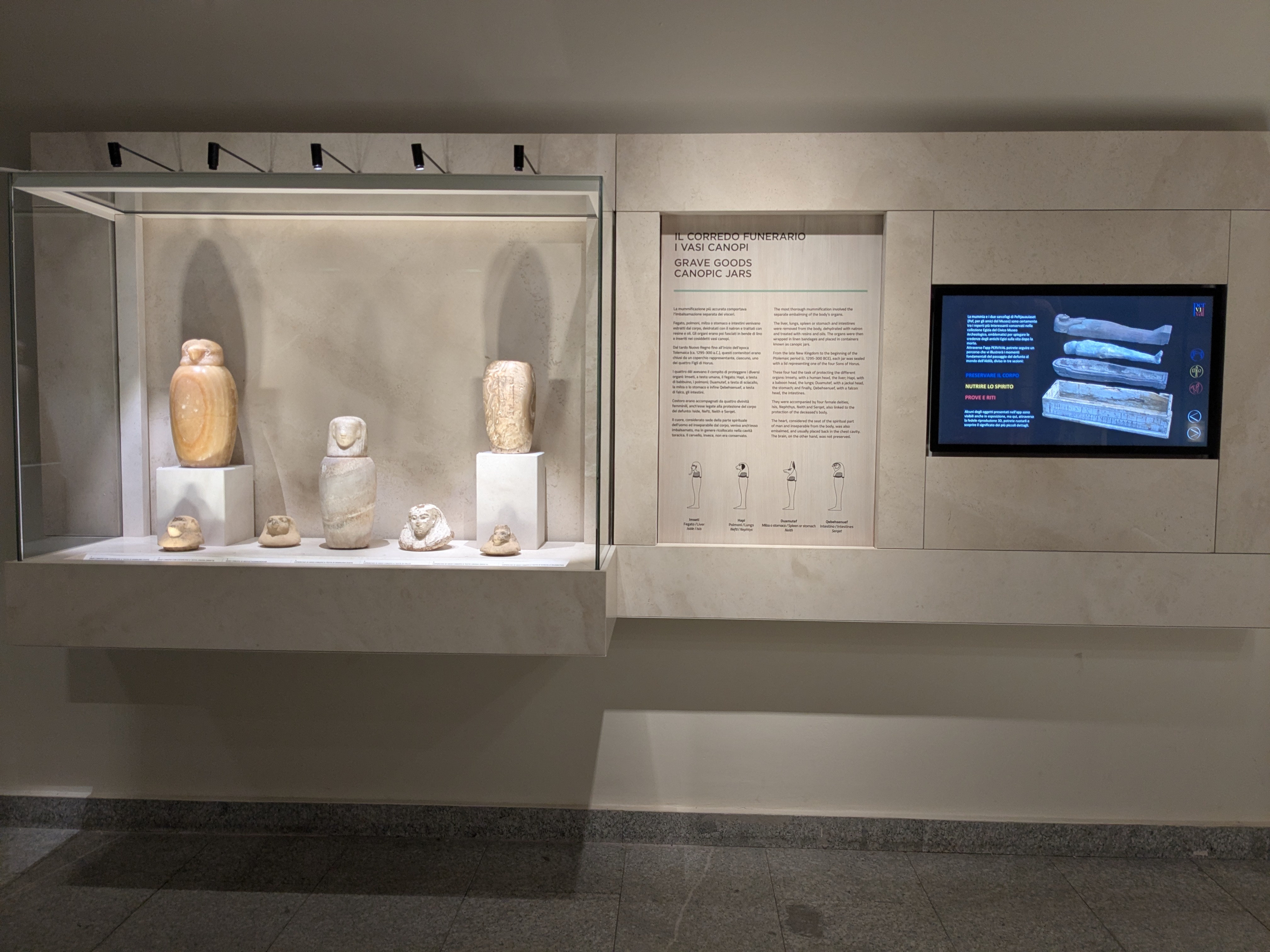
The app that tells the story of funerary rites at the Ancient Egypt Gallery
The app developed by the Department of Mechanical Engineering recounts, on an interactive screen installed in the Museum, the complex Egyptian funerary rites, with previously unseen images and detailed insights.

The Museum as Agora: Christian Greco and Digital Archaeology
Interview with the Director of Museo Egizio in Turin

Flexible work? Just have control!
Working remotely, personalizing schedules, increasing autonomy: is flexibility at work really the perfect recipe for well-being?

Healthcare management: research leaves its mark on society and territory
From lab to market: exploitation in scientific research
You might also like
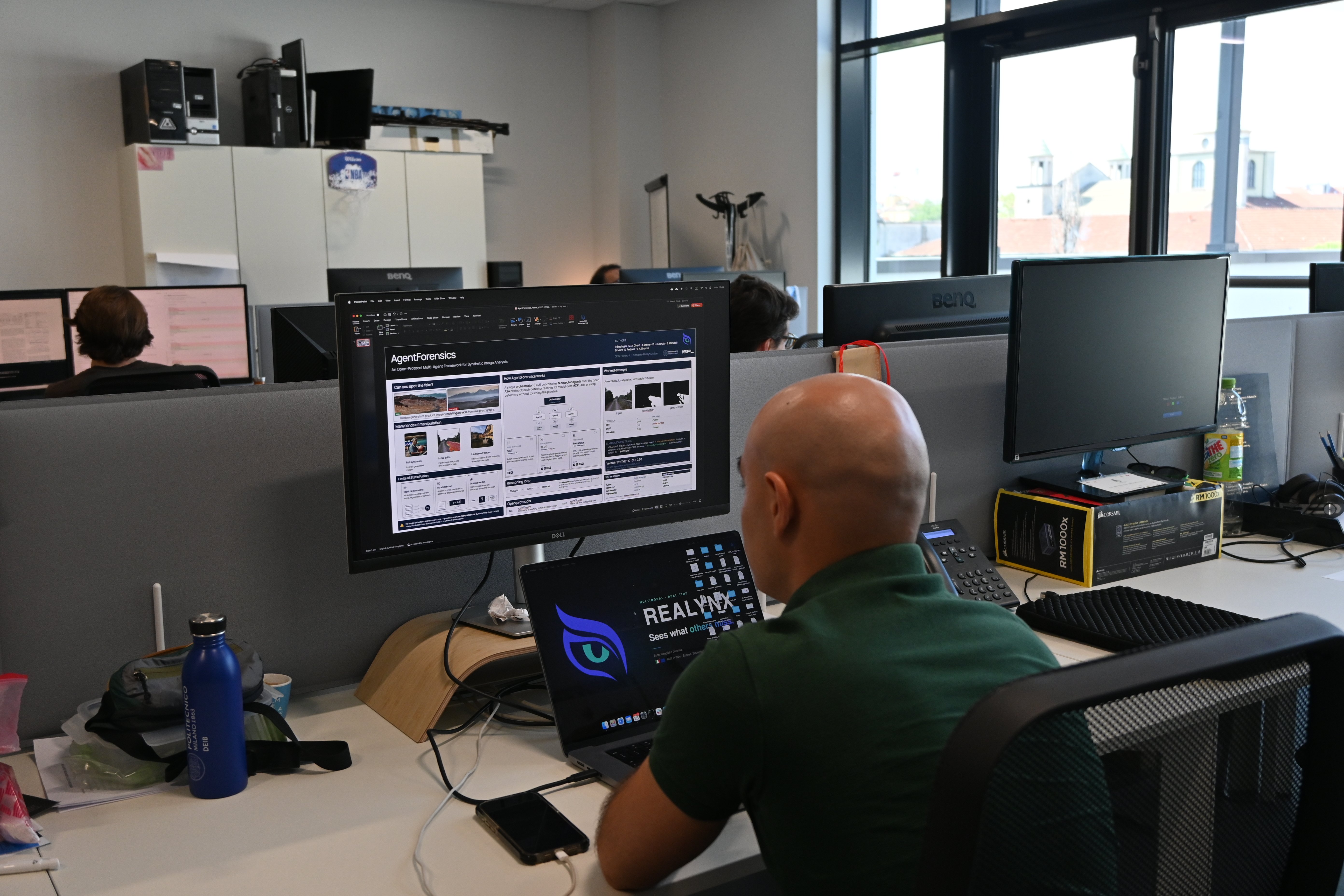
Beyond true and false: recognising synthetic content in the age of AI
From cloned voices to deepfakes, the challenge is no longer just to distinguish what is true from what is false, but to understand how content has been produced, transformed and used.
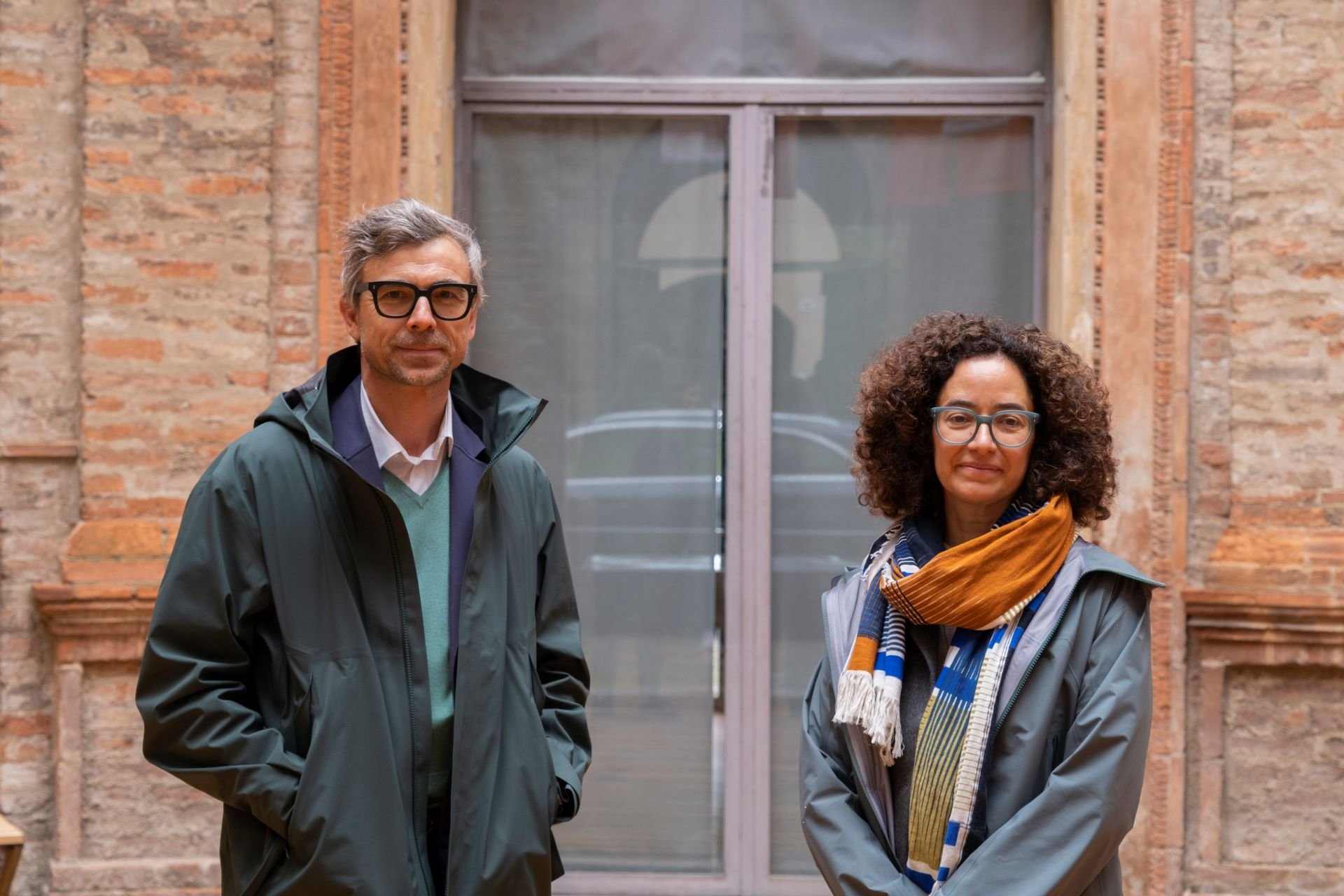
Building in Balance
Matteo Scagnol and Sandy Attia of MoDus Architects discuss an architecture shaped by the tension between landscape and infrastructure, rules and freedom, materials and climate change.

Who owns Milan? Map reveals forces reshaping the city
The financialization of the real estate market and its effects on urban development dynamics

Technology in the desert: how to map in 3D Egyptian and Roman excavations using photogrammetry
An interview with Alessandro Mandelli, a veteran for Politecnico di Milano's excavations in Egypt
