

ReverseLab, a space for contemporary art between the prison and the city


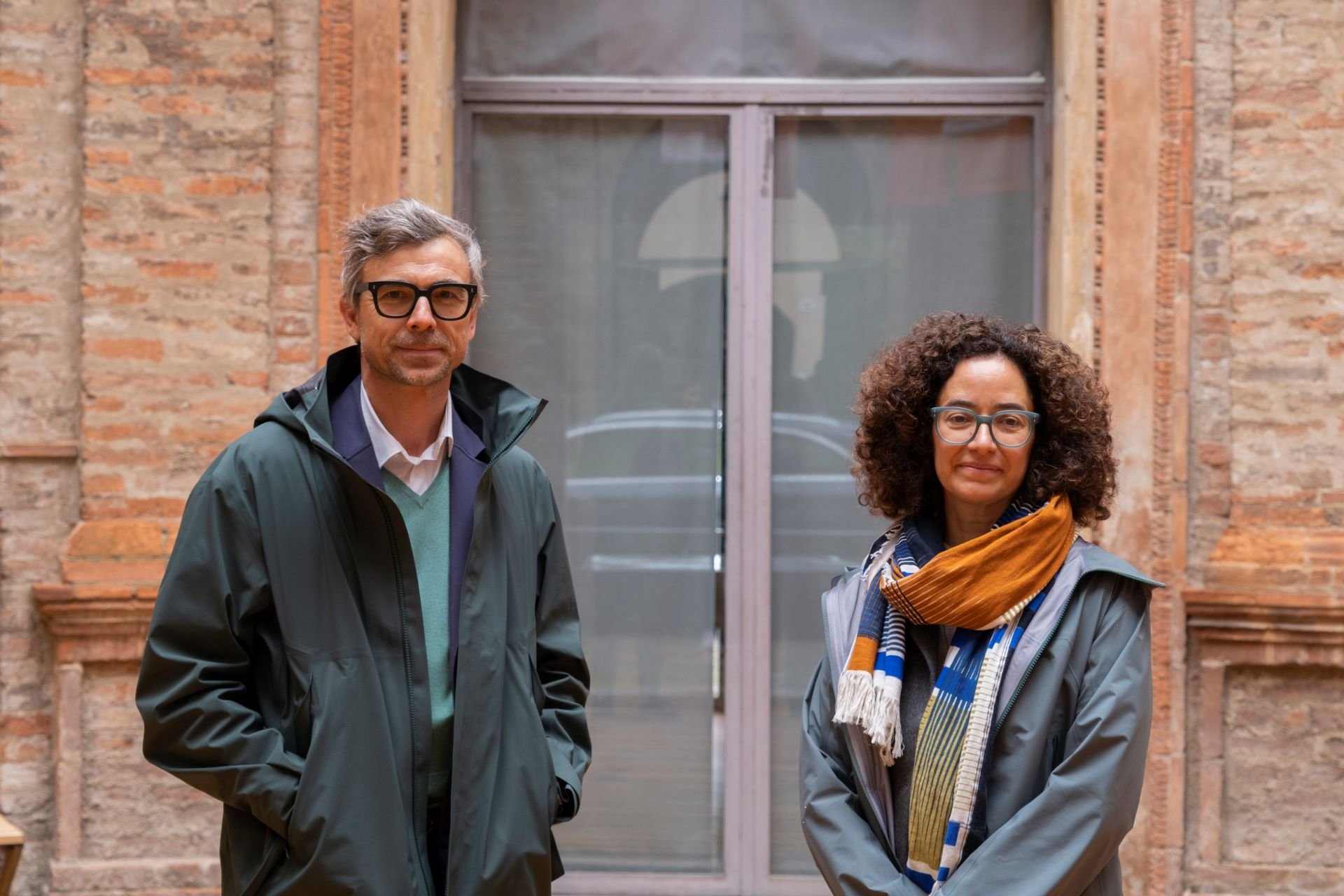
We met with Andrea Di Franco and Francesca Piredda, the project managers of ReverseLab, which operates inside the San Vittore Prison as part of the activities of Off Campus San Vittore. They told us how the idea of creating a space inside a prison was born, with the aim of developing various projects to build a bridge between the prison and the city.
ReverseLab is a project that focuses on relationships and the diverse skills of its participants. It's an invitation to go and see the exhibition set up by inmates and prison guards, with the active collaboration of artist Maurice Pefura, titled "Artists are the ones who make a fuss."

ReverseLab is a space for contemporary art between the prison and the city. What is it and how did the idea come about?
Andrea Di Franco. It is a space within the prison that interprets the process of rehabilitation – in other words, the activity of re-education and re-socialisation of prisoners. And this space does so by involving prisoners in the production of works of art.
There are already art therapy schools and workshops in San Vittore. But the interesting thing about this project, which is in a way revolutionary, is that the artworks produced are to be put permanently on public display. So it is not only an “internal” thing, it is also one that becomes part of the cultural life of the city and even beyond.
I think this is revolutionary, in a sense, because it does not exist anywhere else in the world, as it is the first time that something like this has been done inside an active prison . There are many similar things but in abandoned, closed prisons. There are many art therapy courses for rehabilitation where the inmates create works of art and maybe organise an event to allow people from the outside to view them, but that’s it. This project, instead, aims to define a permanent space for art and culture that is open to the city.
So how did the idea come about?
Andrea Di Franco. ReverseLab was the brainchild of the prison director. When we started thinking about a project, we talked to the prison to understand what the role could be of the Off-Campus, established in October 2022. He pointed out several things: one of them was that they had this large space, a warehouse full of all sorts of debris, flammable stuff and sensitive documents that had to be stored and kept in good condition. “It is just waiting to be used for a project, I say it should be an exhibition space.” He wanted to make a space of memory, where the story of San Vittore could be told right in an exhibition.
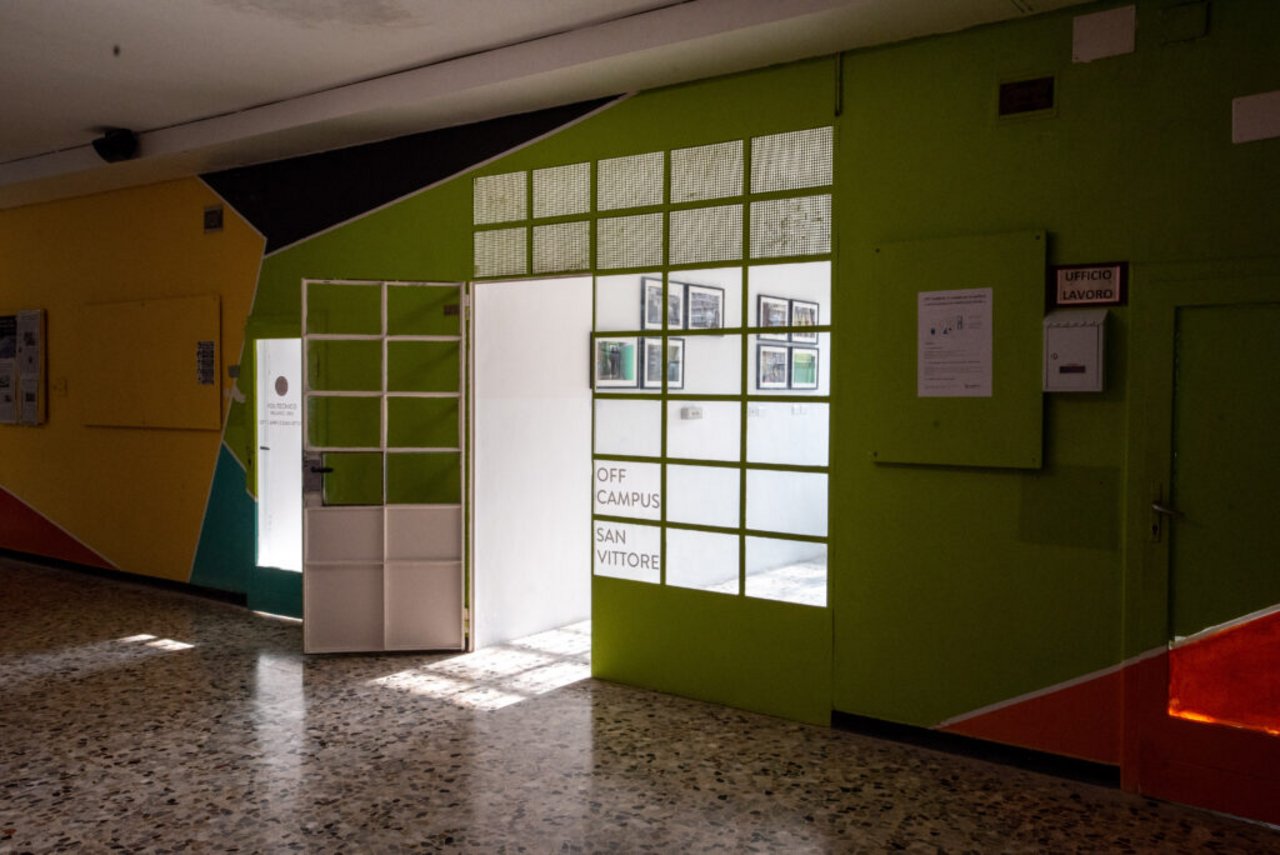
So we replied that we would do something more active, inventive and transformative, and make it a space for contemporary art: one that could be used to create not a permanent exhibition that would always remain the same, but one that would really become an engine or centre of cultural production open to the public. He said: “Let’s see”, and we put our idea to the Fondazione di Comunità Milano, participating in territorial call 57, which secured us good financing.
Have you already measured the achievement of the objectives you have set for yourself?
Francesca Piredda. Let’s say that our initial achievement was when this space opened up to the city, since it was the first objective. It has been a great experience: for, despite the limits dictated by the conditions and rules of the prison, people want to come and see the space for themselves, but also to see and understand the things that people living in prison have to say. Art, of course, offers an opportunity to prisoners, but also to the Penitentiary Police officers we have involved: it represents an important opportunity for expression and storytelling.

The guidance of an artist like Maurice Pefura, in producing this collective body of art, was key to finding a way to make the content all the more accessible to the outside world. Even with respect to the extent of the role that this project has played within the prison, I must say that the fact that more than 40 inmates were involved along the way, notwithstanding the limitations and constraints of the prison itself, was very important.
Was participation in the workshop on a voluntary basis?
Francesca Piredda. Yes, we have the help of the educators in the various departments who advise us and give us a list of names of people who can be invited to take part. Then each of them decides whether or not to do so. Clearly, there are many reasons for prisoners to participate other than that of simply creating art. Being engaged in any type of activity allows inmates to stay out of their cells. This is undoubtedly a great incentive and I would say that it is one of the objectives of the project as well. Art therefore becomes an act of liberation for those who are inside and of opening the prison in general to those who are outside.

So, after the internal participation, another achievement has been the sell-out attendance of the exhibition. But the qualitative feedback we’re getting from the people we meet, both from within and outside the prison, is also very important, if not more so. Inmates and agents (who have been almost more difficult to involve) also bring their voices: they have shown curiosity and an increasing number have wished to come and see the space.
It is not only those who carry out the activity who come – but also those who want to see what is going on and play some part in this project. The feedback of the operators who work in San Vittore in different capacities and who want to be involved in the subsequent phases of this project is also important for this space to become a space for them and for their activities.
What will be the next steps?
Francesca Piredda. There is still much to be done with respect to the redevelopment of the space, which has only just begun. The PAC will continue to help with the artistic curatorship, an artist of reference will be appointed to hold another participatory workshop, and a new exhibition of the collective work will be set up. These participatory activities may involve other associations: the challenge of the research is to find ways to do this, as part of a collaborative agreement to involve other operators who already carry out rehabilitation programmes in the prison, so that they can use ReverseLab to make the “jump”. Our desire is for ReverseLab to be recognised as a “basin” where art is produced and which is also becoming wider internationally. A place where art can be experienced.
Reverse Lab is one of the projects of the Prison Laboratory, for which you are the scientific managers. One of you comes from the Department of Architecture and Urban Studies and the other from the Department of Design: how did you two come to meet?
Andrea Di Franco. It was at the time of the Polisocial Award on the theme “Sport as an engine of social inclusion”. I had wondered who could help me, because the project had to be interdepartmental. I thought: which departments? What people are aware of and have an interest in these issues? I was recommended to see Francesca Piredda, and when we spoke she immediately said she was keen and would be willing to work with us.
Francesca Piredda. Here’s what happened: one day Andrea Di Franco, a guy I had never met before, came up to me and suggested we work together. I had never worked in a prison before he approached me. And I always say that I will always be grateful to him because he made me enter a world that is as rewarding as it is “scary”, and that allows you to grow from so many points of view. I was already involved in co-design and field research in marginal contexts, but not in ones as marginal as this; so being guided, especially at the beginning, by him and his wonderful group in such an extreme world was a good test and a wonderful opportunity.
It can be said that the Polisocial Award often leads to productive encounters.
The format of the Polisocial Award is somehow very virtuous, because it brings together many different people each with their own special identity but who, by talking and working together, can achieve real success, such as in the case of the ReverseLab workshop. It was formed by them, put into motion by us and carried out by a third-party artist, with the pooling of all our skills and expertise.
What was the first project you worked on together?
Francesca Piredda. The first time we worked together was in Bollate prison for a Polisocial project on the link between prison and sport. Andrea, at first, really had to explain this to me, because I was struggling to find the connection between the two themes. And then, instead, we found ourselves working for two years at Bollate, initially during lockdown. We therefore had that added complication; we had to invent ways of interacting with the “inside” that could be somehow useful both for research and for the people we wanted to involve.

That two-year experience, in addition to the background that his group already had in this field, led to the creation of “Off Campus San Vittore”, a place where we researchers can continually interact with the prison and try to work together with that community to potentially bring about change.
Andrea Di Franco. I applied to FARB for funding for work I had been doing with the educational laboratories for a year. I needed funding to really get something done. Hence the idea of the red house where inmates could meet with their families. It was the idea of one of the students in the laboratory, which we brought to fruition. This then led on to other projects.

What sort of projects?
Andrea Di Franco. Another space was created in the garden for the inmates and visitors of the Bollate Prison, creating with iron and wood a structure that has become a lovely pergola. Another project that has not been realised, however, is a new small pavilion for meetings, which has not come to fruition despite having been financed.
Andrea, how did you first get involved with prisons?
One of my best students wanted to do his thesis in the Prison Laboratory. He was from Padua and very good. He couldn’t decide whether to be an actor or an architect and therefore channelled his efforts equally in both fields. Eventually, he decided to be an actor, but he still graduated.
At that time he acted in a theatre company that worked with Ristretti e Orizzonti, an association that works in the prison of Padua. On that occasion, during his period of indecision, he asked me if I wanted to oversee a thesis on the redevelopment of some spaces of the prison.
This student did his thesis with a great deal of enthusiasm, to the point that he went inside the prison to do interviews. We still have a great video of his excellent interviews with inmates. Then he spoke with Lucia Castellano, who at the time was the director of Bollate, and completed this brilliant thesis.
So the credit goes to one student! It involved me from a human point of view, as it told of the great potential of many people who, after having committed, let’s say, acts of transgression, followed a path that has led them to be real assets for civil society.
What are the differences between the skills you bring to projects? What are the meeting points?
Andrea Di Franco. I’m an architect, so I deal with space: open spaces and the space of relationships. We share the concept of relationships: understood by you in a more immaterial and narrative way, and by me using physical means.
Francesca Piredda. In the field of communication design, we have been working for many years in the use of narrative principles to support design processes and collaborative processes, because we essentially associate narrative with transformation. Every process of transformation is also a process of storytelling. Conversely, stories always tell of change: there is no story if it does not start from a conflict, a problem to be solved and a condition that must be changed to restore a balance. Synergies and conflicts must then lead to a resolution.
So where there are stories to be told, there is transformation; and since where there is design there is transformation, we have put these worlds together, to then look at the languages that are used to tell the changes in different forms and in different media, also helping us to disseminate information or involve the people we want in the system or in the change.
How important is collaboration with other local bodies, institutions and the voluntary sector in your work?
Andrea Di Franco. Of course, without the PAC, the Community Foundation and the prison itself, none of this would have been possible. I also need to mention the Office of the National Guarantor, and namely Mauro Palma, who became a friend from the moment we met.
What other projects do you carry out or have you carried out in the Prison Laboratory?
Francesca Piredda. We have a lot going on. For example, the permanent storytelling workshop, which has allowed us to keep the collaboration and trust of the people who work at San Vittore alive.
There is also Vocabolario San Vittore, an ongoing project in which we strongly believe but which has been temporarily put on hold due to the considerable work we have had to put into ReverseLab. It is a format that we brought to San Vittore from the Off Campus site of Nolo, where a neighbourhood Vocabolario project had already been started as a way to bring together the various actors and stakeholders in the area, in order to discuss hot topics and needs that were shared or conflicted with life in the neighbourhood. It works like this: you start with a few keywords and find a way to collect many different voices and points of view on each of these words, and then organise sessions and occasions for meeting and discussion.
In San Vittore we did the same, but with a number of differences contextual to the place. We are still in the process of preparing the first release of the Vocabolario project, composed of four pairs of keywords that have been identified and discussed with the people of San Vittore. We want to prepare it both internally and confer with people outside of the prison on these issues.
Another project that we would like to carry out is Second Chance, a collection of clothing and basic necessities for the inmates of San Vittore, which involved many people, including colleagues and students from the Bovisa campus. We would like to be able to bring this initiative to the various Campuses of the Politecnico, in collaboration with Sesta Opera, which for many years has been distributing clothing and basic necessities in the various prisons around Milan.

Related stories
The creative force of mathematics, in the words of Sachiko Nakajima
The scientist and pianist is a tireless promoter of topics such as STEM, diversity and inclusion. In this interview she told us about her artistic world and her vision of mathematics.
Financial mathematics, AI, ESG and personal finance – QFinLab’s activities
Focus on financial education with master’s degrees, projects with schools, and targeted informational initiatives.

The eclipse that marked the end of the fourth Egyptian dynasty
Giulio Magli reveals the secrets of archaeoastronomy.

Financial crises and multinational corporations: how international production chains have been reshaped
Giulia Felice talks about the effects of the 2008 financial crisis on European multinational companies

Healthcare management: research leaves its mark on society and territory
From lab to market: exploitation in scientific research
You might also like
Building in Balance
Matteo Scagnol and Sandy Attia of MoDus Architects discuss an architecture shaped by the tension between landscape and infrastructure, rules and freedom, materials and climate change.

From circuit to laboratory
The collaboration with the Politecnico as seen by Autodromo Nazionale Monza

Research Takes to the Track at Monza
The agreement between Politecnico di Milano and the Monza National Circuit creates an open-air laboratory for safety, sustainability, materials, mobility and major events.

Digital sovereignty: why regulating AI is not enough
Interview with Roberto Baldoni, Senior Advisor for Technology and Cybersecurity Policy to the Ambassador of Italy to the United States