

PoliMOVE wins the self-driving car race in Las Vegas

In their 1909 Manifesto, this was how the Futurists extolled the speed of the automobile, considered the paradigmatic innovation of the time, destined to change the environment and the perception of reality by the man who drove it with a firm hand.
More than a century later, on 7 January 2022 the PoliMOVE team from Politecnico di Milano won the Indy Autonomous Challenge in Las Vegas, the first head-to-head race between cars with no human behind the wheel, driven only by artificial intelligence.
The race took place during the Consumer Electronics Show (CES), the world’s largest electronics fair, and involved some of the world’s leading universities. The cars, Dallara AV-21s, were the same for all the teams, the added value being the work of each individual university. With a view to making a sport that has no human drivers more ‘human’, PoliMOVE gave its virtual driver a name, calling him AS.CAR.I (AutonomouS.CAR.Intelligence), in honour of Alberto Ascari, the last Italian Formula 1 driver to win a world title.
PoliMOVE is part of the mOve research group of the Politecnico, which has been dealing with autonomous vehicles of all types for 20 years, from electric bicycles to cars and tractors. The team works in close collaboration with the most prestigious companies in the automotive sector.
mOve has specific expertise in the automatic control of vehicle dynamics and all aspects of autonomous driving closely related to it.
Frontiere met Andrea Ticozzi, Alberto Lucchini and Stefano Carnier, three PhD students in Information Engineering from the DEIB (Department of Electronics, Information and Bioengineering) who participated in the competition that took the Politecnico di Milano to the top of the world.

Andrea, tell us how the Las Vegas race that led to your victory came about.
The Las Vegas race was the second one in this championship. The first one had been held at the end of October in Indianapolis. One of the first of its kind, where the goal was to be able to do fast laps in self-driving cars.
The race on 7 January was the next step and it was supposed to start with two cars racing on the track at a time, in an overtaking competition. So it was a multi-stage course: initially, there were qualifying laps to decide on the racing order for the tournament, and then there was the overtaking competition, with a semi-final and a final. In the qualifying rounds, which consisted of single laps of the circuit, we at PoliMOVE achieved the best time against the other five universities that qualified for the final.
We won the semi-final against Korea’s KAIST University and then the final against Munich’s TUM University. The Germans were actually the defending champions because they had won the Indianapolis competition, and we managed to beat them.
What expectations did you have, did you think that you could win?
There was definitely hope of winning. We worked hard and we were convinced that we had worked well, also when we compared ourselves with the other teams. At a certain point, we realised that what we were doing was working. Then there is always some uncertainty when you’re dealing with these technologies. There’s always a fair chance that something will go wrong, that a sensor will fail, that an actuator won’t do what it’s supposed to do. Fortunately, everything went relatively smoothly and we were rewarded in the end.

Alberto how did your team come about and who is in it?
Polimove is a sub-group of Move, the research group led by Professor Sergio Savaresi within the Department of Electronics, Information and Bioengineering.
We started the project two years ago, partly for fun and partly for a bet. Polimove was created based on a proposal made by one of our colleagues who was working with the American university that developed the prototype we used to compete. The members of this group included the more experienced second and third year PhD students. Each of us had our own specific expertise. This group of six PhD students was then joined by research fellows and final-year students. In the last phase of the competition, when we actually worked on the car, there were 12 of us, including those who went to the United States.
What difficulties did you find at the beginning of the Polimove story? How did you overcome them?
The car was delivered in July 2021. The prototype had been made by the University of Clemson in South Carolina, with the assistance of various companies that then intervened in this project. We started almost from scratch on the software side. We really needed to develop the drivers to make sure that the sensors would communicate with the computer and that all the actuators assembled to make the car self-driving effectively didn’t malfunction.
During the four months leading up to the Indianapolis race, there was a change of pace, which required, among other things, the collaboration of the various teams, who initially all worked together to get the prototypes up and running. It was also an opportunity to collaborate with universities from all over the world: six American, one Korean and three European ones. Our day consisted of meeting up with all the other researchers in a big workshop where we all worked together to try and create a prototype that actually worked. In the last part, however, our work was divided up and there was a PhD student in charge of each area of development.
In your opinion, what was the added value displayed by the Politecnico di Milano team compared to the other teams?
We approached the race differently from the other universities. We took it quite seriously, a lot of us going to the United States, all of us sufficiently experienced in the most important issues. Other teams, especially the American ones, saw it more as a chance to experiment, in fact they were mainly made up of students.
The teams that achieved the best results were the European ones, since they were made up of people with a certain degree of experience. And in fact, in both Indianapolis and Las Vegas, the University of Modena and Reggio Emilia and the University of Munich took the top positions. It is definitely a context in which you need experience, because everything was completely new, and in just a few days the perspectives and possibilities change completely.

Stefano what challenges does the future hold for your team?
The Indy Autonomous Challenge is not a real championship, but the organisation is trying to plan a series of events, with increasing levels of difficulty. They have already planned two for 2022.
Then there’s another competition we’re taking part in, Roborace, which is starting up at the moment and that, on the other hand, is a real championship. The intention is to start a real tournament with 10 races in the space of a year, starting in September 2022.
In the slightly more distant future, what challenges do you think autonomous driving will face?
One of the developments that might be possible is managing to organise races against the Formula 1 world champion; to see how far the technology has come and whether it can beat the best driver in the world. It might then end up being possible to stage real mixed races. One possible scenario might be where each team puts a driver-driven car and a self-driving car on the track.
Other developments could be ones in which this type of technology will support the drivers. There might be purely autonomous races, although this type of racing is still viewed with suspicion, because everyone thinks that if you take the driver out of the race, you lose the public’s interest. It would, however, be a driver from a technological point of view.
If autonomous driving is being developed in the industrial world, a purely outdoor race may not be a huge success with the public, but it is important for the development of this type of technology.
Related stories
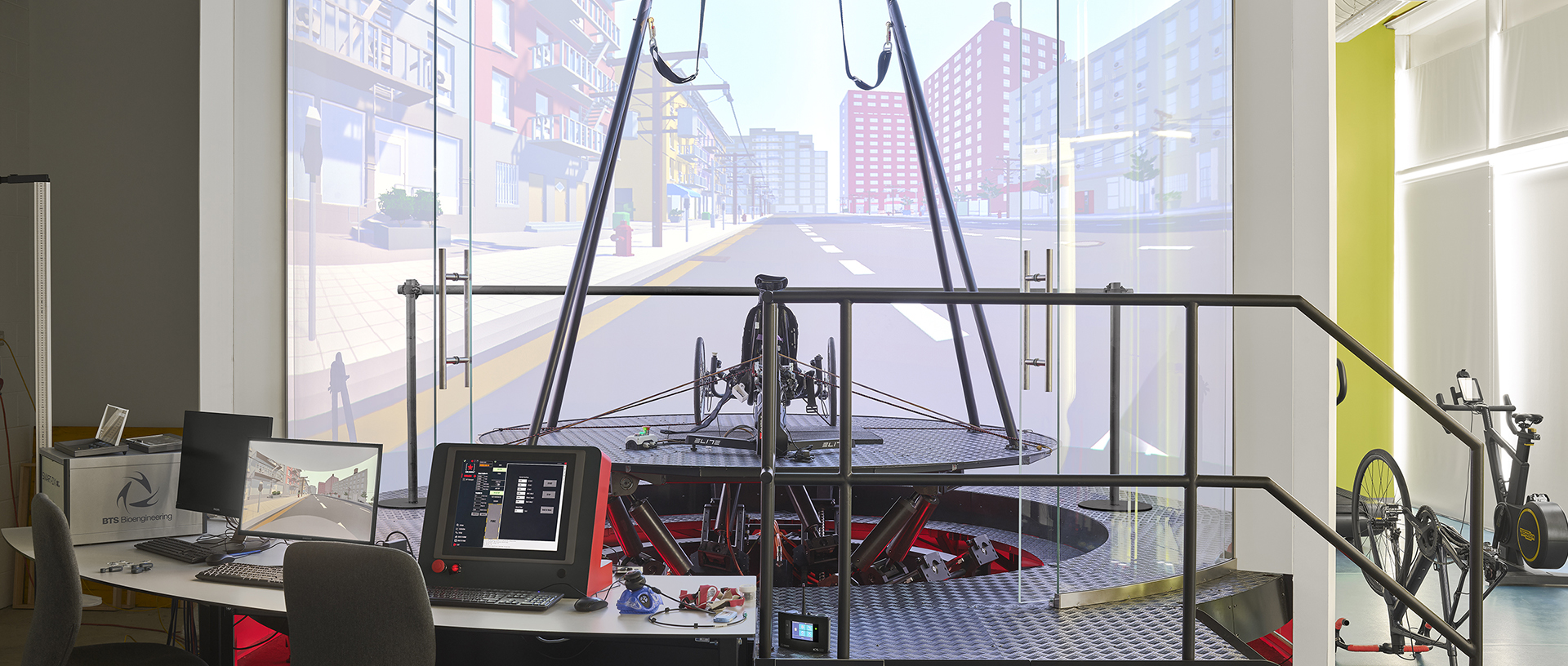
Bobsleigh, bicycles, wheelchairs and feet: Lecco’s HexaLab is the world’s most advanced multi-sport simulator
The HexaLab at the Lecco Campus is based on the “human-in-the-loop” approach, whereby a human operator can control the simulator and physically interact with the equipment and the “simulated” environment around them

Which mobility for the future? One… that’s been tested in the Anechoic Wind Tunnel
Alex Zanotti and Donato Grassi show us a unique structure in Italy in the academic field

The importance of being “good ancestors”: face-to-face with Cristina Bombassei
The first woman to receive an honorary degree in Engineering from Politecnico di Milano

Where VENTO blows: Italy cycling towards change
From Turin to Venice at a slow pace. Paolo Pileri tells us about VENTO, an idea of the future that has the courage to slow down.

Technology, safety and comfort: how local public transport is changing
Sensors, intelligence and connections for new smart vehicles
You might also like
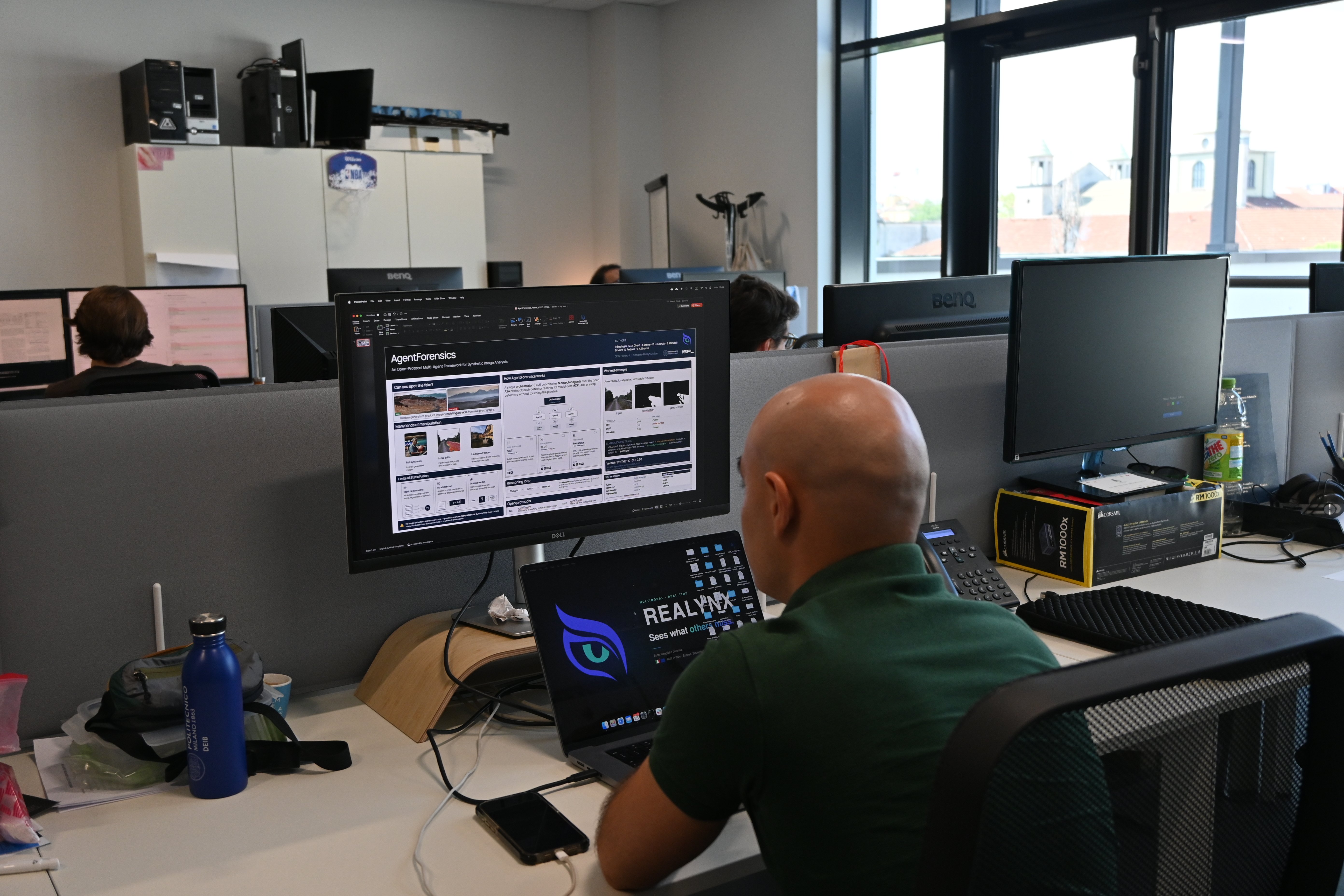
Beyond true and false: recognising synthetic content in the age of AI
From cloned voices to deepfakes, the challenge is no longer just to distinguish what is true from what is false, but to understand how content has been produced, transformed and used.

Who owns Milan? Map reveals forces reshaping the city
The financialization of the real estate market and its effects on urban development dynamics

Technology in the desert: how to map in 3D Egyptian and Roman excavations using photogrammetry
An interview with Alessandro Mandelli, a veteran for Politecnico di Milano's excavations in Egypt

Reading Maps: The Taste of Discovery
Jessica Gritti discusses the research on the Maps section of the Civica Raccolta delle Stampe “Achille Bertarelli”: from cataloguing and new international connections to the value of collaboration between universities and cultural institutions.
