

Gio Ponti and Politecnico

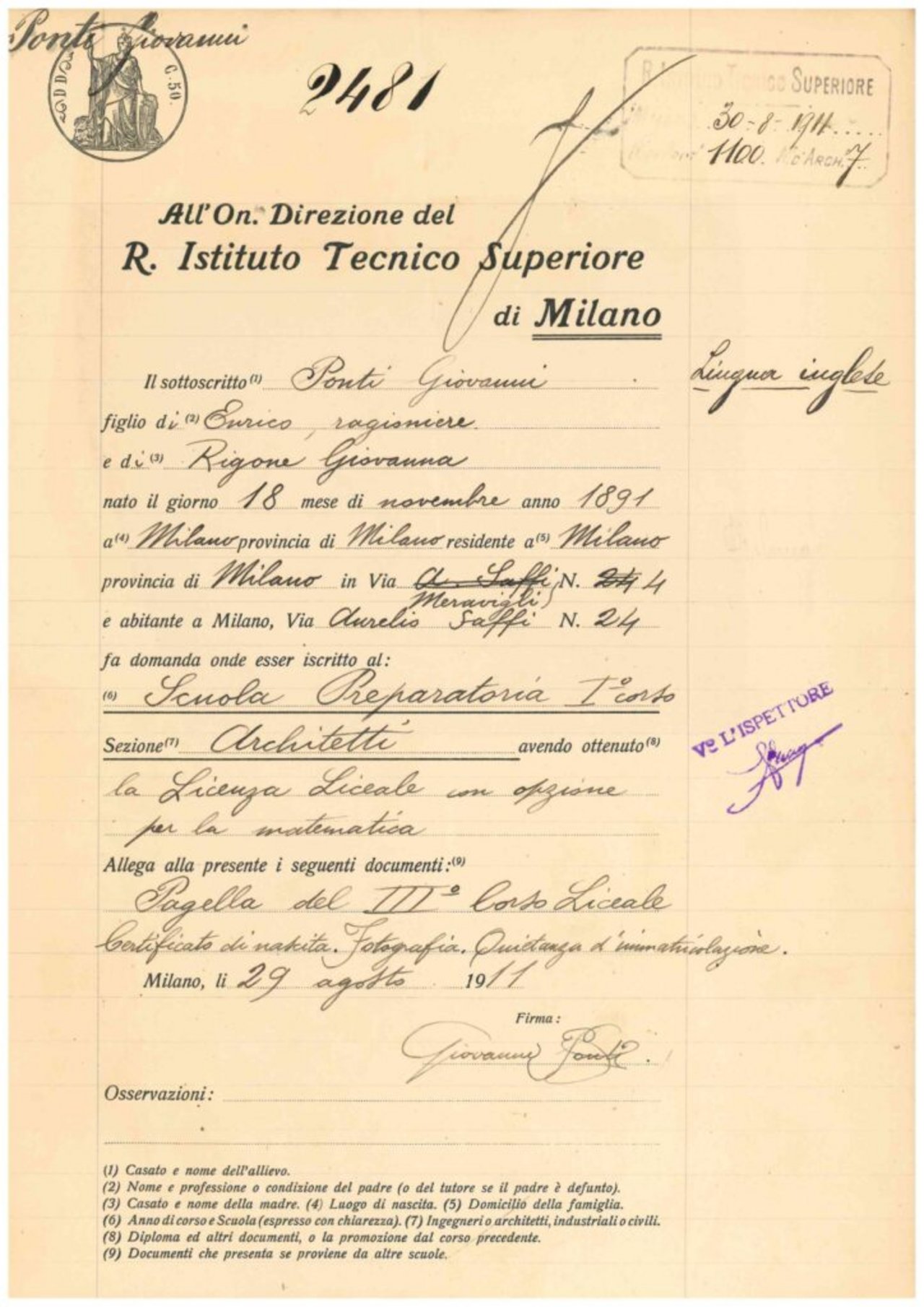
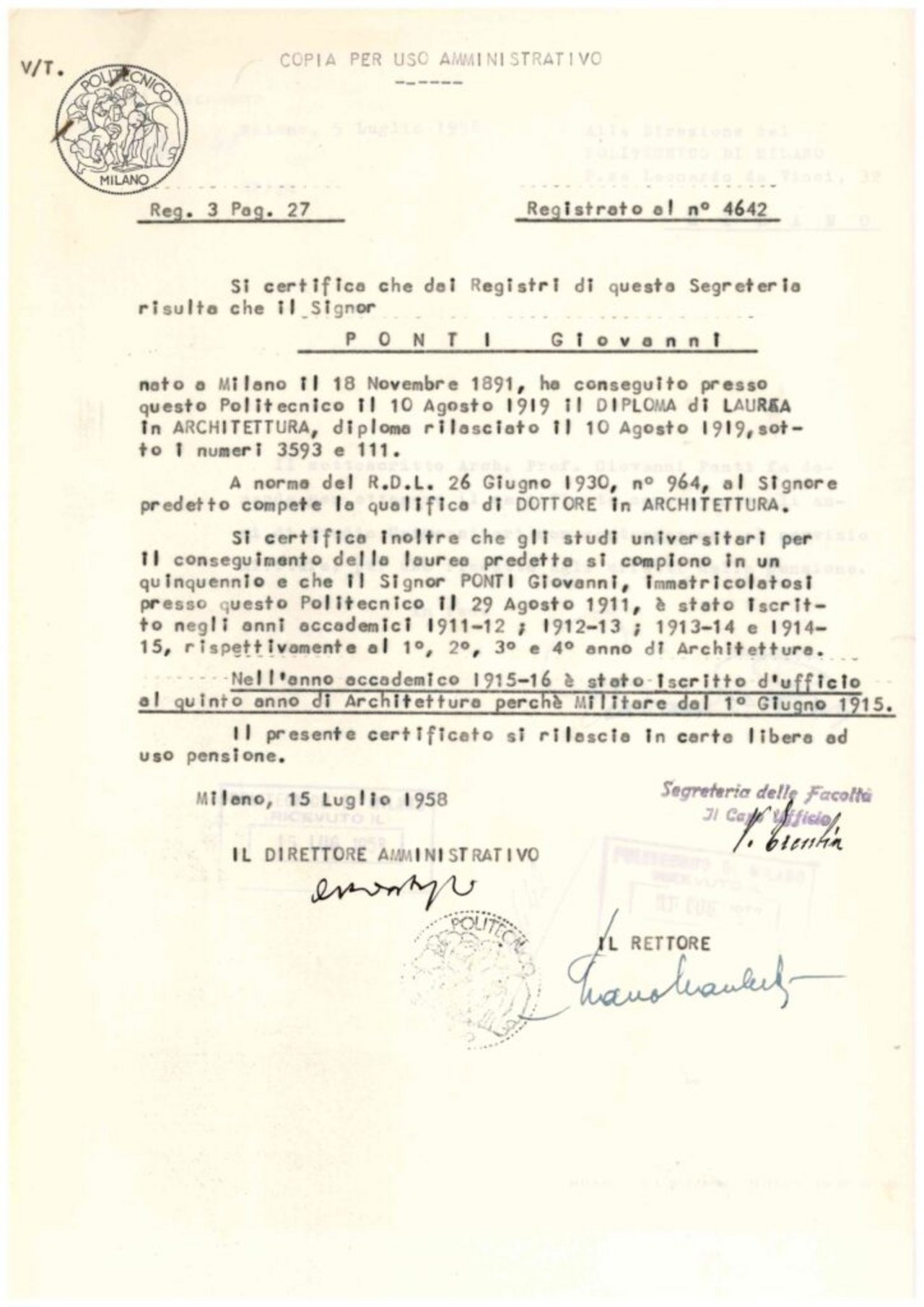
Architect, painter and designer. For many, these are the main activities in the professional life of Giovanni Ponti, known simply as Gio Ponti. But in addition to these activities, he also worked as a professor. Ponti taught for a long time at the Faculty of Architecture of Politecnico di Milano, which he had previously attended as a student in 1913, and from which he graduated in 1919, after serving in the military during the First World War.
Ponti’s first studio in Milan was opened in 1927 with architect Emilio Lancia. In 1928, he founded and directed the magazine ‘Domus’ with Gianni Mazzocchi, which became his tool for disseminating new design ideas in architecture. In the 1930s, he became affiliated with the engineers Fornaroli and Soncini and moved towards rationalism, as evidenced by some of his most important works of the period, such as the Torre Littoria (1932-33) in Parco Sempione, Casa Marmont (1934-36) and the first Palazzo Montecatini (1936-38) in Via della Moscova.
Ponti’s participation in the Milan Triennale began in 1930. In 1931, he began working with Luigi Fontana, later renamed Fontana Arte and became its artistic director. He also collaborated with Antonio Fornaroli and Eugenio Soncini from 1933 to 1945, creating important designs and works, including school complexes, offices and residential buildings.
In 1941, Ponti founded the magazine ‘Stile’ for the Garzanti publishing house, which he directed until 1947, promoting his agenda to broadcast artistic and architectural culture to form an “unprecedented culture of living”. Ponti’s design philosophy was characterised by the search for a balance between functionality and formal elegance in his furniture.
In 1952, architect Rosselli joined his firm, thereby creating the Ponti, Fornaroli, Rosselli studio. These were the years of reconstruction and Ponti left a considerable mark on Milan, with buildings such as the Pirelli Skyscraper (1956-60), now the seat of the Regione Lombardia Council, the Assolombarda headquarters in Via Pantano (1958) and the Istituto Nazionale delle Assicurazioni building in Via San Paolo (1963-67).
In design, he collaborated with some of the most important companies in the industry. Symbolic of this collaboration was the ‘699 La Superleggera’ chair of 1957, a reinterpretation of one of the symbols of Ligurian craftsmanship, the Chiavari chair. In 1949, Ponti made the first of two prototypes; the upper part of the backrest was bent backwards, a slightly modern twist on the inspirational model.
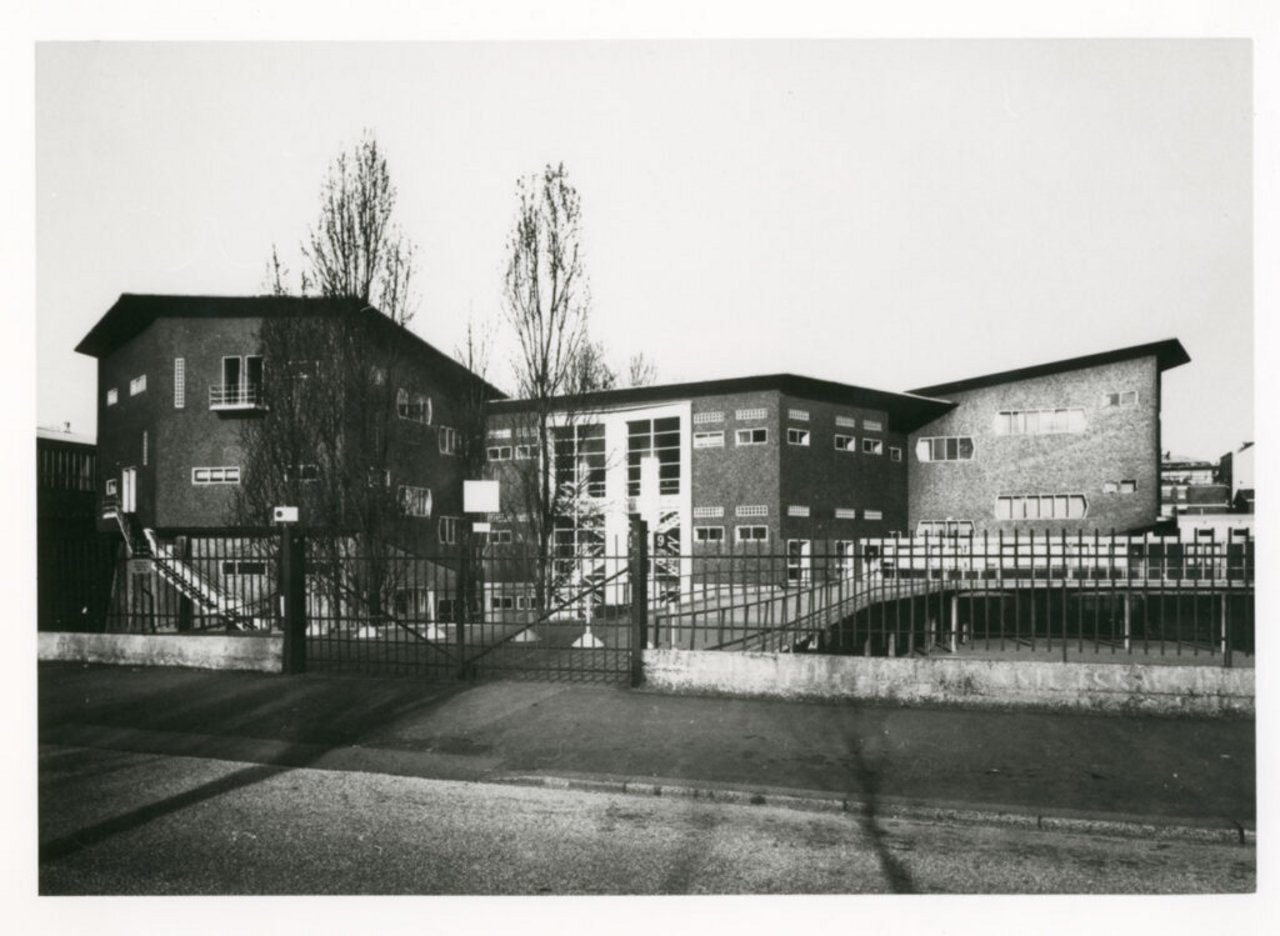
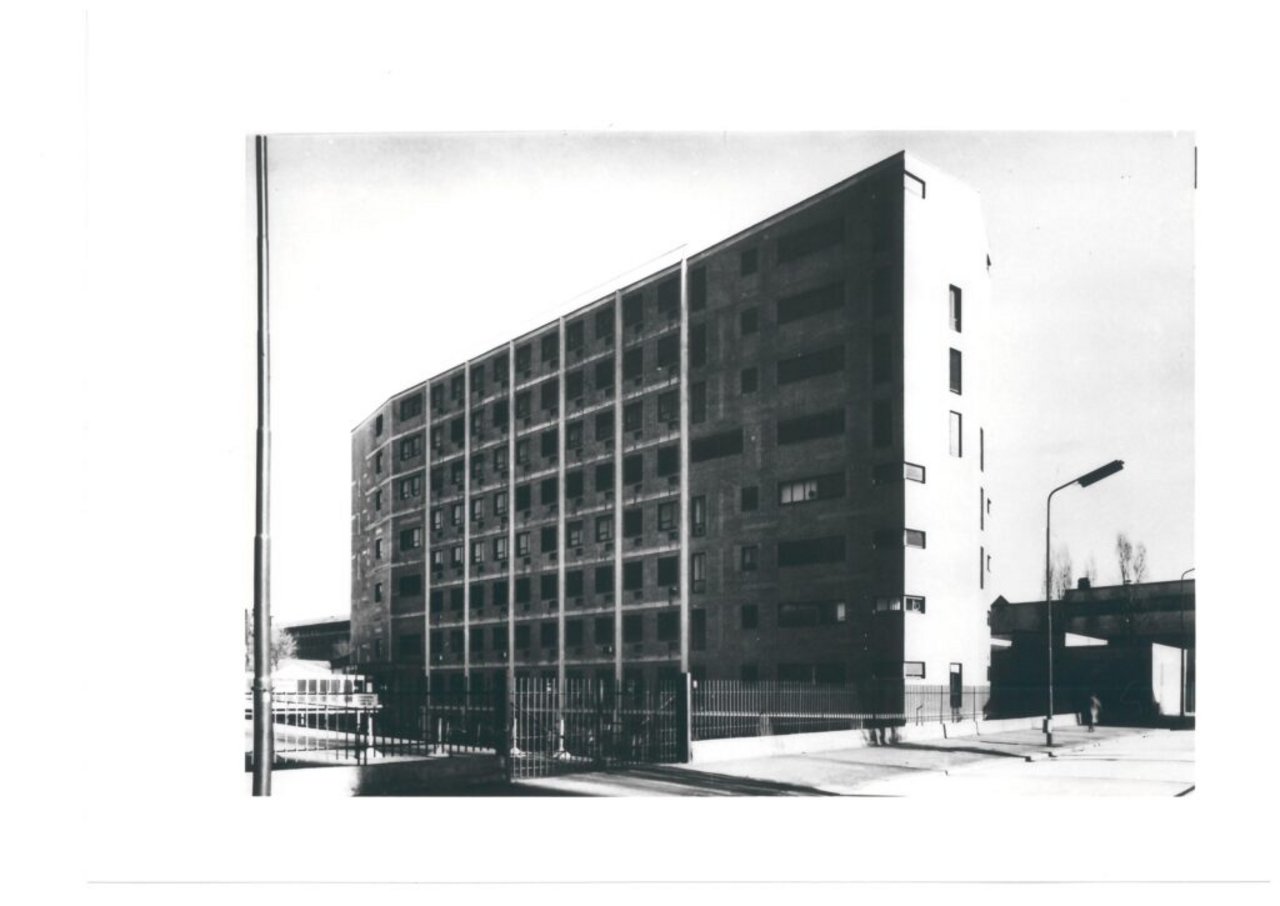
In 1953, Gio Ponti’s work became even more closely linked to Politecnico di Milano. City Planning allocated many new spaces to Politecnico, keeping them from the growing city. The most significant event, which again highlighted the strong contrasts underlying the nature and life of Politecnico’s urban sites, related to its largest expansion, with the construction of the Architecture buildings. Due to the need to build new headquarters in suitable and more spacious areas, the land was identified beyond Via Bonardi and Pietro Portaluppi was entrusted with drafting the first urban design, later created with Gio Ponti’s contribution: specifically, the ‘Trifoglio’ and the ‘Nave’ buildings.
Related stories
Italia di mezzo, the research that places the Italian province at the centre
The DAStU project studies territories that coincide neither with large metropolitan areas nor with inner areas, and seeks to build new representations to support their socio-ecological transition

«A curious, ironic, tireless man», this is the treasured personal memory of Federico Bucci’s wife
An intimate and vivid portrait by Emanuela Bergomi

Re-building the Future: How a Milan District Became a Model for Energy Efficiency
The village of Chiaravalle on the outskirts of Milan is home to four buildings owned by the municipality.

Altre Lombardie: Journey Through Resilient Territories
A project resulting from 28 workshops with approximately 1,600 participants, which focuses on housing, mobility, services and governance

With Proxima, buildings become adaptive structures
A revolutionary patent for a modular, hybrid form of architecture
You might also like

Inside high-altitude rock
How climate change triggers Alpine landslides

Where research impact begins
Technology transfer takes knowledge and inventions beyond the laboratory, along a path shaped by expertise, encounters and choices.

Four asteroids for Politecnico di Milano’s DART Lab
The International Astronomical Union has named four small bodies of the Solar System after Francesco Topputo, Iosto Fodde, Carmine Giordano and Paolo Panicucci: a recognition of the scientific and technological work of the laboratory of the Department of…

The Roots of a Resilient City
Join Professor Andrea Galli as we explore GeoT-LAM, where geotechnical engineering investigates the complex interplay between trees, soil and water to help design safer, more resilient cities.
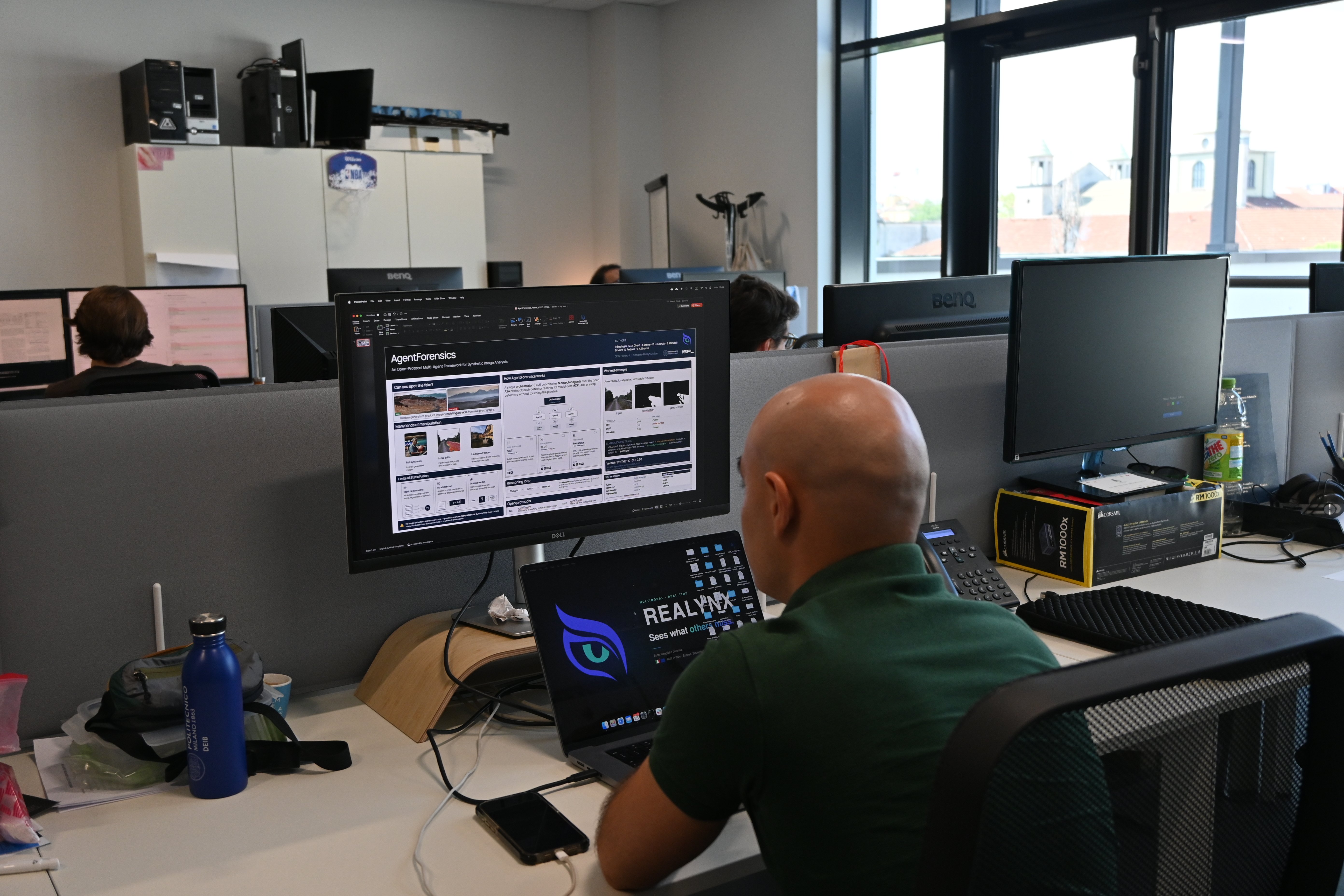
Beyond true and false: recognising synthetic content in the age of AI
From cloned voices to deepfakes, the challenge is no longer just to distinguish what is true from what is false, but to understand how content has been produced, transformed and used.