

From disabilities to possibilities: the role of inclusive sport-therapy


At the heart of research at the Politecnico di Milano, technological innovation meets a fundamental value: inclusivity. Thanks to pioneering projects, such as those developed in the field of assisted motor rehabilitation, biomedical research is changing the face of sport, making it accessible to an increasing number of people.
Emilia Ambrosini, Professor of Bioengineering in the Department of Electronics, Information and Bioengineering, has always been involved in technologies linked to the rehabilitation and assistance of people with motor disabilities. Professor Ambrosini mainly uses robotic devices and Functional Electrical Stimulation systems to design solutions that explicitly meet their needs. In this interview, she tells us about her passion for biomedical engineering and introduces us to the world of ActivE³, an innovative project that combines sport, technology and rehabilitation.
We discover how sport becomes not only a form of physical wellbeing, but also a powerful tool for inclusion, capable of providing people with different degrees of disability increasing autonomy. With the creation of platforms such as the sensorised trike, developed for Sports Therapy, the idea of a more inclusive society takes shape, thanks to cooperation between engineering, science and humanity.
It’s a journey between technology, inclusion and sport, which invites us to rethink what ‘overcoming barriers’ really means.
Where do you carry out your research activities?
Primarily, at the Nearlab (Neuroengineering and Medical Robotics), where we develop methods and technologies, often in collaboration with some of the most important clinical institutions, to help with and promote the independent lives of patients suffering from motor neuron diseases. These technologies include therapeutic robots for children with autism, functional electrical stimulation (FES) to treat people with spinal cord injuries and post-stroke patients, wearable robots (exoskeletons and exosuits) that support people with motor disabilities resulting from neuromuscular diseases and strokes.
In addition, I belong to We-Cobot (Wearable and collaborative robotics laboratory) at the Lecco Campus, where we work on wearable and collaborative robotics not only for rehabilitation but also for industry, with the aim of promoting worker wellbeing. What’s distinctive about this lab is that it’s multidisciplinary, with several departments, such as DEIB, DMEC, DESIGN, DIG and DABC, all working there.
What research activities do you carry out as part of ActivE³?
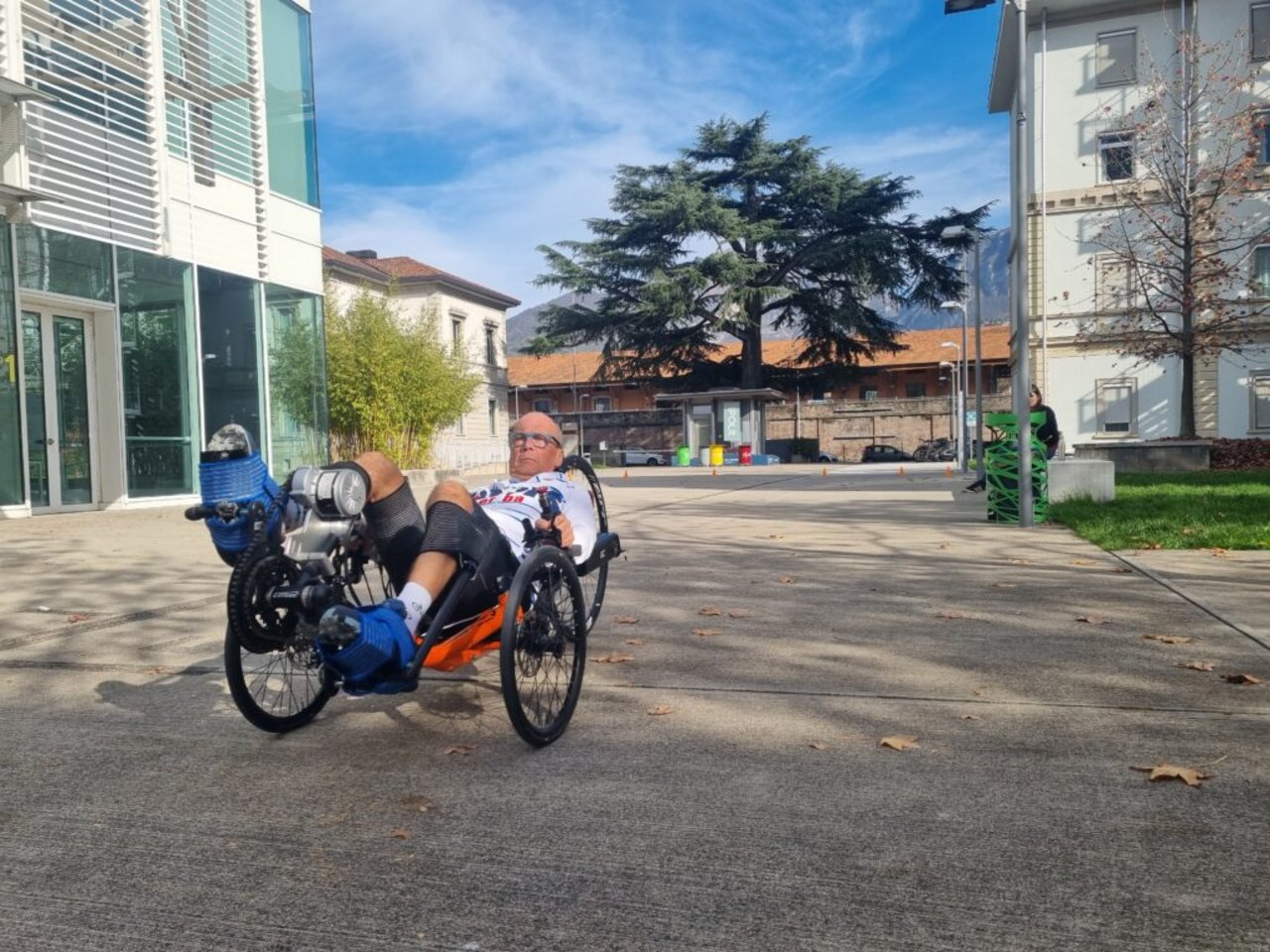
The aim of a project like ActivE³ is to overcome, thanks to technology, the barriers of motor practice and active living, making it truly inclusive. In fact, regular physical activity helps prevent many diseases and contributes to psychological wellbeing, reducing feelings of loneliness and improving quality of life. Our role, specifically, is focused on the development of a Sports Therapy platform that enables people who are frail and/or those with motor disabilities, such as elderly people with balance problems and chronic patients, for instance those who have had a stroke or spinal cord injury, to engage in outdoor sports activity. In particular, we have developed a hybrid trike combining Functional Electrical Stimulation, motor assistance and voluntary contribution as a platform for Sports Therapy for frail and/or chronic patients.
How does the trike work?
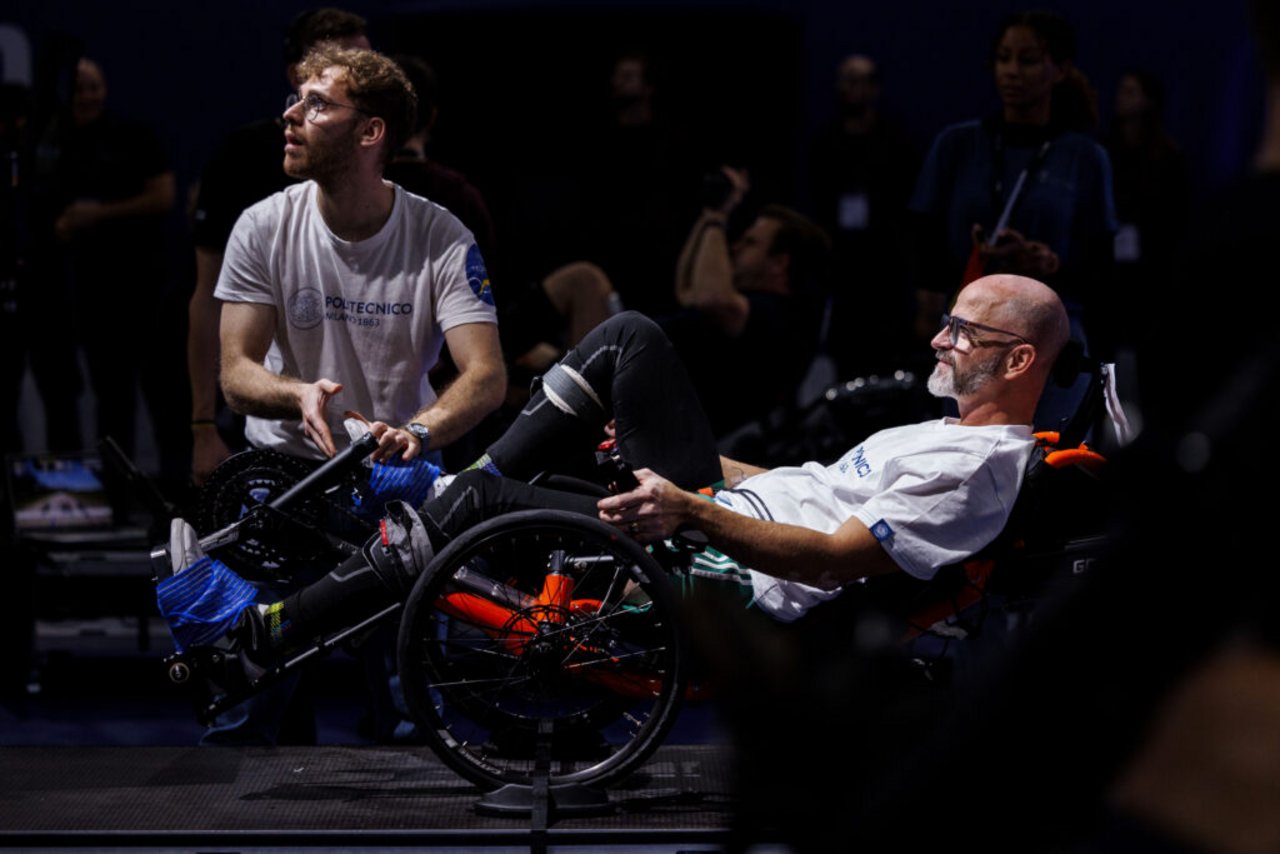
The trike is a three-wheel recumbent bicycle, sensorised and adapted for use by people who are frail. The trike has been equipped with an encoder for measuring the angle at the pedal crank, sensorised pedals for measuring the power produced by both legs, an electric motor for pedalling assistance and a Functional Electrical Stimulation system for stimulating 8 muscle groups in the lower limbs. The system is completed by a tablet with a graphic interface for setting and displaying training parameters. Different control modes have been implemented to allow people with varying degrees of disability to use it.
©2024 ETH Zurich / Cybathlon / Nicola Pitaro
How did the trike project come about?
The ActiveE³ project, funded by Fondazione Cariplo and Regione Lombardia- currently underway – and the FESleg project, which ended in April 2020 and was carried out thanks to the support of INAIL Centro Protesi (person in charge of the project: Professor Alessandra Pedrocchi), were partly encouraged by my participation in the Cybathlon competition.
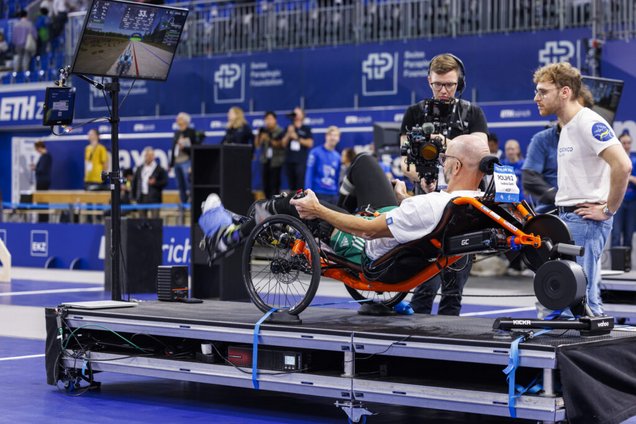
Cybathlon is an international competition that brings together athletes with disabilities from all over the world, who compete in different disciplines using state-of-the-art assistive technologies. One of the aims of the Cybathlon, organised by ETH Zurich, is to promote the development of innovative assistive technologies. Scientists, engineers and companies from all over the world are working to create increasingly powerful and intuitive devices that can improve the quality of life of people with disabilities. Another goal of the competition is to raise awareness of disability and inclusion issues, showing how technology can be a powerful tool to overcome barriers and foster autonomy.
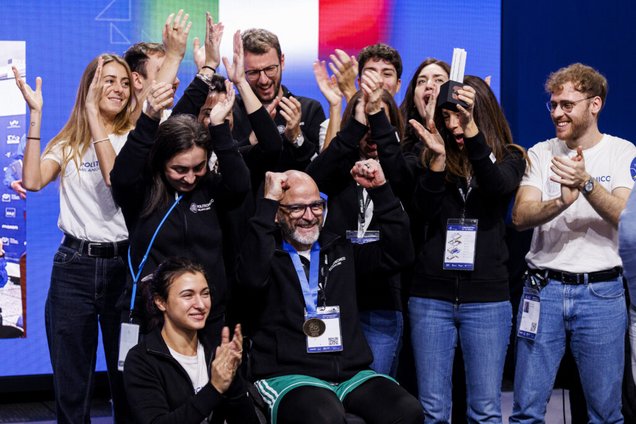
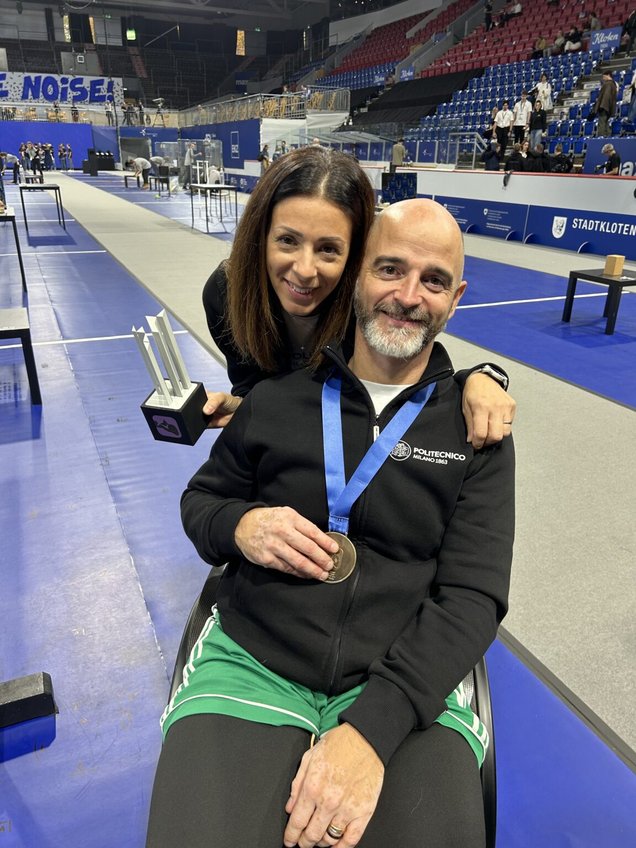
Back in 2019, I put together a team of mainly students and PHD Candidates in Biomedical Engineering and Mechanical Engineering at the Politecnico di Milano, with whom we participated in the FES bike (Functional Electrical Stimulation bike) discipline in the two competitions held in November 2020 (global format with remote participation) and in October 2024 in Zurich. In the competition just gone, we came third place (out of 10 teams), with rider Andrea Gatti.
©2024 ETH Zurich / Cybathlon / Nicola Pitaro
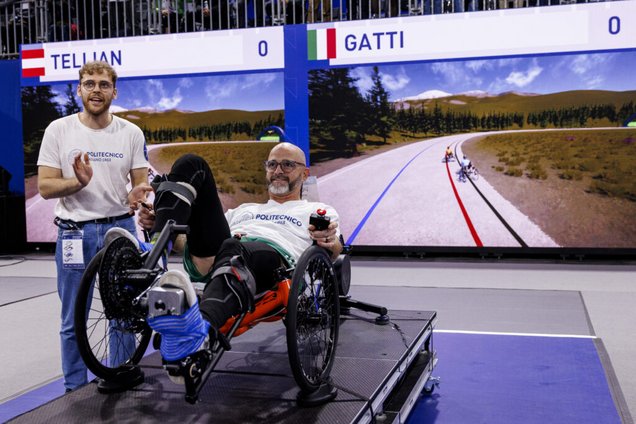
©2024 ETH Zurich / Cybathlon / Nicola Pitaro
This initiative was initially included in the Passion In Action programme and later in the competition programme at the Politecnico di Milano
With the help of students, we developed a passive trike integrated with an electric muscle stimulator capable of sending trains of coordinated impulses through surface electrodes that include the contraction of paralysed muscles and reproduce the movement of pedalling in people with complete paralysis of the lower limbs. Students dealt with both the optimisation of the trike and the training of different riders over the years. Compared to the platform developed in the ActivE³ programme, the trike used in Cybathlon does not include an electric motor. Furthermore, only riders with complete paralysis of the lower limbs can participate in Cybathlon.
What’s next for Trike?
A trial involving people (over 65s) is currently underway at the Lecco Campus to assess the usability and safety of the system.
Finally, a trial is planned at the Villa Beretta Rehabilitation Centre, a clinical partner with whom we are collaborating on the project, to test the effectiveness of a training programme with this system on the psycho-physical wellbeing of chronic post-stroke patients.
Related stories

BAMBI: when research meets life
A safe, accessible, and easy-to-use device to counter postpartum haemorrhage.

The voices of violins and patients. Mirco Pezzoli’s research leads to an AI that listens to the heart
Music, science and healthcare: an unexpected trio. But perhaps not, according to Mirco Pezzoli, Researcher from the Department of Electronics.

Innovation and sustainability to prevent and treat bone fractures
The PRESTO project brings concrete benefits for patients’ health and the sustainability of health systems

Organs-on-chip: towards increasingly personalised medicine
Mattia Ballarini opens the door to his world: organs-on-chips.

The new personalized coaching platform to promote a healthy lifestyle
Giuseppe Andreoni introduces to us app and wearable devices
You might also like

Where research impact begins
Technology transfer takes knowledge and inventions beyond the laboratory, along a path shaped by expertise, encounters and choices.

The Roots of a Resilient City
Join Professor Andrea Galli as we explore GeoT-LAM, where geotechnical engineering investigates the complex interplay between trees, soil and water to help design safer, more resilient cities.
Building in Balance
Matteo Scagnol and Sandy Attia of MoDus Architects discuss an architecture shaped by the tension between landscape and infrastructure, rules and freedom, materials and climate change.

From circuit to laboratory
The collaboration with the Politecnico as seen by Autodromo Nazionale Monza

Research Takes to the Track at Monza
The agreement between Politecnico di Milano and the Monza National Circuit creates an open-air laboratory for safety, sustainability, materials, mobility and major events.