

Four asteroids for Politecnico di Milano’s DART Lab


In July 2026, on the occasion of the latest edition of the international conference Asteroids, Comets, Meteors, four asteroids were named after four members of the DART Lab, the Deep-space Astrodynamics Research & Technology Laboratory of the Department of Aerospace Science and Technology of Politecnico di Milano: Francesco Topputo, Iosto Fodde, Carmine Giordano and Paolo Panicucci. The conference took place from 6 to 10 July 2026 in Poznań and brings together the international community that studies asteroids, comets and meteors.
We spoke with Paolo Panicucci, faculty member at DAER and member of the DART Lab, to understand how the naming of an asteroid works, why this recognition also concerns the work of engineers and how science and technology come together in space missions to small bodies of the Solar System.
Professor Panicucci, how does the naming process work?
The process takes place within the scientific community that gathers at the Asteroids, Comets, Meteors conference, which is held every three years and brings together experts on all small celestial bodies. In that context, nominations are proposed by colleagues from the community. A committee assesses them and, if the nomination is considered valid, the name is approved by the Working Group for Small Bodies Nomenclature of the International Astronomical Union, the body that officially assigns names to celestial bodies. It is not necessarily a nomination from within Politecnico, or from the institutions to which the researchers themselves belong: it comes from the community, and then the committees decide whether it is legitimate.
Once approved, the naming is published in an official bulletin, which recognises the asteroid’s new name and the reasons for the person to whom it is dedicated.
It is a recognition linked to the contribution made by the laboratory to the exploration of asteroids and small bodies of the Solar System, both from a scientific and a technological point of view. The important point is that it also recognises the technical contribution that allows missions to be conceived, developed and flown. In our work we deal — among other things — with the conceptualisation, design and implementation of space missions to small bodies: defining the trajectory that a probe must follow, contributing to its design, identifying the information it must use on board, writing and testing the algorithms that allow it to determine its own position or maintain a precise and safe orbit. All this also serves to ensure that the data collected have scientific value.

What actually are asteroids?
Asteroids fall into the category of small bodies of the Solar System. They are neither planets nor natural satellites and they represent a valuable source of information on the history of our Solar System. Many of them derive from planetesimals, the small bodies that formed during the early stages of aggregation of the Solar System but were not definitively incorporated into the major planets; others are fragments produced by the subsequent collision and destruction of larger bodies.
For this reason, asteroids can preserve very ancient materials, dating back to the early stages of formation of the Solar System, and allow us to reconstruct the conditions and processes that led to the birth of the planets and to the materials that compose them.
This does not mean that they have remained unchanged. Over billions of years, small bodies have been modified by collisions, heating, interactions with water inside their parent bodies and, on their surfaces, by radiation, the solar wind and micrometeorite impacts. Some larger bodies have even undergone melting and internal differentiation. It is precisely the combination of very ancient materials and traces of these later transformations that makes asteroids particularly important for reconstructing the formation and evolution of the Solar System and for understanding how the different materials were distributed and moved within the disk from which the planets formed.
Do you know where the asteroids that now bear your names are?
Yes. Each of us went to look up our own. They are four distinct asteroids and are located between Mars and Jupiter. We also know that they will not impact Earth. There was also joking among us about who had the most eccentric or most inclined asteroid, but the essential point is that they belong to that region of the Solar System and do not have trajectories that are dangerous for our planet.
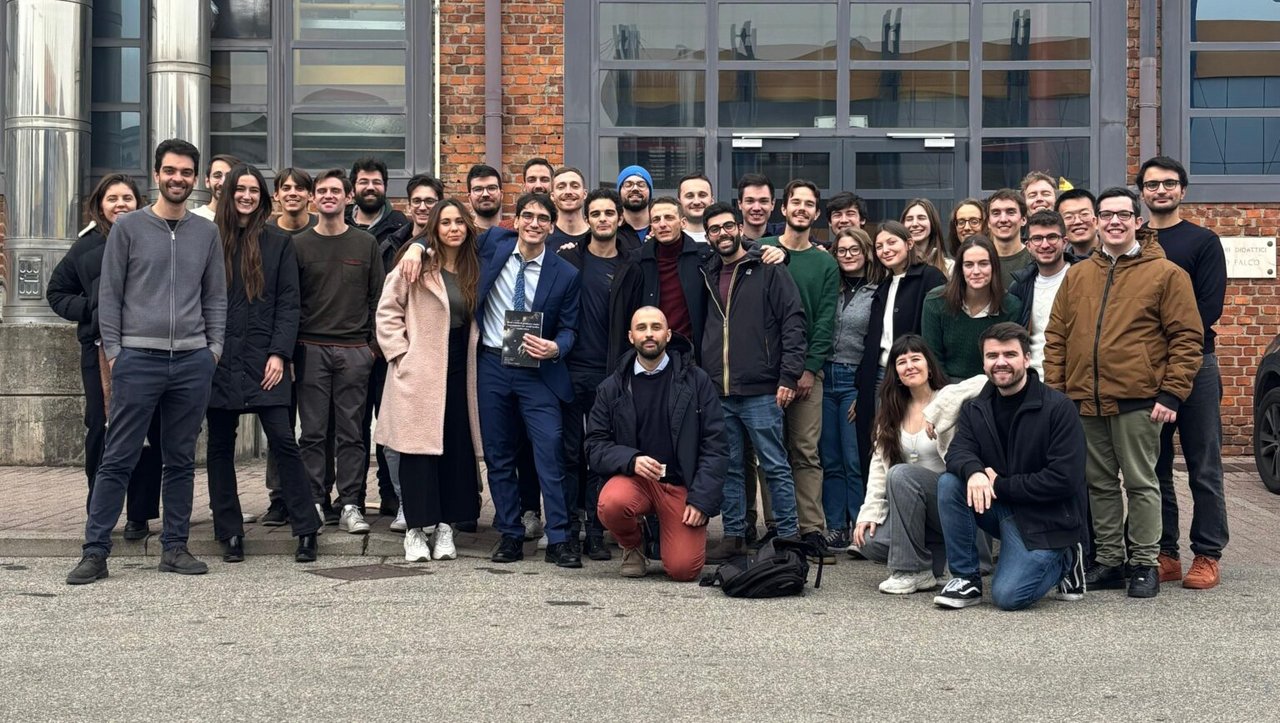
How important is it that a naming of this kind should recognise four engineers?
Our field is at the intersection between science and engineering. It is clear that we also work at a scientific level and publish in specialist journals, but the recognition also very much concerns the technical and technological part: what allows a space mission to move from an idea to an operational concept.
Usually, these recognitions are more associated with the strictly scientific environment. In this case, however, the work behind trajectories, guidance, navigation and control algorithms, and the design of the operations that allow a probe to collect useful data is also valued. We work to make missions actually happen: so that a scientific idea becomes a technical concept that can be built and is feasible.
What is the difference between the scientist’s approach and the engineer’s?
Science aims to understand the ultimate principle: to understand what objects are made of, which processes formed them, and which data are needed to interpret them. In our field, engineering takes these scientific needs and translates them into mission requirements, then into technical system requirements from which to derive and conceive orbits, algorithms, instruments, probe subsystems, the ground system, operations and manoeuvre planning.
One example is trajectories. Those who do not work in this field might imagine movement in space as being like that of an aircraft, free to move in any direction. In reality, orbital dynamics is much more similar to maritime navigation: some routes are allowed, others are not, and there are mandatory points to pass through, like natural straits. It is up to engineers to define which orbits are possible from an energy and physical point of view, and how these can maximise the mission’s scientific return.
So science and engineering complement each other?
Yes. In missions to asteroids and small bodies of the Solar System, the relationship between scientists and engineers is continuous and necessary. Planetary scientists, astronomers, astrobiologists, geologists, geomorphology experts and other figures define the scientific questions. Engineers work so that those questions can be transformed into missions, instruments, trajectories, images and reliable data.
The result is a necessarily multidisciplinary environment. To study an asteroid, the skills of those who formulate the scientific questions and of those who build the technical conditions that make it possible to answer them are needed. Acquiring a photo is important, but knowing from which point in the orbit it was taken and at what angle with respect to the Sun is necessary in order to do science. It is in this shared space that the DART Lab works: designing trajectories, guidance, navigation and control systems, small satellites and scientific contributions for space missions dedicated to asteroids and small bodies.
Related stories

“I Wanted to Become an Astronaut. Today I Help Astronauts Prepare for Mars”
A simple Holter monitor could track cardiovascular fitness during space missions

A sustainable future for lunar orbit
Dozens of missions are about to reach the Moon: a “waste sorting” system for their satellites is already needed today.

What if the answer to “Are we alone in the universe?” is hidden in a laser?
From laser physics to the search for habitable planets: a forty-year scientific journey. With NIR AstroComb, near-infrared becomes the key to discovering new worlds.

Water as a shield from cosmic radiation for astronauts: the housing module Moon Urchin suit for lunar life
Water as a source of life, even where there is no life – or at least, not yet.

Beyond the Earth’s orbit: the importance of satellite autonomy
Behind the great space missions lies the work of scholars like Paolo Panicucci, a researcher at the Politecnico di Milano. With experience in Italy, France and the United States, and prominent international collaborations, Panicucci recounts his journey in…
You might also like

Where research impact begins
Technology transfer takes knowledge and inventions beyond the laboratory, along a path shaped by expertise, encounters and choices.

The Roots of a Resilient City
Join Professor Andrea Galli as we explore GeoT-LAM, where geotechnical engineering investigates the complex interplay between trees, soil and water to help design safer, more resilient cities.
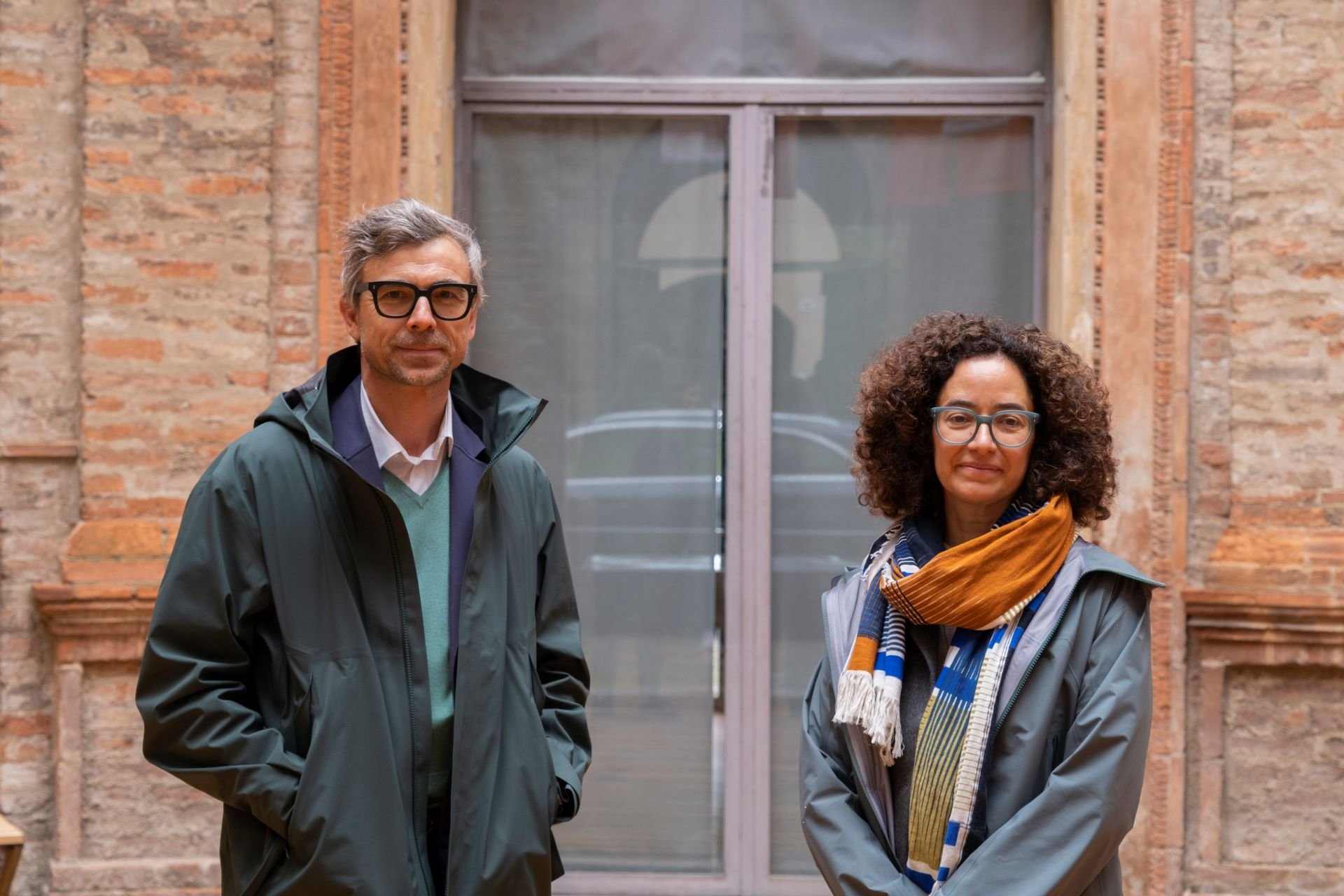
Building in Balance
Matteo Scagnol and Sandy Attia of MoDus Architects discuss an architecture shaped by the tension between landscape and infrastructure, rules and freedom, materials and climate change.

From circuit to laboratory
The collaboration with the Politecnico as seen by Autodromo Nazionale Monza

Research Takes to the Track at Monza
The agreement between Politecnico di Milano and the Monza National Circuit creates an open-air laboratory for safety, sustainability, materials, mobility and major events.