

From California to the Politecnico: the first “superbrain” in Europe



The first university electronic calculator in Europe arrived in 1954 at the Politecnico di Milano. This is the story of the CRC-102A and its “designer” Luigi Dadda.
It was 1951 and the then Rector, Gino Cassinis, ordered, with funds from the Marshall Plan or ERP (Euopean Recovery Programme) a programmed electronic calculator from the Californian company Computer Research Corporation. But it was Luigi Dadda, rector from 1972 to 1984, who accompanied it by ship from the US to the Politecnico, thanks to an assignment of $135,000.
Dadda said he was immediately involved in choosing the most suitable calculator, in part thanks to the knowledge acquired there, having, among other things, spent two years at the California Institute of Technology, or CalTech. The choice was not easy from a technical point of view, but in addition, Dadda was not so sure that the Americans would sell it to a university, given that the Marshall Plan was focused on industry … On this point, Cassinis reassured Dadda that the Politecnico would also use it for industrial applications.

Dadda went to the factory located just south of Inglewood, the Los Angeles airport and studied the machine in great detail, also because he needed to know it inside and out, given that he would be responsible for its transport once it was loaded onto the ship. He attended a 3-month training course with two other colleagues: a US Navy officer and a Royal Canadian Air Force officer.
The “chosen computer used pure binary numbers, with magnetic drum memory of 1024 (210) 42-bit words, a 3-address instruction format, with an auxiliary magnetic tape memory. Data input and output used an IBM punch card reader. We rejected this solution for cost reasons (the card readers cost more than the actual computer). We adopted a special teleprinter (Flexowriter) equipped with a tape reader and puncher (7 bit) operating at 10 characters per second,” wrote Dadda.
“The machine was completed and tested on schedule and, in early September, I accompanied it to the port in Long Beach to the ship (an old “Liberty”) which was to carry it to Genoa. Fortunately, the ship was already loaded with bales of cotton from South America and I asked that it be placed in the middle of them: this relieved me of my serious concern about the strong vibrations it would otherwise have suffered. The machine arrived in Genoa in perfect condition,” recalled Dadda.

“The commissioning of the computer at the Politecnico di Milano, which took place in October 1954, was the most important episode in the process of its generation and at the same time had numerous important effects on the state of scientific and technological computing,” wrote Dadda in 2004 to celebrate the 50th anniversary of the arrival of the CRC-102A at the Politecnico.
Edison and Pirelli were the first users of the CRC; the computer could carry out the calculation work of around thirty experts. Many more followed, including Macchi, Face-Standard, Montecatini, Magneti Marelli, Siemens, ANIC, Innocenti, CGE, La Rinascente, Franco Tosi, etc., and many research institutes, such as the astronomical observatories in Merate, Brera, Pino Torinese, the ISMES in Bergamo, the Dinamometric Institute in Turin, CISE….
Thanks to the CRC-102A, the first course in electronic engineering in Italy was established in 1956 and the university founded the Centre for Numerical Computing.

Although the CRC stopped “performing calculations” in 1963, its “installation … was the culmination of research into new mathematical methods and their scientific and engineering applications, and at the same time the point of departure for new research, teaching and dissemination, which gave rise to Italian computer science,” said Dadda.
Even today, the university is proud of it for everything it represented and represents, which is part of its history.

Related stories

Digital sovereignty: why regulating AI is not enough
Interview with Roberto Baldoni, Senior Advisor for Technology and Cybersecurity Policy to the Ambassador of Italy to the United States

Human Creativity and Generative Artificial Intelligence. How Imagination and Algorithms Come Together.
When imagination becomes a hybrid process, between prompts, the model's "personality" and critical thinking.
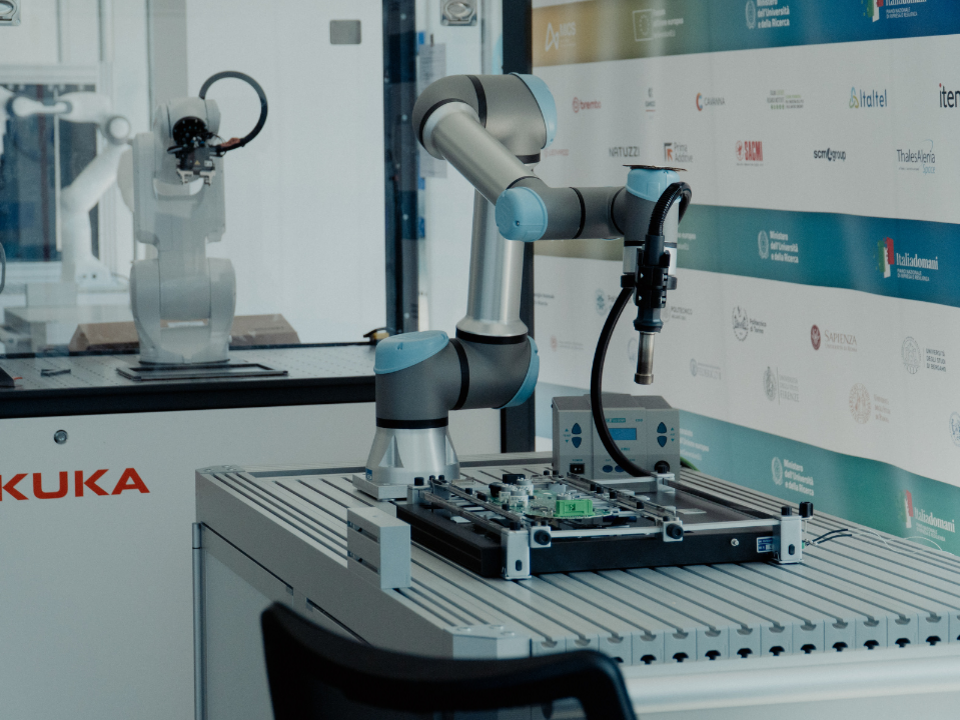
Inside the Marco Garetti Laboratory, where technology and humans meet
The “miniature” factory designed to observe, simulate, and experiment.

The Beginning of a New Story
The story of Armando Brandolese, one of the key figures of that pioneering era
You might also like
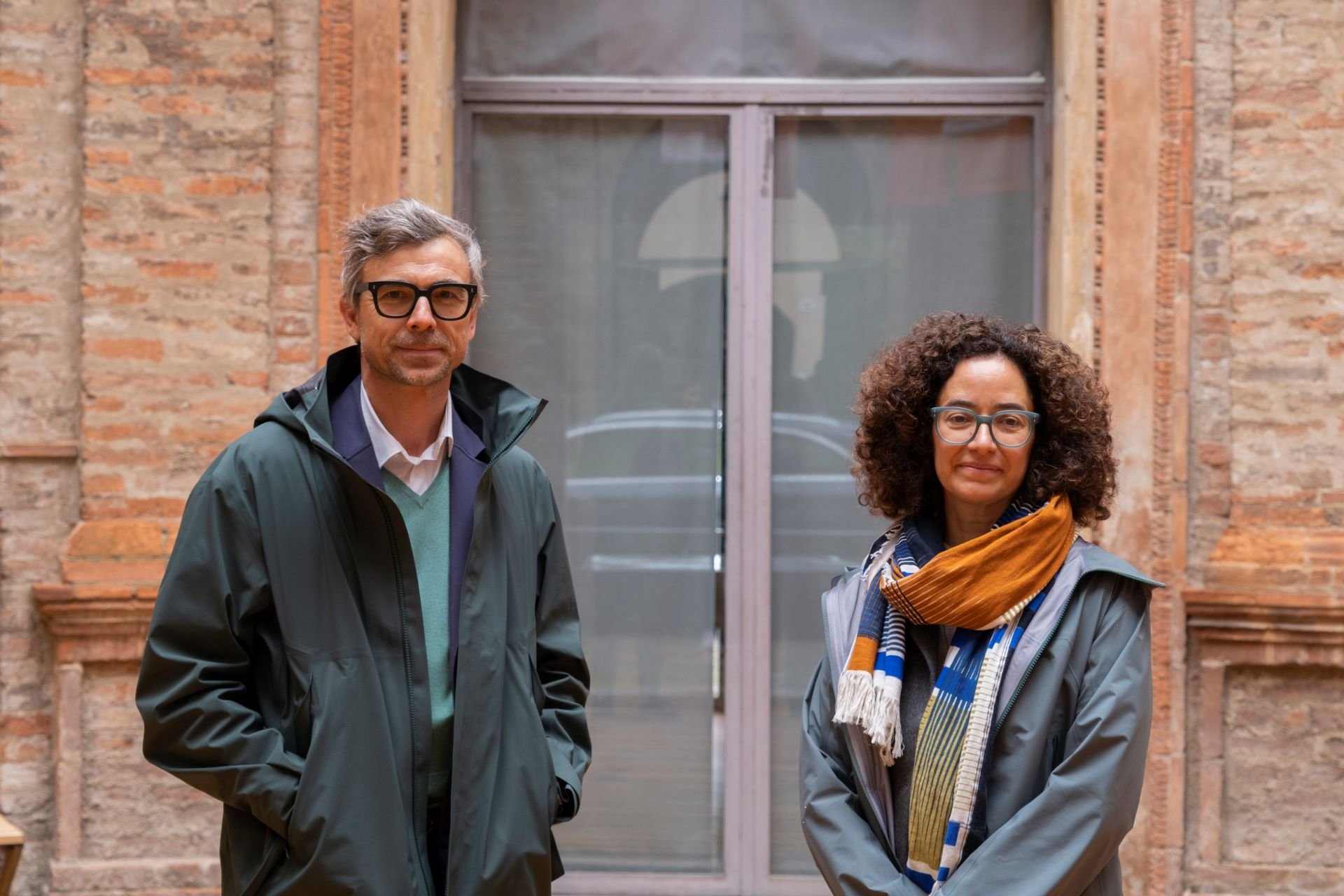
Building in Balance
Matteo Scagnol and Sandy Attia of MoDus Architects discuss an architecture shaped by the tension between landscape and infrastructure, rules and freedom, materials and climate change.

Who owns Milan? Map reveals forces reshaping the city
The financialization of the real estate market and its effects on urban development dynamics

Reading Maps: The Taste of Discovery
Jessica Gritti discusses the research on the Maps section of the Civica Raccolta delle Stampe “Achille Bertarelli”: from cataloguing and new international connections to the value of collaboration between universities and cultural institutions.

Geopolitical instability, health crises: the risks in the pharmaceutical supply chain, and how to manage them

From circuit to laboratory
The collaboration with the Politecnico as seen by Autodromo Nazionale Monza